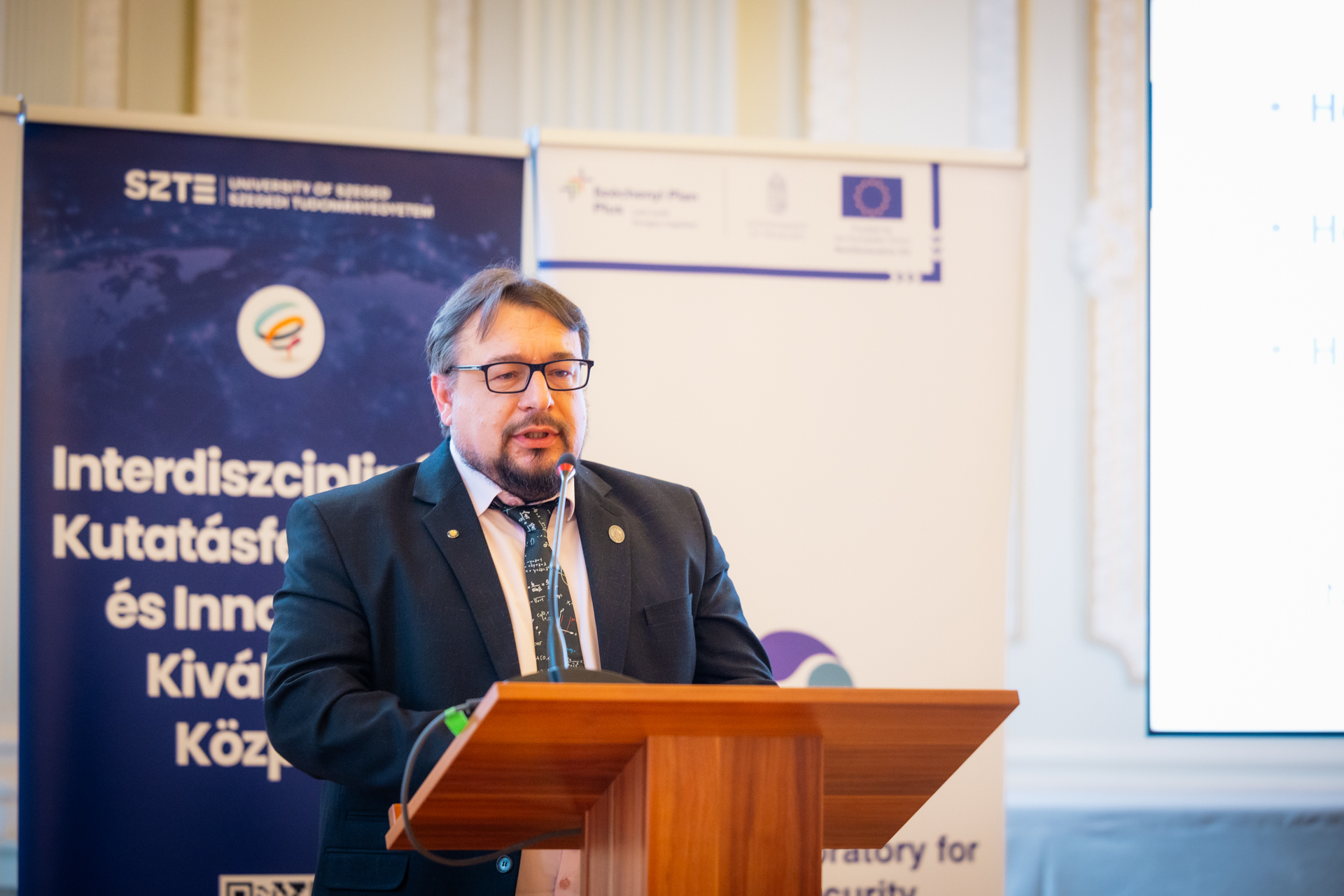
The National Laboratory for Health Security (NLHS) project – implemented through a collaboration of sixteen Hungarian universities and research institutes under the leadership of the University of Szeged – marked its conclusion with a closing event held at SZTE. Founded four years ago and led by mathematician Gergely Röst, the consortium set out to monitor pathogens posing potential future threats to humans, as well as their vectors and habitats; to assess associated risks; to generate forecasts based on the analysis of epidemiological data; and to support healthcare delivery and governance through data-driven diagnostic tools – thereby strengthening the health security of the Hungarian population. According to policymakers, the NLHS has become one of the most successful projects within Hungary’s National Laboratory Program.
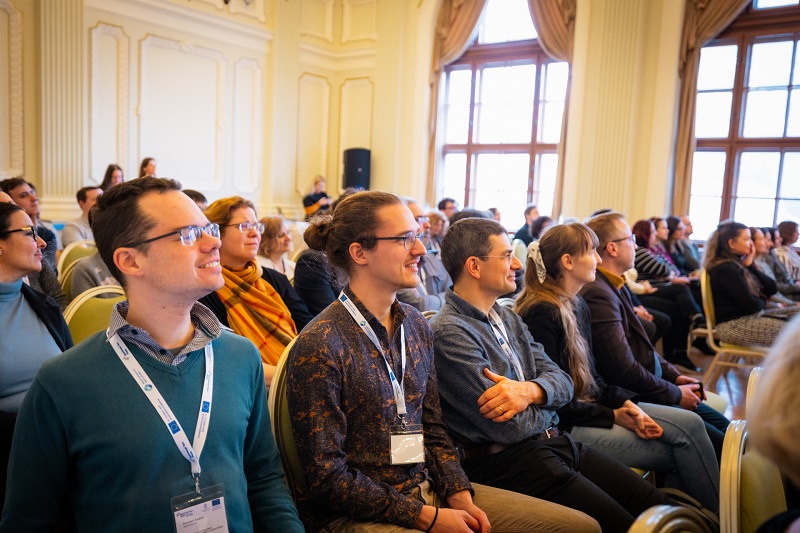
The closing event of the National Laboratory for Health Security (NLHS) project, held in the Ceremonial Hall of the University of Szeged’s main building. Photo: Ádám Kovács-Jerney
The National Laboratory for Health Security established a range of complex monitoring systems, including TÉR-EPI, which analyses population-level health indicators in Hungary, as well as nationwide networks tracking respiratory diseases. In addition, one of the NLHS’s major achievements was the creation of a permanently operational, collaborative network of research groups that had previously worked in isolation. Across its four main divisions – Mathematical Epidemiology, Eco-Epidemiology, Invasion Biology, and Data-Driven Health – the project supported cutting-edge interdisciplinary research, covering the full continuum from early detection and observation through modelling the spread of epidemics to preparing the healthcare system for emerging threats. Research into ecological systems also played a key role in strengthening early warning and rapid response capacities, with a particular focus on species newly emerging in Hungary as a result of climate change and on the pathogens associated with them that may pose risks to human health.
Over the four-year project period, researchers participating in the NLHS program published more than 400 scientific papers, including 250 in top-tier, high-impact journals. The National Laboratory for Health Security also built international partnerships with leading universities worldwide, including Harvard University, Yale University, and Kyoto University, while fostering the next generation of researchers through the involvement of nearly 100 doctoral students. Notably, during the outbreak of foot-and-mouth disease, the laboratory played an active role in emergency response efforts. By introducing Citizen Science standards – such as the Hungarian Data Reporting Questionnaire (MASZK) system, mosquito monitoring, and tick surveillance applications – it also engaged the wider public in data collection.
At the closing event, the project was praised by Judit Fendler, Chancellor of the University of Szeged; László Palkovics, Government Commissioner for Artificial Intelligence and former Minister for Innovation and Technology; László Bódis, Deputy State Secretary for Innovation at the Ministry of Culture and Innovation; Péter Domokos, Scientific Co-President at the National Research, Development and Innovation Office; and Gábor Szabó, Chairman of the Board of Trustees of the Foundation for the University of Szeged. Their addresses were followed by a lecture by mathematician Gergely Röst on the importance of data- and model-driven approaches to health security.
Dr. Judit Fendler: A university ecosystem that nurtures excellence
Judit Fendler, Chancellor of the University of Szeged, emphasized that in the 21st century the role of universities extends far beyond education alone. Their impact on the national economy – and, through that, on society as a whole – is clearly visible in Szeged. Global companies such as BYD and Rheinmetall both chose to set up production facilities in the city primarily because of the University of Szeged, while Vulcan Shield Global, one of the world’s leading producers of specialized materials now establishing a presence in the Southern Great Plain region, was likewise attracted to Szeged by the university’s outstanding capabilities and state-of-the-art infrastructure in materials science.
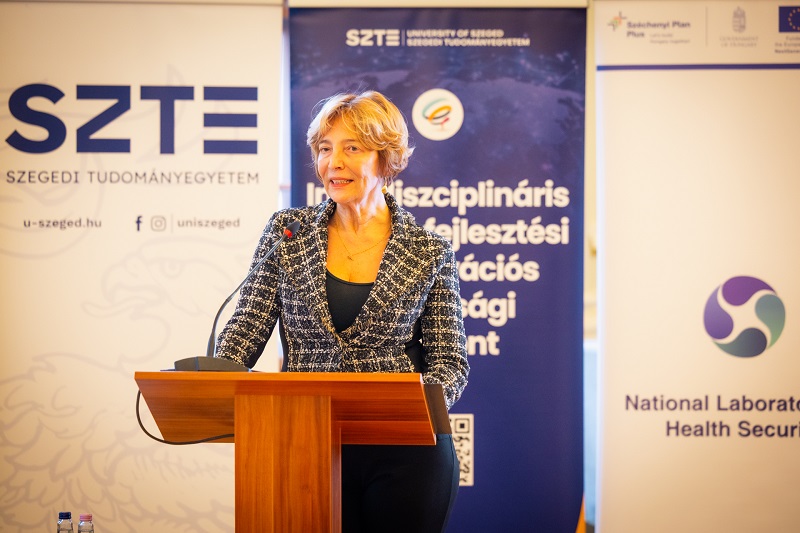
Dr. Judit Fendler, Chancellor of the University of Szeged. Photo: Ádám Kovács-Jerney
“Innovation at the University of Szeged is not a buzzword but a guiding principle of everyday operations,” the Chancellor emphasized. “We have created – and continue to develop – advanced infrastructures and research facilities that reinforce our traditionally strong disciplines while enabling collaboration with the world’s leading research centers.” Fields such as laser physics, biomedical sciences, mathematics, astronomy, and Earth sciences in Szeged now enjoy clear national recognition. Soon to be inaugurated, the stereotactic robotic technology center; a cyclotron facility capable of producing radiopharmaceuticals and unique in Europe; the only complex cryo-electron microscopy facility of its kind in Hungary; and several other flagship facilities all serve the same mission – one first articulated by István Báthory 450 years ago, renewed by Kuno Klebelsberg a century ago, and reaffirmed by Albert Szent-Györgyi 80 years ago.
Recalling the many distinguished researchers, physicians, engineers, and writers who once studied in Szeged, the Chancellor underlined that what the University of Szeged produces is not a series of isolated peaks of excellence, but a sustained, outstanding academic ecosystem that continually renews itself. The trajectory is clear: the biomedical research tradition founded by Albert Szent-Györgyi led, decades later, to Katalin Karikó’s Nobel Prize, just as Frigyes Riesz’s work in Szeged laid the foundations of functional analysis and gave rise to the Szeged School of Mathematics. Together with Alfréd Haar’s contributions, this tradition paved the way for later advances in applied mathematics.
“A similar long-term vision defines the University of Szeged’s approach to artificial intelligence – a field it began shaping at a strategic level decades ago, well ahead of global trends. Last summer, we took another important step in this area by acquiring an AI-based supercomputer,” the Chancellor noted, “a milestone that not only strengthens our research infrastructure today but also opens new horizons for future scientific discovery and innovation.”
Dr. László Palkovics: NLHS emerges as one of the most successful national laboratories
Dr. László Palkovics, who – as former Minister for Innovation – had been involved from the outset in the cooperation that laid the foundations for the National Laboratory for Health Security, reflected on these early efforts at the project’s closing event. Now serving as Government Commissioner for Artificial Intelligence, he explained that at the outbreak of the COVID-19 pandemic he had been tasked with assessing the capabilities of Hungary’s higher education and research sector – specifically, identifying researchers capable of analyzing the spread of the virus and its consequences at an advanced level. He recounted a videoconference held at the very beginning of the pandemic, during which several members of the Hungarian government spoke with Albert-László Barabási, a network science researcher at Harvard University, joined by an adviser to the White House. Barabási noted that a group had already been established in the United States to forecast the spread of the epidemic. At that point, László Palkovics turned his camera to show that a similar team had also been formed in Hungary, and that the modelling work was being carried out by Gergely Röst, a mathematician at the University of Szeged. In his remarks, the Government Commissioner added that Dr. Röst had been recommended to him by Gábor Szabó, SZTE’s former rector and now Chairman of the Board of Trustees of the Foundation for the University of Szeged, who simply asked him whether he knew who Hungary’s leading applied mathematician was.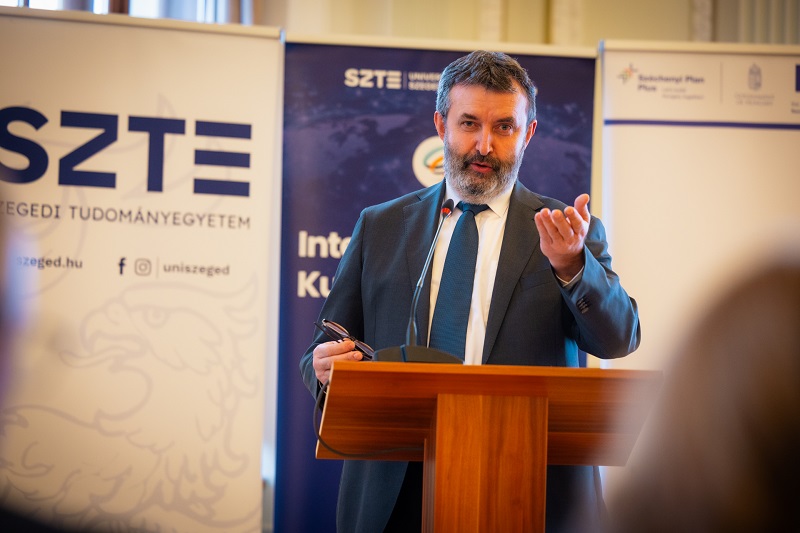
Dr. László Palkovics, Government Commissioner for Artificial Intelligence. Photo: Ádám Kovács‑Jerney
László Palkovics noted that a three-member expert group was soon established, bringing together Gergely Röst from the University of Szeged, alongside Miklós Szócska and Beatrix Oroszi from Semmelweis University. Throughout the pandemic, the team supported operational decision-making with weekly situation assessments and modelling analyses. “There was nothing we failed to anticipate – the virus always followed the paths we had calculated,” Palkovics said. Accordingly, when Hungary’s National Laboratory Program was launched, it was clear that one of the laboratories would be dedicated to health security.
According to the former minister, the National Laboratory for Health Security has emerged as one of the most successful national laboratories, distinguished by the outstanding nature of its scientific results and by its researchers’ ability to translate fundamental theoretical research into tangible public benefit. By way of example, he pointed to the modelling capacity developed within the NLHS, which made a significant contribution to controlling the outbreak of foot-and-mouth disease, and noted that NLHS researchers have more recently also been involved in efforts to combat grapevine flavescence dorée.
László Bódis: A mission-driven National Laboratories Program
László Bódis, Deputy State Secretary for Innovation at the Ministry of Culture and Innovation, recalled that in the early days of the COVID-19 pandemic – when he was serving as Head of Cabinet at the ministry – László Palkovics put him charge of preparing the daily data and forecasts received from Gergely Röst for the government’s morning briefings. This often meant waiting until two or three o’clock in the morning, as the mathematician worked late into the night to complete his analyses for the day.
The Deputy State Secretary confirmed that a new call for proposals has recently been launched under the Mission-Driven National Laboratories Program, with similar funding schemes planned on an annual basis in the future, each targeting challenges of key relevance to society and the economy. The first call, backed by a budget of HUF 20 billion, attracted 48 proposals seeking a combined total of HUF 107 billion in funding. Against this background, this year’s three priority areas – artificial intelligence, health, and energy systems – create strong prospects for the National Laboratory for Health Security to continue its work in a new project phase.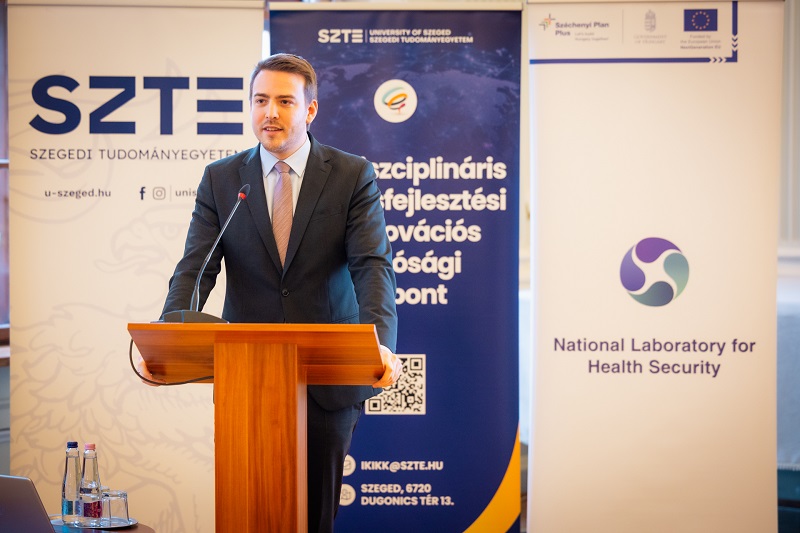
László Bódis, Deputy State Secretary for Innovation at the Ministry of Culture and Innovation. Photo: Ádám Kovács-Jerney
Péter Domokos, Scientific Co-President at the National Research, Development and Innovation Office (NRDI Office), outlined the funding priorities of research calls supported by the NRDI Fund. He explained that the fund’s flagship instrument is the National Research Excellence Program (NREP), under which winning projects were announced in 2025 with a total budget of HUF 40 billion, and noted that a similarly substantial level of funding is available this year as well. According to the Co-President, the NREP is designed to directly support excellence-based research, enabling research groups to operate at the forefront of international science.
“Our goal is to embed the National Research Excellence Program into Hungary’s research funding landscape in a way that reflects international best practices,” Domokos said. He added that the long-term stability of the scientific ecosystem rests on a strong presence of PhD students within research groups. From the NRDI Office’s perspective, this is reinforced through the Research Fund by encouraging the early integration of young researchers into research teams via the University Excellence Scholarship Program (EKÖP), starting at the BSc and MSc levels.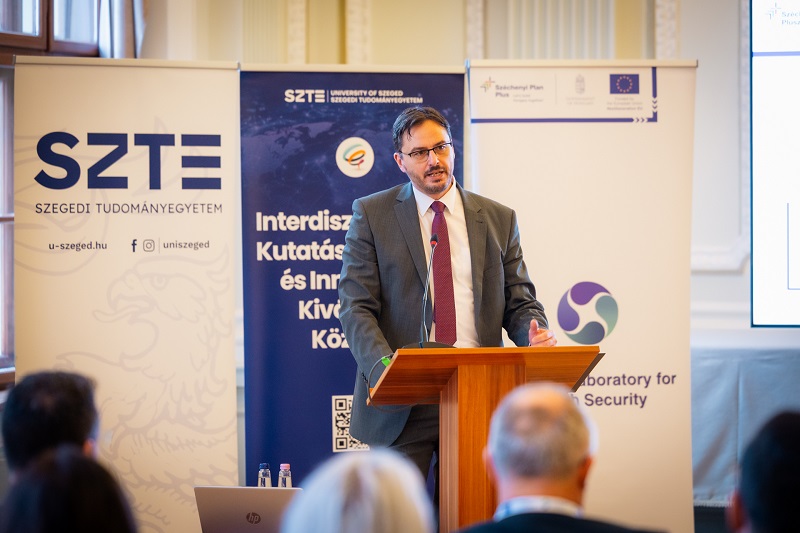
Dr. Péter Domokos, Scientific Co-President at the National Research, Development and Innovation Office. Photo: Ádám Kovács-Jerney
According to the Scientific Co-President of the National Research, Development and Innovation Office, Hungary’s science policy is also about strategically positioning Hungary’s scientific potential internationally. This objective is pursued through instruments such as the Thematic Excellence Program and the National Laboratories Program. Péter Domokos also noted that several excellence-based research groups remain active within the National Laboratory for Health Security as it concludes its current phase, and that these groups are well placed to continue securing support through the National Research Excellence Program.
For researchers in the life sciences, this shift is especially significant, as strengthening the life sciences ecosystem has become an even higher priority for the NRDI Office. The 2025 Life Sciences Program call offered up to HUF 10 billion in funding for pharmaceutical research, while the GINOP Plus Program is set to support a new wave of medical technology developments.
Prof. Dr. Gábor Szabó: Beyond the boundaries of mathematics
Gábor Szabó, who served as Rector of the University of Szeged between 2010 and 2018, has long argued that truly successful projects are rooted in knowledge developed at the intersection of scientific disciplines and real-world applications. In his welcoming remarks, he recalled that in Hungary in the early 1990s, applied mathematics had yet to gain acceptance alongside pure mathematics, and that securing recognition for it as an independent specialization required sustained effort within the national accreditation framework.
Recalling his time in the United States in the 1990s, he added – drawing laughter from the audience – that the difference between a mathematician and an applied mathematician was said to be that the former was very clever, while the latter had a job. Looking back on the early years of his rectorship, Professor Szabó also noted that he had taken stock of which researchers at the University of Szeged had secured grants from the European Research Council (ERC), the European Union’s flagship program for frontier research. Among the awardees was Gergely Röst – a detail that would later prove decisive when, during the COVID-19 pandemic, Szabó was able to recommend him to then Minister for Innovation László Palkovics as Hungary’s leading applied mathematician, who happens to work in the field of epidemic modelling.
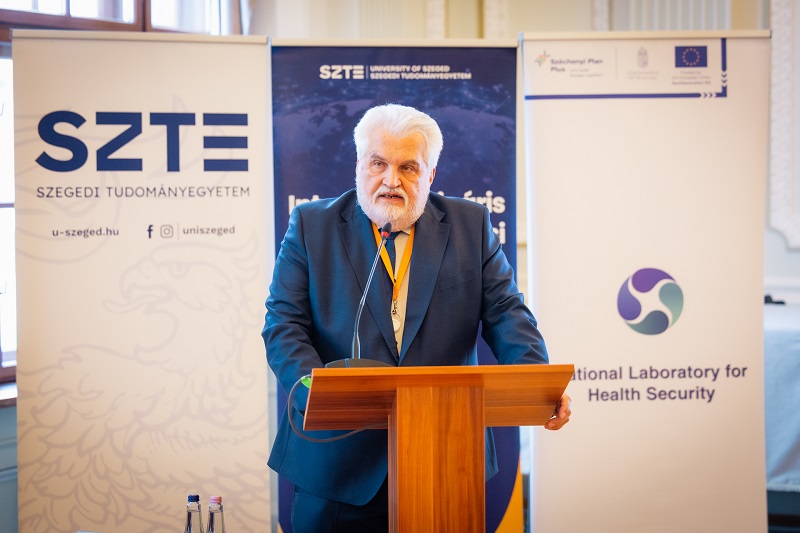
Prof. Dr. Gábor Szabó, Chairman of the Board of Trustees of the Foundation for the University of Szeged. Photo: Ádám Kovács-Jerney
Gábor Szabó said he deeply appreciates the fact that Gergely Röst has built a genuine school of applied mathematics, gathering around him an exceptional community of talented young researchers, and that he speaks about his students’ achievements with evident pride in professional forums. In Szabó’s view, this also reflects the spirit of the times: these young scholars have moved beyond the traditional boundaries of mathematics, directing their work not toward a single discipline but toward complex problems that arise at the intersections of fields.
Society has a short memory, Gábor Szabó observed, and much has already been forgotten since the COVID-19 pandemic – things that should not have been. “Yet we would do well to remember that extremely efficient global systems are not sufficiently robust,” he added. “Society needs to reassess the value of redundancy and reconsider the fact that, given the vulnerability of supply chains, grain produced locally and stored in local silos can offer greater security than supplies arriving by ship from far away.”
Professor Szabó concluded his speech by expressing his hope that the work of the National Laboratory for Health Security will continue – for the benefit of society as a whole.
Dr. Gergely Röst: Data-driven decisions for a healthier environment
In his presentation, Gergely Röst, professional lead of the National Laboratory for Health Security, began by asking a simple question: Where did it all start? In response, he then showed a photograph. Taken in 2009–2010, it captured what he jokingly called “Hungary’s entire H1N1 pandemic modelling capacity” at the time – Dr. Röst himself, fifteen years ago, seated at a departmental desk with his first PhD student, then still an undergraduate, Diana Knipl, who has since gone on to work as a risk analyst at Morgan Stanley in London.
Yet even this modest setup was enough to deliver results with real-world impact. “Our model predicted – six weeks in advance – how high the H1N1 influenza peak would be, and that the virus would not return after the winter break,” Dr. Röst recalled. “At the time, doctors were convinced that, following the usual pattern of influenza, H1N1 would surge again in January. The model calculations, however, showed that it would not.” Those forecasts proved pivotal in the policy debate over whether Hungary should purchase the final two million doses of vaccine.
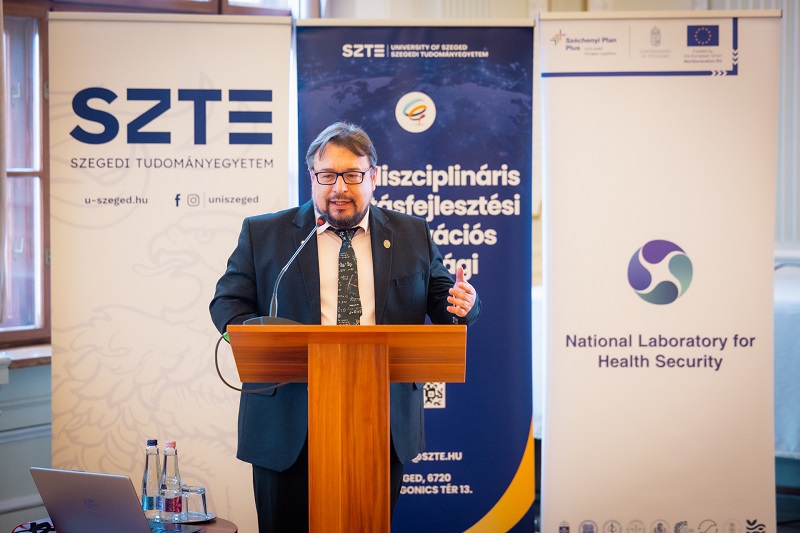
Mathematician Dr. Gergely Röst, professional lead at the National Laboratory for Health Security. Photo: Ádám Kovács-Jerney
Not long after these early successes, Gergely Röst, a mathematician at the University of Szeged, secured a European Research Council (ERC) grant from the European Union to establish a dedicated research group. Their focus was a deceptively technical yet crucial issue: how to properly incorporate time-delay differential equations into epidemic models.
Well before COVID-19, the team was already tackling real-world epidemiological challenges – for example, modelling the risk of measles transmission during the 2012 European Football Championship. Over time, each project broadened the scope and ambition of their work, yet none fully anticipated the scale of the test that would arrive in 2020.
When the COVID-19 pandemic struck, years of theoretical and applied groundwork suddenly became operationally indispensable. Efforts in two fields that would later form the backbone of the National Laboratory for Health Security were already being closely coordinated: epidemic modelling, led by Gergely Röst at the University of Szeged, and data-driven health, coordinated by Miklós Szócska at Semmelweis University. As the pandemic unfolded, this collaboration continued to widen, drawing in ecological perspectives as well – including invasion biology under László Garamszegi and eco-epidemiology under Gábor Földvári, both at the HUN-REN Centre for Ecological Research. Together, these strands gradually converged into the integrated, interdisciplinary approach that would go on to define the National Laboratory for Health Security.
Gergely Röst also outlined the broader vision behind the National Laboratory for Health Security: to build a scientific foundation for epidemic preparedness, the management of ecological challenges, and data-driven health – one that genuinely informs and improves decision-making.
“We need data,” he said. “The more data we have, and the better its quality, the stronger our analyses, models, and forecasts become. And better analyses lead to better decisions. When decisions improve, our environment becomes healthier – and so do people. In the end, that is what all of our work is about.”
Over the full four-year period, researchers at the National Laboratory for Health Security published a total of 400 scientific papers, including 250 in Q1 journals, of which 150 appeared in D1-ranked outlets. “When the call was launched, the minimum requirement was 25 high-quality publications. We committed to delivering 70 – and ultimately produced 250,” Gergely Röst summarized. “More than 100 students, PhD candidates, and early-career researchers were involved in the work, and we have established collaborations with around twenty top 100 universities worldwide.”
In his presentation, Gergely Röst went on to review the proprietary monitoring systems developed by the National Laboratory for Health Security. One of these is TÉR-EPI, a public health monitoring platform that presents a wide range of health indicators in Hungary through clear, high-quality visualizations. “Even for those who are not healthcare professionals, exploring this system is both interesting and instructive – you can learn a great deal about Hungary from it,” the project’s professional lead noted.
The Tick Monitor and Mosquito Monitor systems are designed to map insects that may potentially transmit diseases. In one of the National Laboratory for Health Security’s applications, mosquito species are identified using artificial intelligence based on sound: drawing on an AI-trained mosquito sound library, the system can recognize species with an accuracy exceeding 90 percent. A further development goal is to integrate this sound-recognition technology directly into traps, enabling mosquito traps to automatically identify the species they capture.
Launched during the first weeks of the COVID-19 pandemic, the MASZK data-collection initiative later returned in an expanded and further developed form as MASZK 2 – this time as a Citizen Science project. The platform remains open to volunteer contributors, inviting members of the public to share information on currently circulating respiratory illnesses and, in doing so, to play an active role in public health research.
Beyond these initiatives, the National Laboratory for Health Security also operates the VEBIS vaccine-effectiveness monitoring network, alongside surveillance systems that track respiratory viruses across both primary care and hospital settings. Led by Miklós Szócska, the NLHS’s Data-Driven Health division has developed an artificial intelligence engine that supports healthcare system management through a dedicated research environment, the integration of large-scale datasets, and AI-assisted analytics.
The nationwide digital pathology program, likewise powered by artificial intelligence, provides physicians with real-time feedback through the analysis of histological samples. The NLHS also monitors disease-related mortality trends: under the name HUN-MOMO, it has established Hungary’s excess-mortality monitoring system, complemented by a Cause-Specific Mortality Database. Taken together, these interconnected platforms are laying the foundations for a more responsive, predictive, and resilient health-security framework – one capable of anticipating emerging threats and supporting evidence-based decisions well into the future.
When twenty hours of mathematics save fifty lives
“What has the National Laboratory for Health Security delivered in economic terms?” Gergely Röst asked. “To answer that, we first have to grasp the scale of the damage epidemics can cause.” He pointed out that the COVID-19 pandemic generated global losses of around HUF 4×10¹⁵ – four petaforints (four quadrillion forints) – an almost unimaginable figure. In Hungary alone, the cost of the pandemic in 2020 reached approximately HUF 30 billion per day. “Against numbers like these,” he added, “it becomes clear that even the smallest improvement translates into an enormous economic return.”
One particularly telling example highlighted in Gergely Röst’s presentation was the decision, effective from 1 March 2021, to extend the interval between the first and second doses of the AstraZeneca vaccine from four weeks to twelve, based on the research group’s recommendation. At the heart of this choice was a clear, rational dilemma: in a situation of vaccine scarcity, postponing the second dose would allow more people to receive at least one shot – but would this strategy actually lead to better protection at the population level?
In the United Kingdom, a twelve-week dosing interval had already been adopted in the early phase of the pandemic. At the same time, new studies were emerging that examined how much protection a single dose provides over time, and how overall immunity compares once the second dose is administered.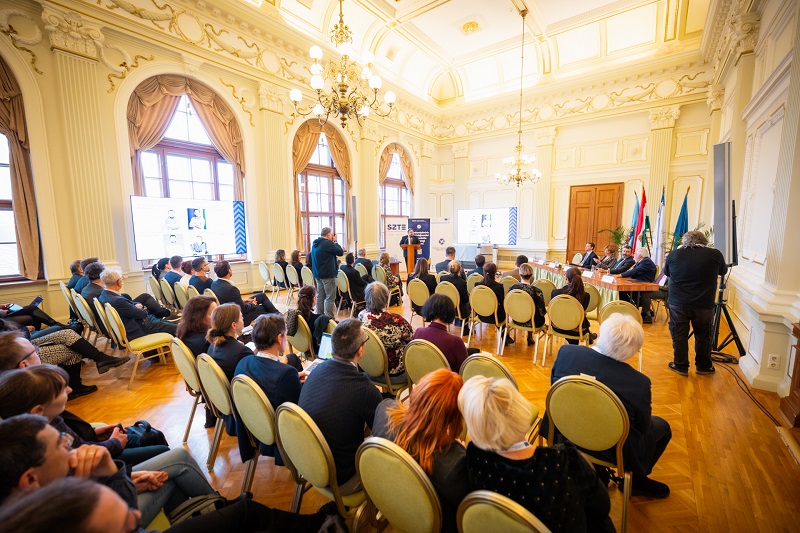
Dr. Gergely Röst delivering a lecture at the National Laboratory for Health Security’s closing event. Photo: Ádám Kovács-Jerney
“Based on these data, we were able to calculate the quantitative difference the two strategies would make in terms of population-level protection,” Dr. Röst explained. “In essence, it required computing a convolution integral. My colleagues completed the calculation within an afternoon, and on that basis, decision-makers extended the interval between doses to twelve weeks.” In England, similar analyses showed that the strategy shift prevented around 10,100 deaths and 58,000 hospitalizations.”
In Hungary, fewer AstraZeneca vaccinations were administered than in the UK, and the strategy was implemented over a shorter time frame,” Dr. Röst noted. “As a result, its impact can be estimated at around 0.5 percent of the British outcome – equivalent to roughly 50 lives saved and 290 hospital admissions avoided.”
“On the other side of the equation,” the scientist added, “the work required a total of about twenty hours on the mathematicians’ part, at a cost of roughly HUF 200,000. Based on World Health Organization methodology and hospital cost data, that single calculation delivered a thirty-thousand-fold return on investment.”
Gergely Röst concluded by noting that such exceptionally high returns are not unusual in applied mathematics. As he recently pointed out at a roundtable discussion at the University of Szeged, UK-based analyses show that, on average, investments in mathematics deliver a six-hundred-fold return on investment for the economy.
Gergely Röst agrees with policymakers responsible for science funding that ensuring the long-term sustainability of the systems and collaborations built within the National Laboratory for Health Security is a strategic priority for Hungary. As the project’s professional lead, he identified the gradual erosion of the expert base as the greatest potential risk. “If funding and attention fade, fewer researchers remain in the field year after year, and young talent gradually moves elsewhere,” he warned. “In the long stretches between pandemics, capacities are quietly dismantled – and when the next global outbreak arrives, everything has to be rebuilt from scratch. Only sustained investment in health security research can break this vicious cycle,” he emphasized.
Original Hungarian article by Sándor Panek
Feature photo: Mathematician Dr. Gergely Röst, Head of the Department of Applied and Numerical Mathematics at the University of Szeged and professional lead of the National Laboratory for Health Security. Photo: Ádám Kovács-Jerney