The roots of artificial intelligence research in Hungary are closely tied to Szeged. In the 1950s, Professor László Kalmár’s laboratory developed one of the country’s earliest ’robots,’ Katica – an achievement that marked the beginning of a long-standing scientific tradition.
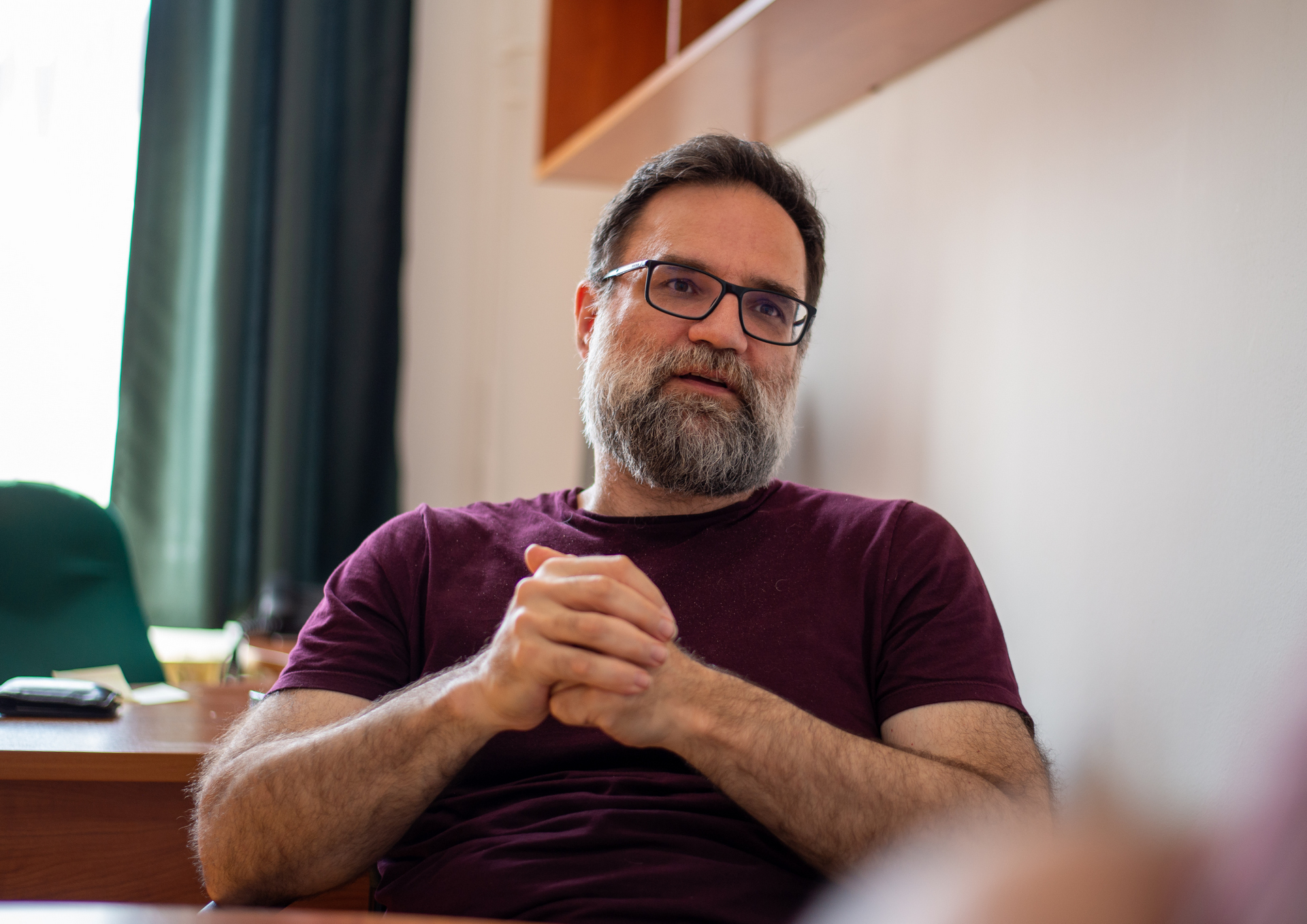
Today, AI-related research at the University of Szeged is primarily concentrated at the Institute of Informatics and at the Artificial Intelligence Competence Center within the Center of Excellence for Interdisciplinary Research, Development, and Innovation. The latter is headed by Professor Márk Jelasity, who shared insights into the University’s current AI research priorities and future directions.
“Building on decades of scientific expertise, the University of Szeged unveiled its new artificial intelligence-optimized supercomputer in the summer of 2025. With a computing capacity of 1.75 petaflops, the system is now available to researchers and users across the University. Developed using technology from Hewlett Packard Enterprise, the supercomputer provides the high-performance computing power required for the University’s rapidly expanding portfolio of AI research projects,” the professor explained.

One of the University’s flagship research initiatives is the RAItHMA project, which explores the operation, reliability, and real-world applications of generative models, including large language models. Alongside this work, the University of Szeged is also leveraging its extensive health data resources. Researchers are developing AI-driven predictive models capable of identifying the risk of certain diseases – such as cancer – up to a decade in advance.
“The University of Szeged’s strategy is clear: artificial intelligence is not treated merely as a subject area or a standalone field of research. Instead, we are building a comprehensive ecosystem in which education, research, and societal impact reinforce one another. Our continuously expanding range of academic programs, internationally competitive infrastructure, and multidisciplinary collaborations together position SZTE as one of Hungary’s leading centers for artificial intelligence,” emphasized Professor Zoltán Kónya, Vice-Rector for Scientific Affairs and Innovation.

A key priority for the University of Szeged is to ensure that its students acquire up-to-date knowledge that can be readily applied in a rapidly evolving technological environment. In line with this goal, an English-language MSc program in Artificial Intelligence will be launched in September 2026. The program will offer a comprehensive overview of the field, covering topics ranging from the foundations of machine learning, generative AI, and data processing to the legal and ethical dimensions of artificial intelligence. The program will feature two specializations: AI Researcher, tailored for students aiming for academic and research careers, and AI Engineer, designed to prepare graduates for practical roles in software development and industrial innovation.
Complementing these developments, the University of Szeged will launch a new Master’s program in Electrical Engineering in 2027, offering three specialization tracks: embedded systems, space technology, and artificial intelligence. Unique in the Southern Great Plain region of Hungary, the program will equip students with advanced expertise spanning hardware, software, and AI technologies. Together, these initiatives further strengthen Szeged’s role as a national hub for artificial intelligence – where cutting-edge research, innovative education, and technological development converge to shape the future.
Source: SZTEinfo
Feature photo: Prof. Dr. Márk Jelasity, Professional Director of the Artificial Intelligence Competence Center at SZTE’s Center of Excellence for Interdisciplinary Research, Development, and Innovation