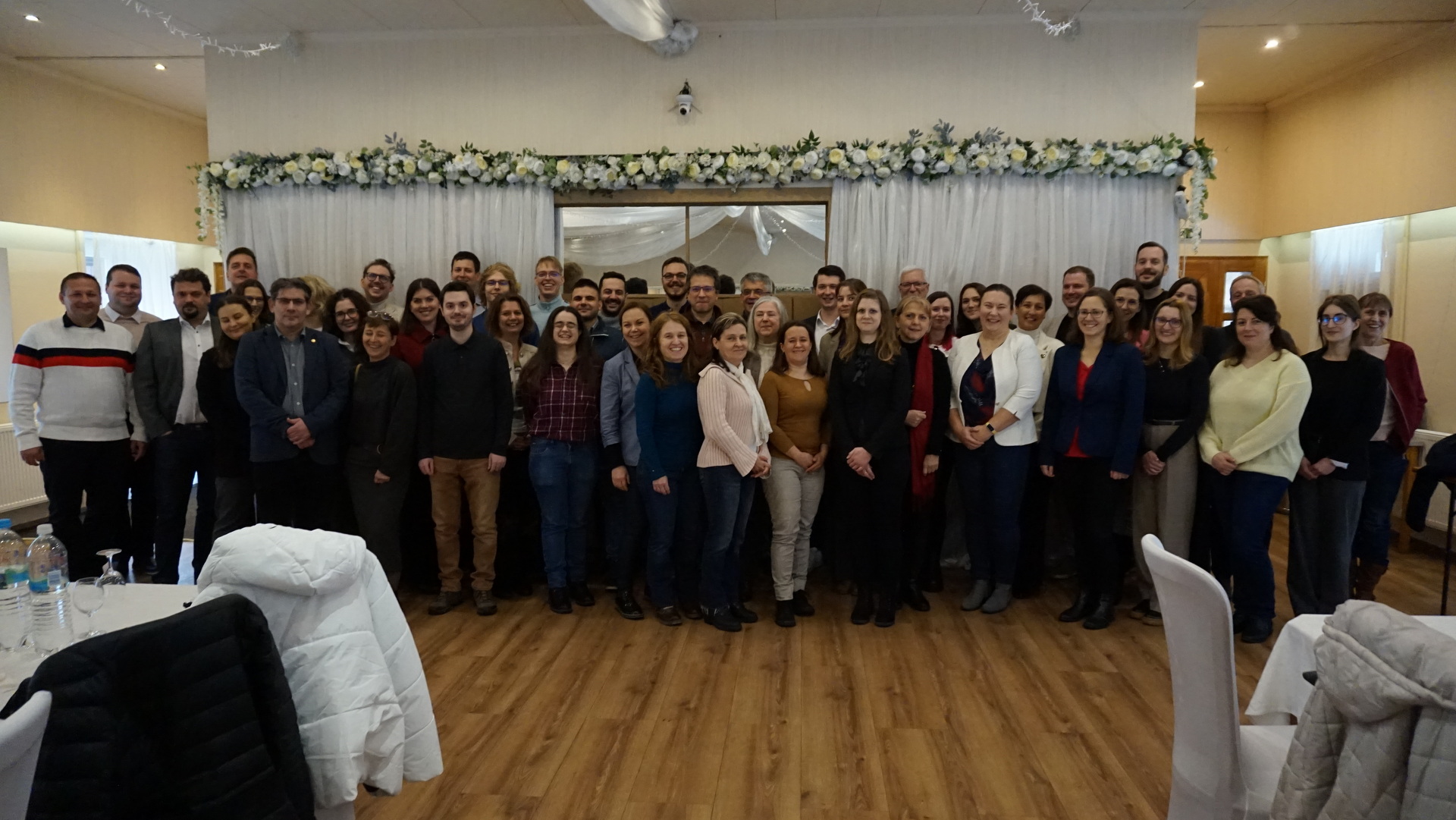
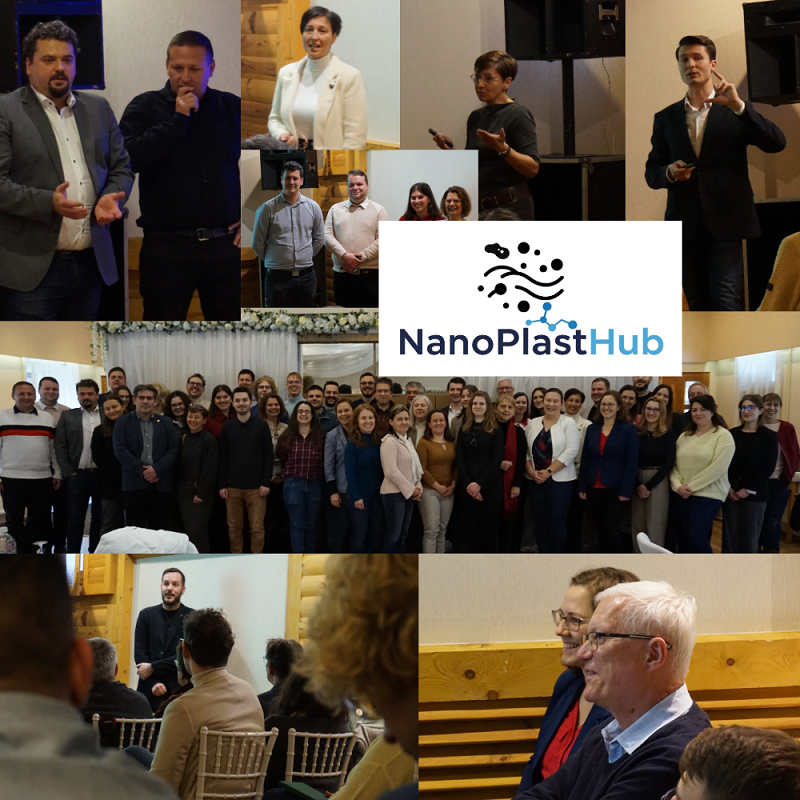
Hosted at the Eko Park Conference Center in Szeged, the NanoPlastHub research group of the University of Szeged brought together researchers from SZTE, the Budapest University of Technology and Economics, and the University of Pannonia for a professional forum aimed at exploring new avenues for collaboration. The program spanned a broad range of scientific topics, from manufacturing technologies and their effects on plant and animal life to the application of artificial intelligence in nanoplastics research. In total, 30 scientific presentations were delivered at the event.
Microscopic particles formed through the degradation of plastics released into the environment have emerged as one of the most pressing challenges of the global ecological crisis. At the NanoPlastHub workshop, researchers emphasized that a comprehensive understanding of microplastics and nanoplastics can only be achieved through multidisciplinary collaboration. This approach integrates precisely engineered model materials, advanced measurement and analytical techniques, and the coordinated investigation of environmental and biological impacts.
From producing to measuring
During the morning sessions of the NanoPlastHub forum, experts from the University of Szeged’s Faculty of Science and Informatics presented state-of-the-art methods for the production of reference materials. The talks examined the fabrication of model particles using both top-down and bottom-up approaches, including nanoplastics generated through laser ablation, and highlighted the growing role of 3D printing in the development of standardized particles. Modern analytical techniques also featured prominently, with presentations focusing on spectroscopic and chromatographic methods used to identify and classify contaminated samples. Additionally, researchers shared promising results on the efficient extraction of plastic contaminants, underscoring the rapid pace of methodological advancement in the field.
Biological impacts
The second half of the workshop focused on the biological and environmental effects of microplastics and nanoplastics. Researchers from the University of Szeged’s Faculty of Science and Informatics, the Albert Szent-Györgyi Medical School, and the Faculty of Pharmacy addressed a series of key research questions spanning plant biology, environmental systems, and human health. These included:
- How do nanoplastics influence plant root development and stress responses?
- What effects do polymer particles have on biogas production and on microalgae?
- What insights can be gained from Drosophila (fruit fly) models and from studies conducted on human cells?
- What risks are associated with inhalation exposure to microplastics and nanoplastics?
- How can the effects of plastic particles on eukaryotic cells be systematically classified?
- What are the primary threats posed by plastic pollution to human health?
- In what concentrations are microplastics and nanoplastics present in water and soil?
- How can artificial intelligence support research into the biological impacts of plastic pollution?
Innovation and future outlook
In closing, participants of the NanoPlastHub workshop agreed that research into nanoplastics is inherently multidisciplinary, requiring close cooperation among chemists, biologists, physicists, engineers, medical professionals, and IT specialists in order to effectively mitigate environmental and health risks.
NanoPlastHub’s work is nationally unique in its strong integration across faculties and institutes at the University of Szeged, enabling a genuinely comprehensive and interdisciplinary approach to this complex global challenge. The research group aims to maintain its leading role in microplastics and nanoplastics research in Hungary, while also delivering results of international relevance and impact.
Looking ahead, NanoPlastHub will further strengthen its scientific visibility by hosting an international conference in Szeged in September 2026, bringing together leading Hungarian and international experts in the field.
To explore the full program of the workshop and learn more about the initiative, visit the
official NanoPlastHub website of the University of Szeged.