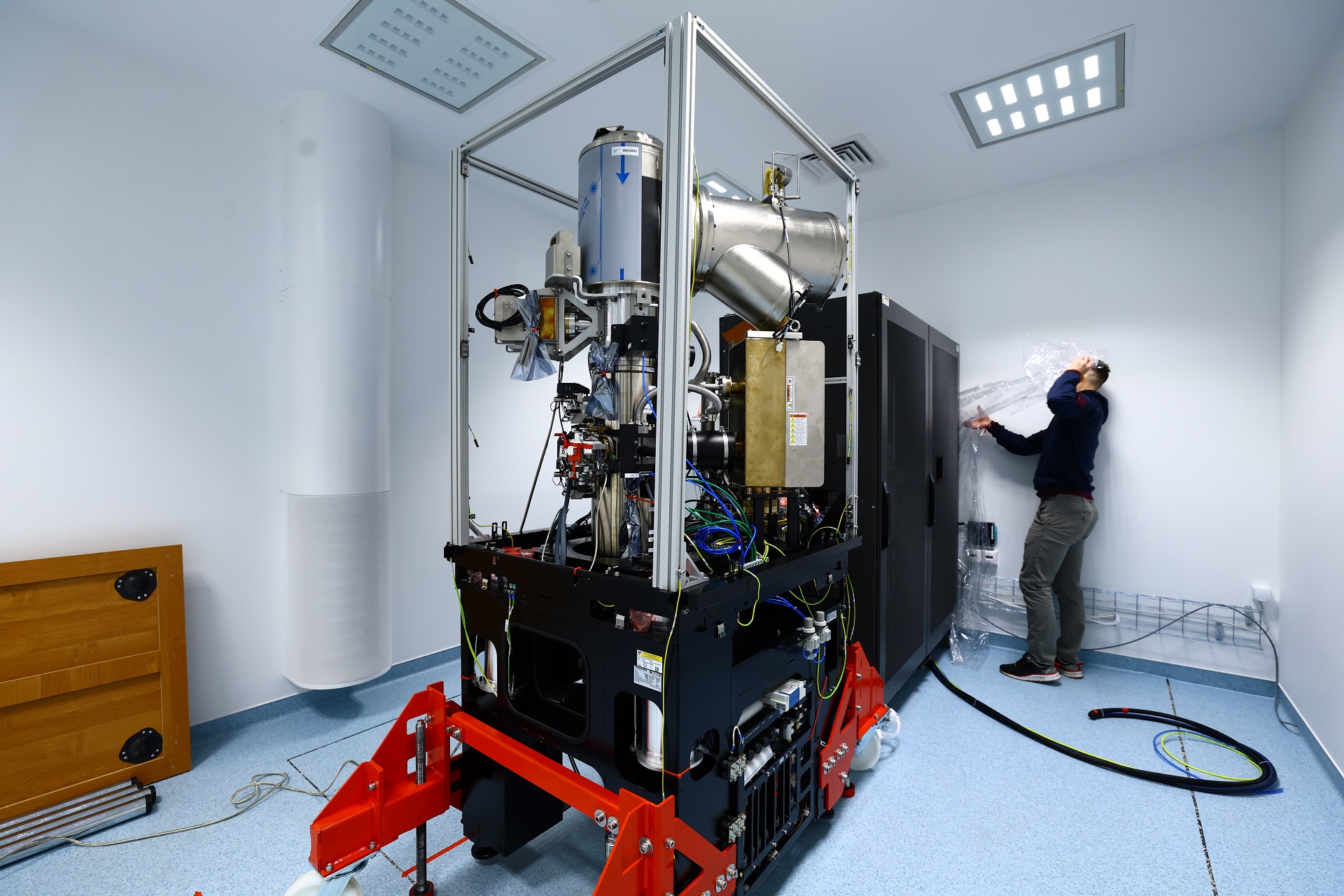
The University of Szeged’s Cryo-Electron Microscopy Research Facility has reached a new milestone with the recent arrival of its final instrument. The Apreo 2 S LoVac, a state-of-the-art scanning electron microscope, can reveal nanometer-scale details on material surfaces, further expanding the capabilities of the new research center.
Launched in spring 2024, the development will establish Hungary’s first cryo-electron microscopy platform at the University of Szeged. The HUF 4.5 billion investment – financed entirely from the University’s own resources – has enabled the acquisition of four advanced instruments. These include the Tundra cryo-transmission electron microscope (cryo-EM) for preliminary sample screening and optimization; the Glacios 2 cryo-EM, capable of determining the three-dimensional structure of viruses and individual proteins; the Talos F200i 200 kV transmission electron microscope, designed for the analysis of nanostructures and battery materials; and the Apreo 2 S LoVac scanning electron microscope, which reveals nanometer-scale surface details of materials.

Cryo-electron microscopy (cryo-EM) is transforming multiple fields of science by enabling researchers to examine complex and dynamic systems that remain beyond the reach of many traditional methods. The insights gained through this technology represent a major breakthrough not only for fundamental research but also for drug discovery and the design of molecular and nanoscale systems. By revealing molecular structures with exceptional precision, cryo-EM allows scientists to develop targeted therapies, advanced vaccines, and innovative biotechnological solutions.
“This development opens a new chapter for the University of Szeged, strengthening its position in both the scientific and educational landscape while creating new opportunities to advance healthcare,” said
Professor Dr. Zoltán Kónya, Vice-Rector for Scientific Affairs and Innovation at the University of Szeged and Scientific Director of SZTE’s Center of Excellence for Interdisciplinary Research, Development, and Innovation (IKIKK). “By making the structures of material systems and biological organisms visible at an unprecedented scale, it will enable far more precise design and targeting of therapeutic solutions – many of which have until now been developed empirically or on the basis of broader approximations. At the same time, it will help uncover entirely new directions for interdisciplinary research. The infrastructure we are establishing here will not only operate as a powerful independent research platform but also has the potential to become part of a complementary national electron microscopy network currently taking shape,” Professor Kónya concluded.
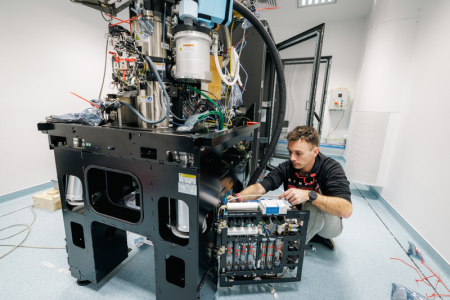
The cryo-EM platform established at the University of Szeged is poised to strengthen Hungary’s research and development competitiveness across a wide range of fields, from structural chemistry, biochemistry, and biology to materials science, nanotechnology, the pharmaceutical industry, and agriculture. Combined with its related services, the SZTE Cryo-Electron Microscopy Research Facility is expected to become a key resource for both academic researchers and industrial partners – driving new discoveries, enabling cutting-edge innovation, and reinforcing Szeged’s role in shaping the future of science and technology.
Source: SZTEinfo