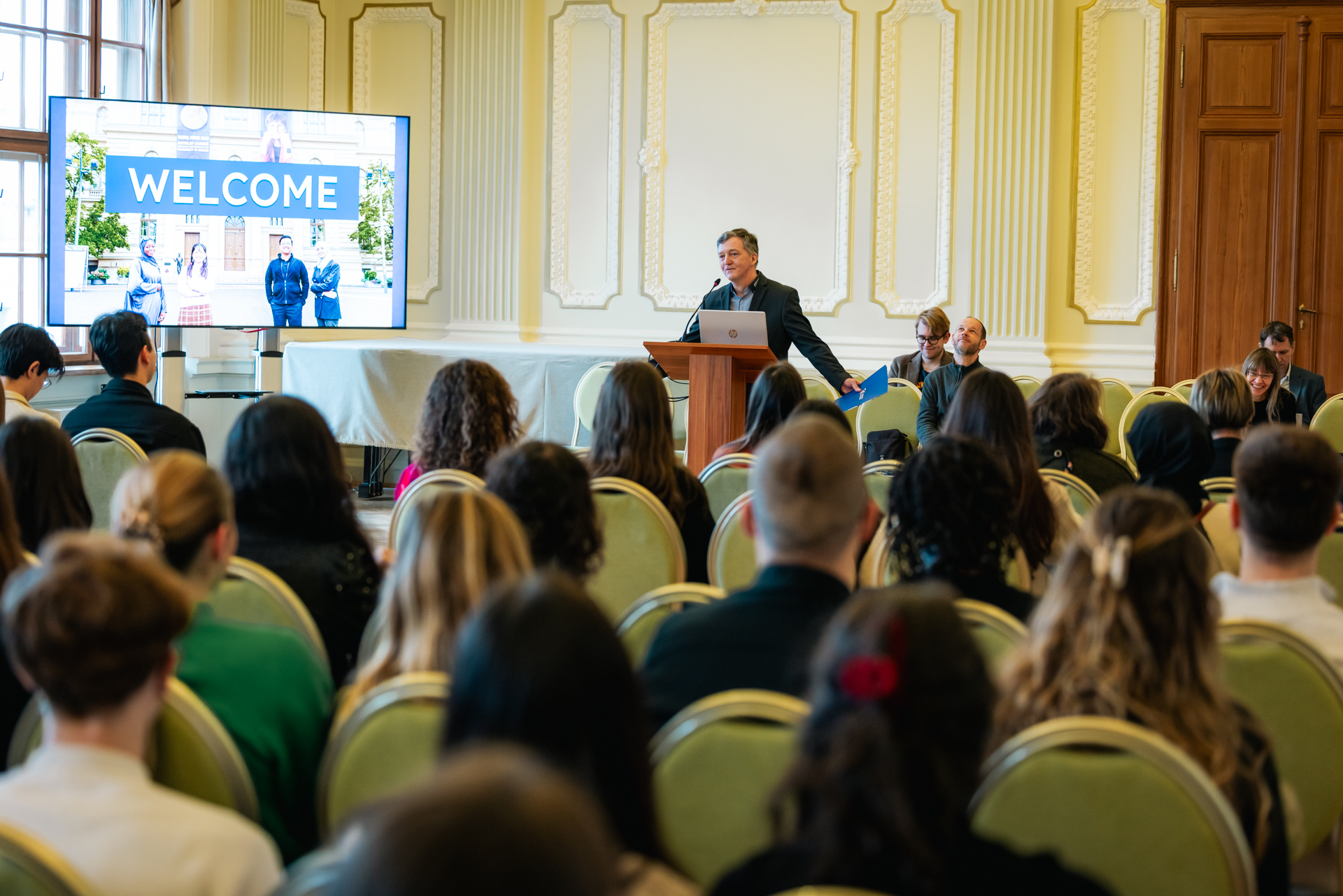
With the start of the new semester, the Directorate for International Affairs and Public Relations hosted an Orientation Day in the ceremonial hall of the University’s main building to welcome Erasmus+ scholarship students embarking on their studies at the University of Szeged. In the spring term of the 2025–2026 academic year, 85 international students are joining SZTE through the Erasmus+ mobility program, further strengthening the University’s vibrant and diverse academic community.
At the orientation event, Program Coordinator Tibor Zilahi welcomed the incoming Erasmus students and outlined what to expect from life at SZTE. Citing the Shanghai Ranking, he noted that the University of Szeged ranks among Hungary’s leading universities. With 12 faculties and roughly 25,000 students – including some 5,000 from abroad – SZTE stands as one of the country’s most internationally engaged institutions, situated in a city that is becoming increasingly global in outlook and character.
SZTE continues to attract strong international interest. In the spring term of the 2025–2026 academic year, 85 students from 13 countries are beginning their studies across nine faculties through the Erasmus+ mobility program. In addition, one student from Austria has joined the Faculty of Humanities and Social Sciences under the CEEPUS scheme.
As noted at the event, the largest number of students this semester have arrived from Turkey (27) and France (24). Portugal is represented by nine students, followed by Italy (six) and Spain (five). Bulgaria, Germany, Lithuania, Poland, Romania, and Sweden have each sent two students, while one student has arrived from the Czech Republic and one from Belgium.
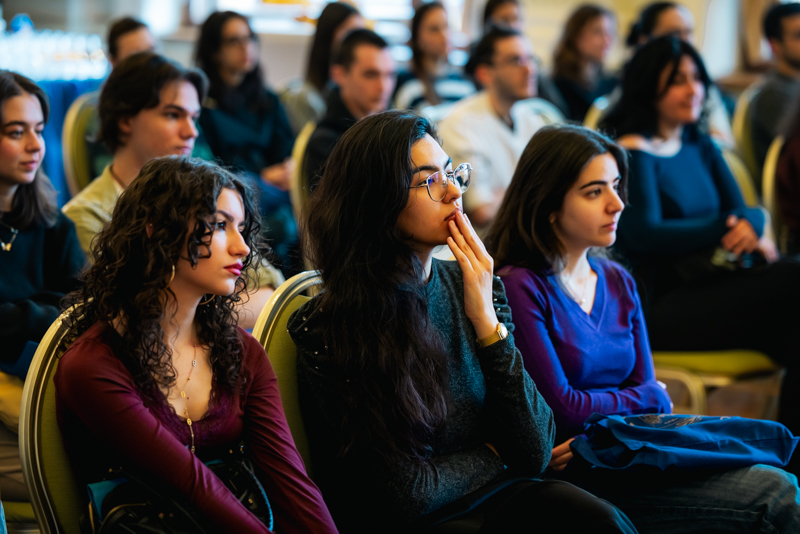
Photo by István Sahin-Tóth
Once again this year, a substantial number of students from Turkey have chosen to spend their Erasmus+ study period at the University of Szeged. Many pointed to the program’s cultural diversity and the mobility opportunities it offers as key reasons behind their decision.
The city’s lasting appeal is reflected not only in new arrivals but also in returning students. One participant, motivated by positive experiences during a previous stay, has returned to the University – this time to pursue doctoral studies.
Most Erasmus+ students have enrolled at the Albert Szent-Györgyi Medical School, the Faculty of Engineering, and the Faculty of Law and Political Sciences, while significant numbers have also chosen the Faculty of Economics and Business Administration, the Faculty of Humanities and Social Sciences, and the Faculty of Pharmacy.
Miriam Noir from France is studying Business Administration and Management and is currently in the final year of her bachelor’s program. As she shared, this marks her first semester abroad as an Erasmus+ scholarship student, and she chose Hungary because it struck her as the most exciting and distinctive option.
Although she arrived only a few days ago, Miriam has already begun discovering the city, visiting several landmarks, including Dóm Square. Based on her first impressions, she describes Szeged as both beautiful and welcoming. She also finds Hungarians friendly and open, adding that even in situations where English is not spoken, people make a genuine effort to communicate with her.
“I decided to apply for the Erasmus+ scholarship because I wanted to challenge myself,” Miriam said. “I’m especially hoping to improve my English – I feel there’s always room to grow. It’s also a great opportunity to meet new people and step outside my comfort zone. I didn’t want to stay in one place; I wanted to try something new.”
Debora Lazzarotto arrived in Szeged from Italy a week ago to spend a semester at the University of Szeged as part of her medical degree program.
“So far, I really like both the city and the University,” she said. “My friends encouraged me to apply and they spoke very highly of SZTE.” A fifth-year medical student, Debora is now looking forward to the start of classes. “Improving my English is also an important goal for me, and that was a strong motivation for studying abroad,” she added.
Fanni Farkas, Erasmus+ inbound student coordinator, offered the new international students practical guidance on administrative matters, helping them navigate the first steps of their mobility period with confidence. She also underscored that the University of Szeged offers 70 degree programs in English and other foreign languages. In addition, she explained that the buildings of the University’s 12 faculties – together with the Teacher Training Center – are integrated into the urban fabric, making Szeged itself feel like one expansive campus.
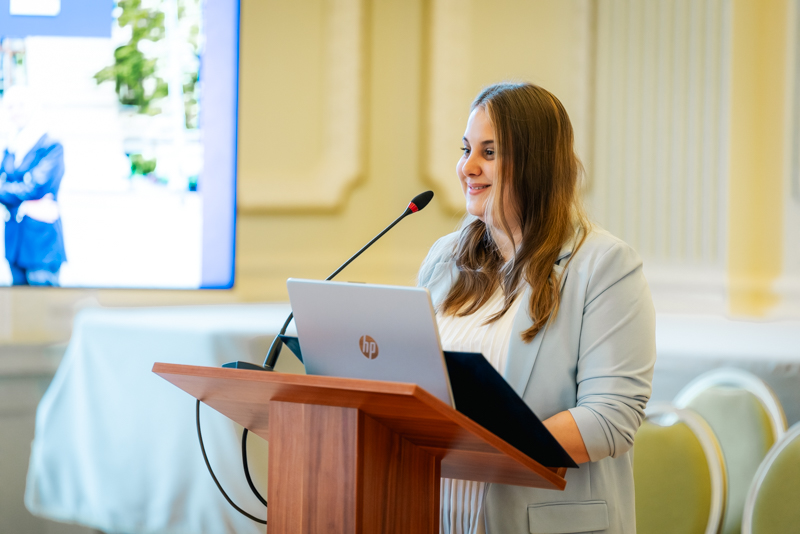
Fanni Farkas, Erasmus+ inbound student coordinator, provided guidance to international students on administrative procedures. Photo by István Sahin-Tóth
At the event, coordinators from the various faculties and departments also welcomed the international students, who had the opportunity to engage with them in person during the coffee break. In these informal conversations, the coordinators introduced their respective faculties and outlined the courses on offer, along with the cultural programs available to students.
After the break, Zita Horváth, President of Erasmus Student Network (ESN) Szeged, shared insights into the organization’s work and highlighted its community events planned for February, including International Bingo – an interactive activity that encourages students to connect through lighthearted challenges – as well as a city tour, billiards, and karaoke, all designed to help newcomers feel at home in Szeged. Having taken part in an Erasmus+ exchange in Germany two years ago, she understands firsthand the mix of excitement and uncertainty students often experience at the beginning of their mobility journey.
At ESN Szeged, a team of dedicated student volunteers supports international students in navigating everyday matters and practical challenges. In addition to providing one-on-one mentoring, the volunteers are available at their office next to the entrance of the University’s main building.
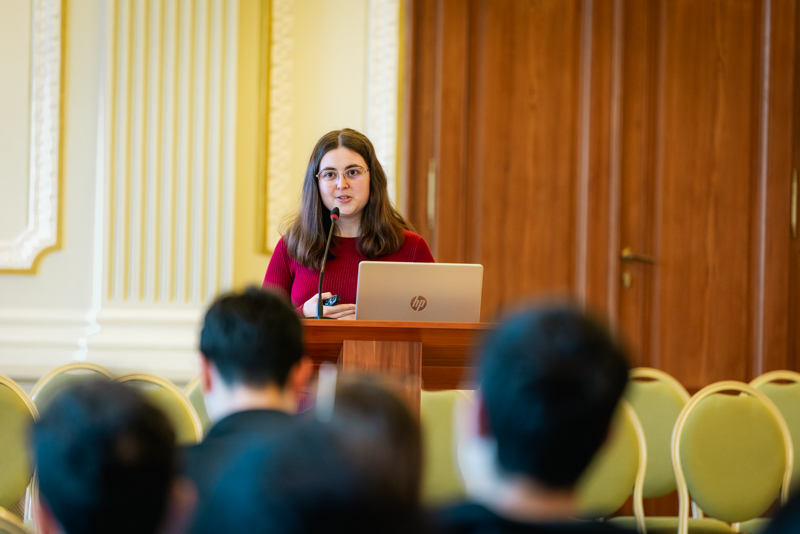
Zita Horváth, head of Erasmus Student Network (ESN) Szeged. Photo by István Sahin-Tóth
Throughout the Orientation Day, Erasmus+ students visited their respective faculty buildings to complete enrollment formalities and take their first steps into academic life at SZTE. They also received detailed information about the Student Services Office at the József Attila Study and Information Center and registered at the Klebelsberg Library and Archives, where they were issued their library cards – a symbolic milestone marking the official start of their semester in Szeged.
Original Hungarian article by Helga Balog, Fruzsina Nánai, Noémi Pap
Photo by István Sahin-Tóth