A research program led by Prof. Dr. Tamás Papp, Head of the Department of Biotechnology and Microbiology at the Institute of Biology of the University of Szeged’s Faculty of Science and Informatics, has secured HUF 400 million in HU-rizon funding to advance new preventive and therapeutic strategies against filamentous fungi responsible for severe respiratory and lung diseases in humans.
The research focuses on two high-risk types of fungi. One is Aspergillus fumigatus, the leading cause of aspergillosis. The other comprises species of the order Mucorales, which cause mucormycosis. Although mucormycosis is less common in Hungary, it can lead to severe and often fatal lung infections or may originate in the nasal cavity and spread rapidly to surrounding tissues.
As Tamás Papp explained, these two types of fungi pose the greatest threat to patients with underlying diseases or weakened immune systems. Treating such infections is particularly challenging, because the patients’ condition already limits which drugs can be used safely. To make matters worse, many species in both groups of fungi are resistant to currently available antifungal agents, leaving physicians with even fewer therapeutic options.
The urgency is heightened by the fact that these infections can progress with alarming speed, particularly in aspergillosis, a condition in which fungal growth develops in the lungs and may invade surrounding tissues. According to one estimate, Aspergillus fumigatus may cause 10 to 14 million infections worldwide each year. Mucormycosis is even more dangerous: depending on the patient’s underlying condition and the treatment available, mortality rates may range from 30 to 90 percent even with therapy. Despite the severity of these infections, no truly effective treatment currently exists – and there is no preventive vaccine at all.
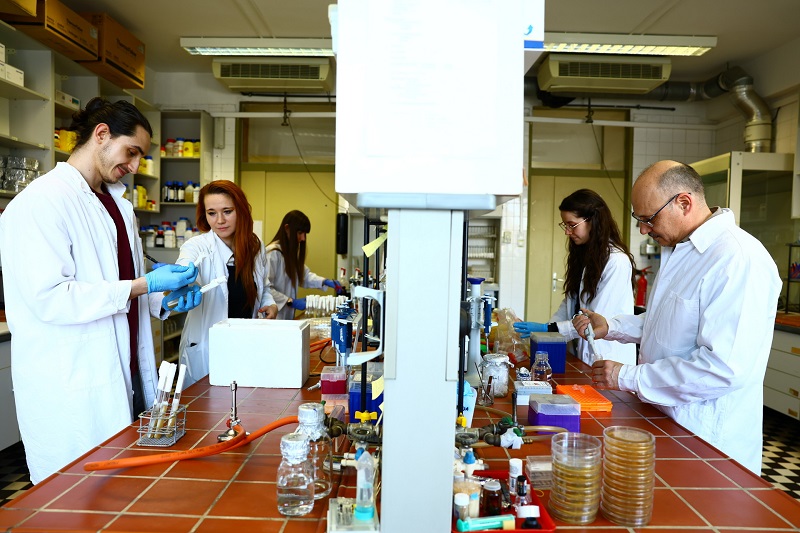
Professor Tamás Papp (right) with colleagues in the laboratory of the HUN-REN–SZTE Pathomechanisms of Fungal Infections Research Group. Photo: Anna Bobkó
The project brings together two long-established research teams from the Department of Biotechnology and Microbiology at the University of Szeged’s Institute of Biology. The HUN-REN–SZTE Pathomechanisms of Fungal Infections Research Group, led by Tamás Papp, focuses on mucormycosis, while the Host–Pathogen Interaction Center, headed by Prof. Dr. Attila Gácser, concentrates primarily on aspergillosis. Both groups have extensive experience in the study of pathogenic fungi, and their earlier work has already led to the identification of surface proteins on fungal filaments that could serve as key targets for the development of vaccines and new therapies.
“For the preventive vaccine, we plan to use molecules capable of activating the immune system,” Tamás Papp explained. “Using mRNA technology, our goal is to deliver these molecules into the body and trigger their expression, effectively teaching the immune system how to defend the body against infection. Such a vaccine could be especially effective for patients who are at risk but whose immune systems have not yet been compromised. At the same time, the therapeutic side of the project is based on a different concept. We have identified target molecules on the surface of fungal filaments that could be bound by molecules delivered via mRNA. One possible strategy is to make these targets more visible to the immune system, enabling it to recognize and eliminate the infection more effectively. Another, even more direct approach, would involve molecules delivered by mRNA binding to the fungal cells themselves, destroying them or blocking their growth. What makes the project particularly innovative is its precision: rather than developing a vaccine or therapy that acts throughout the entire body, we aim to create an active agent that works exactly where the infection begins – in the airways and lungs, where fungal spores first enter and take hold. In this way, such a targeted solution could even enhance the effectiveness of the antifungal drugs currently in use,” said the scientific lead of the project.
At the heart of the research is mRNA technology – the groundbreaking technology closely associated with the work of SZTE Professor Katalin Karikó – which offers a powerful way to deliver active molecules precisely to the site of infection. These mRNA-based agents are enclosed in nanoscale lipid vesicles, tiny carriers designed to guide the therapeutic payload to the appropriate part of the body. Within the international collaboration, Norbert Pardi’s research group at the University of Pennsylvania is producing the experimental vaccine candidates and developing their lipid packaging, while researchers at the University of Szeged’s Institute of Biology will test the resulting formulations.
The project’s international reach extends to Germany as well. Completing the consortium is Ilse Jacobsen, professor at the Hans Knöll Institute in Jena, part of the Leibniz Association, whose research focuses on pathogenic microbes. A leading expert in immunological studies using animal models, Jacobsen and her team will investigate how the immune system responds to the mRNA formulations – an essential step toward bringing the new approach closer to practical application.
Tamás Papp explained that the project’s initial findings have focused on one of the most important features shared by both Aspergillus and mucormycosis-causing fungi: the proteins located on the surface of the fungal filaments that spread infection. Because these structures are the first to come into contact with the human body, they are also the ones the immune system is most likely to detect initially. In addition, fungal filaments actively release proteins into their environment, further shaping how the host responds to the infection.
“We have already mapped these proteins and identified several that can activate the immune system,” Tamás Papp said. “These are highly promising candidates for vaccine development. The key question now is how effectively they can trigger a protective immune response. At the same time, our preliminary studies have explored the functions of the many proteins produced on fungal filaments and how they contribute to disease. This knowledge also opens the way for therapeutic development, particularly in designing strategies that can halt the growth of fungal cells.”
“Fungi are especially difficult to target because their cells are much closer to animal cells than bacteria are,” the microbiologist explained. “In many ways they resemble human cells, which makes it challenging to identify weak points that can be blocked without damaging the body’s own tissues. Most antifungal drugs currently available work by targeting differences in the cell wall or cell membrane. Building on this same principle, when searching for targets, we have identified unique proteins on the fungal surface, while the scientific literature describes additional proteins found only in fungal cells.”
As the research progresses, the team is exploring more than one possible route forward. Tamás Papp also pointed out that the researchers plan to examine whether antifungal drug therapy and vaccination could be combined to produce a stronger effect. They will also investigate passive immunization strategies for patients whose immune systems are already compromised or whose condition makes vaccination difficult.
Dr. Papp sees the development of both a vaccine and a targeted therapy as a realistic and well-founded goal. Even under the most conservative scenario, however, the project is expected to deliver a major advance by significantly improving the effectiveness of the antifungal drugs currently available.
Original Hungarian article by Sándor Panek
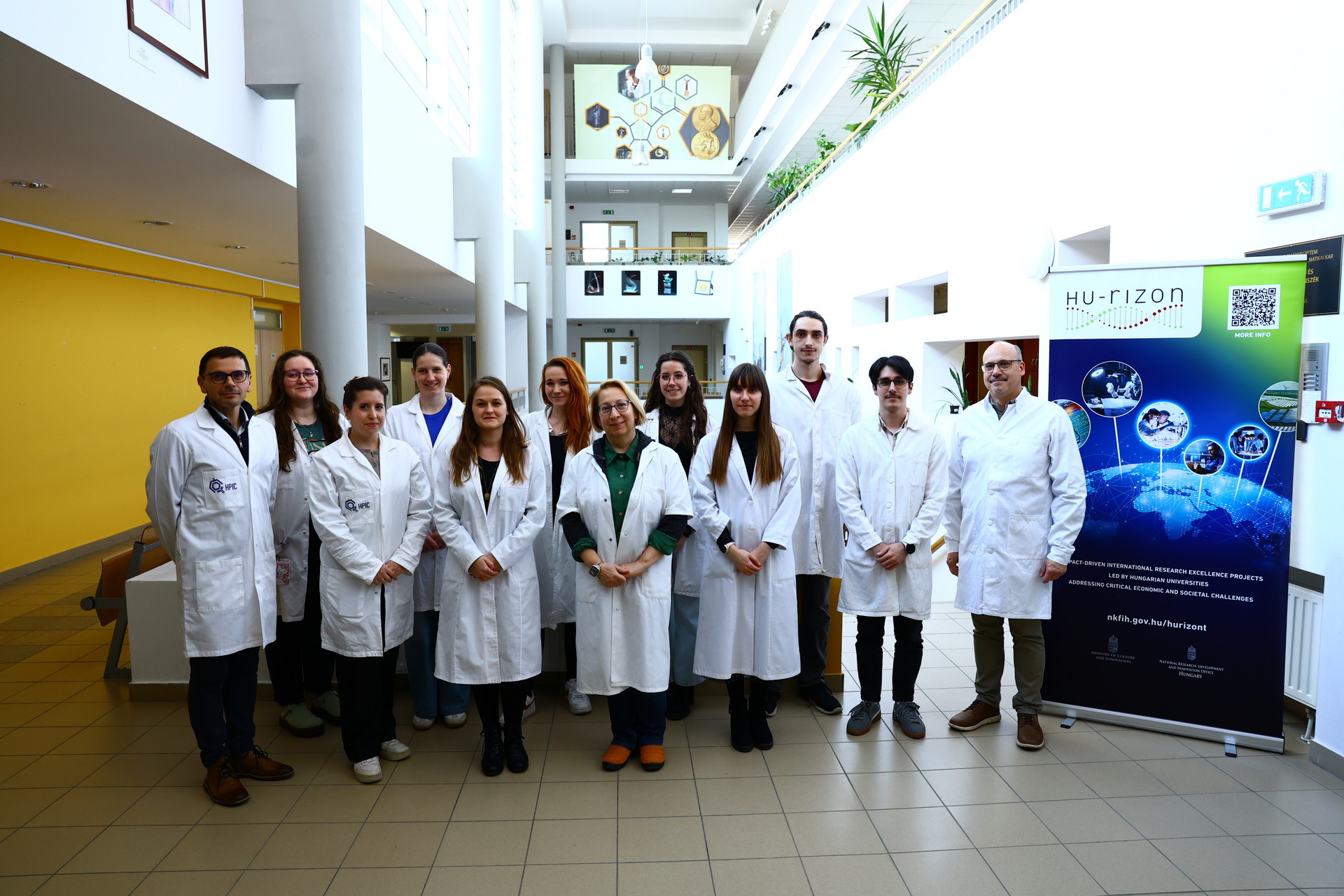
Featured in the cover photo are the two HU-rizon-funded research teams of the Department of Biotechnology and Microbiology at the Institute of Biology, University of Szeged. On the right: Professor Tamás Papp, head of the HUN-REN–SZTE Pathomechanisms of Fungal Infections Research Group; on the left: Professor Attila Gácser, head of the Host–Pathogen Interaction Center. Photos: Anna Bobkó.