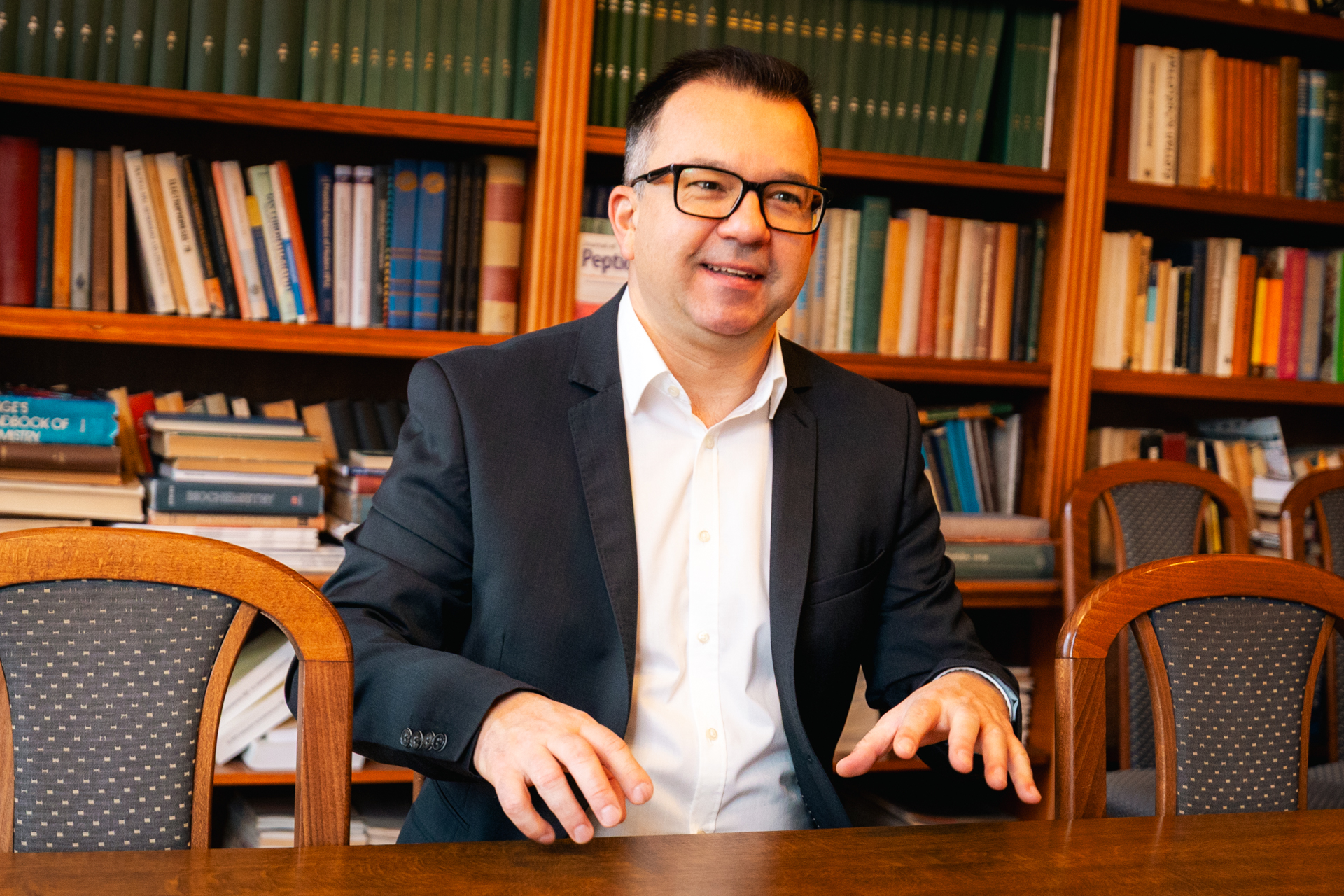
Research led by Professor Tamás Martinek, Head of the Institute of Medical Chemistry at the University of Szeged, may bring a breakthrough in the treatment of diseases long considered incurable. In recognition of its outstanding scientific and innovation potential, the project received the SZTE Innovation Award in the Utilization of Intellectual Property category at the University’s 13th Innovation Day, held in November 2025.
The invention developed by Professor Tamás Martinek and his research group, titled “Delivery of Therapeutic Macromolecules into Human Cells via the Caveolar Pathway Using a High‑Affinity, GM1 Ganglioside Receptor‑Specific Oligopeptide Tagging Sequence,” offers a targeted delivery solution that enables biologically derived therapeutics to act effectively inside human cells.
As the professor recalls, the project was driven by the ambition not only to publish high‑impact scientific papers, but also to achieve tangible, practically applicable results. After all, the most rewarding moment in a researcher’s career is when these two goals converge – and in this case, that is exactly what happened. The concept took shape at a time when funding opportunities were increasingly favoring applied research. Drawing on his extensive experience in drug discovery as both a researcher and an instructor, Prof. Tamás Martinek knew precisely which direction was worth pursuing.
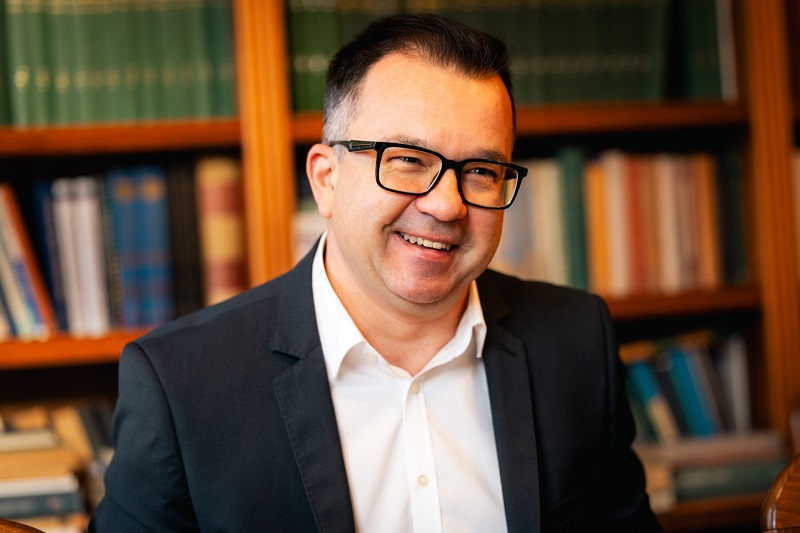
Prof. Tamás Martinek. Photo by Ádám Kovács-Jerney
A rare stroke of luck
“We began to consider whether it would be possible to develop a technology that would allow biologics – biologically derived therapeutic agents, which currently act only in the extracellular space or on the cell surface – to exert their effects inside the cell as well. The key question was whether suitable targets would also be found within the cell. At present, the cell membrane poses a major barrier, preventing these large molecules from entering. However, if they could be delivered in a targeted manner and at clinically relevant concentrations, this could lead to the development of an extremely useful technology,” explains Tamás Martinek.
The researcher adds that the idea was far from risk-free, with a substantial likelihood that it would fail to deliver the desired results. In fact, this approach had been explored for decades without success – until now.
“We set out in one direction, then another. Ultimately, it was our third attempt that brought success. And that’s where the element of luck came into play. We were incredibly fortunate that one of our series of compounds stored in the laboratory refrigerator happened to be in line with our objectives, purely by chance. As for what was required, it came down to a strong internal drive toward applied research, along with a committed partner who included us in their grant proposal and gave us the freedom to think creatively. We also relied on our excellent collaborators and a strong research group. And beyond all this, it took extraordinary fortune – the kind that may come only once or twice in a researcher’s lifetime,” says Professor Martinek, who is also a researcher at SZTE’s Center of Excellence for Interdisciplinary Research, Development, and Innovation.
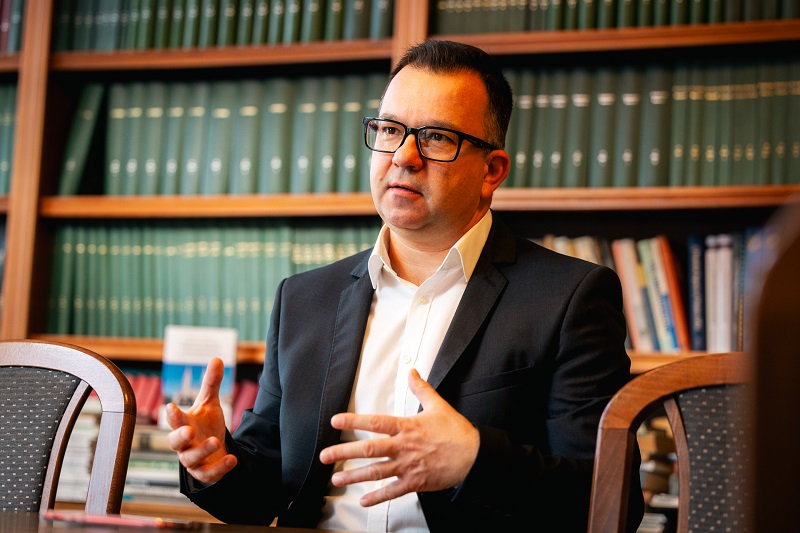
Prof. Tamás Martinek. Photo by Ádám Kovács-Jerney
Opening new paths in the treatment of incurable diseases
What, then, lies at the core of the novelty behind the research team’s work? As Tamás Martinek explains, physicians primarily rely on two broad categories of therapeutic agents. One consists of small-molecule drugs – often described as conventional medicines – many of which were developed in the last century. While these compounds can readily access both extracellular and intracellular spaces, they are capable of targeting only a relatively limited range of pharmacological targets.
At the same time, a substantial and clinically important class of therapeutic targets remains inaccessible to small molecules. Because of their structural properties, these targets cannot be effectively modulated by small compounds; instead, they require interaction with a much larger molecular surface. As a result, drug development in this area depends on protein-based agents. Most commonly, this has meant the use of antibodies – molecules naturally produced by the human immune system to recognize and neutralize pathogens. In therapeutic development, researchers design antibodies capable of binding precisely to specific targets and inducing the desired biological effect. This strategy began to gain traction in the 1990s and reached a major turning point in the early 2000s. As the professor notes, 15 of the world’s 20 highest-grossing drugs today are protein-based therapies, collectively known as biologics or biologically derived medicines.
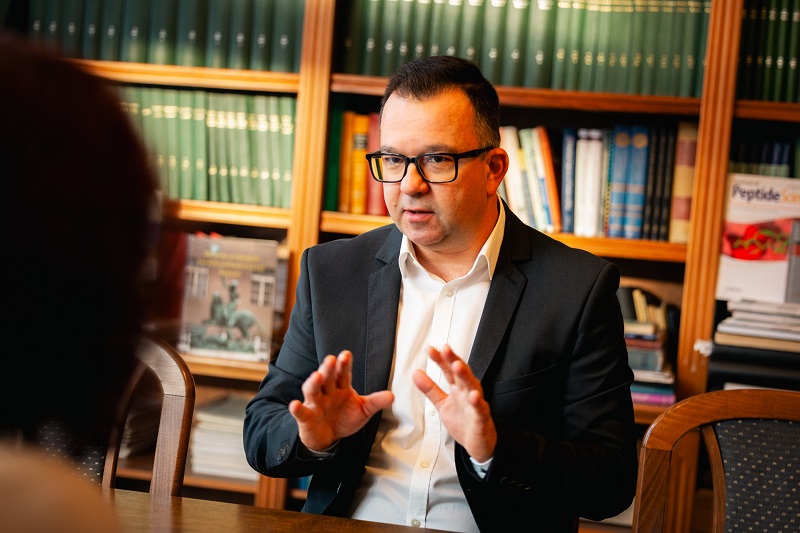
Prof. Tamás Martinek. Photo by Ádám Kovács-Jerney
The professor adds that the technology developed by his team makes it possible to design biologics for intracellular targets – in other words, to enable protein-based drugs to actually enter human cells. The core principle of the method is that the active compound mimics the cell-entry mechanisms used by certain viruses, allowing it to access cells via the same internalization pathway.
“This is a technology platform. Our current objective is to identify partners who are open to exploring this new direction. From a business development perspective, this is particularly challenging, as pharmaceutical companies are not yet investing in this field because they do not currently see a viable solution for delivering active compounds into cells. At the same time, we do not yet have a proprietary compound with which to test the method. Our present focus, therefore, is on experiments that validate the approach and demonstrate that it operates as a genuine technology capable of producing measurable biological effects,” says Tamás Martinek.
From patents to investment
Beyond the laboratory, scientific excellence alone is no longer sufficient for success in the marketplace. Researchers must also cultivate entrepreneurial capabilities – including flexibility, creativity, and resilience in the face of failure. Without at least a basic understanding of business thinking and financial fundamentals, meaningful dialogue between scientific innovators and commercial stakeholders is unlikely to take hold. In today’s environment, understanding science is necessary but not enough: researchers must also grasp how startups and venture capital operate, as investors primarily evaluate the viability of a business model, its revenue potential, and, ultimately, the likelihood of generating a return on investment.
As Tamás Martinek explains, a spin-off company has been established jointly with the University of Szeged. The startup has assumed ownership of the patent and is tasked with advancing the technology into the next phase of development. The team is currently awaiting a decision from the United States Patent and Trademark Office, which represents the final step in securing full intellectual property protection. As the professor notes, the patent grant is expected by spring 2026.
At the same time, Professor Martinek emphasizes that researchers operate under a fundamentally different set of motivations. When a scientist makes a rare “gold nugget” discovery, the driving force is not only publication or academic recognition, but the desire to see that knowledge translated into real-world use – extending beyond academia into business and industry. Achieving this kind of alignment, he adds, is possible only through sustained dialogue, continuous learning, and a shared sense of humility between investors and researchers alike.
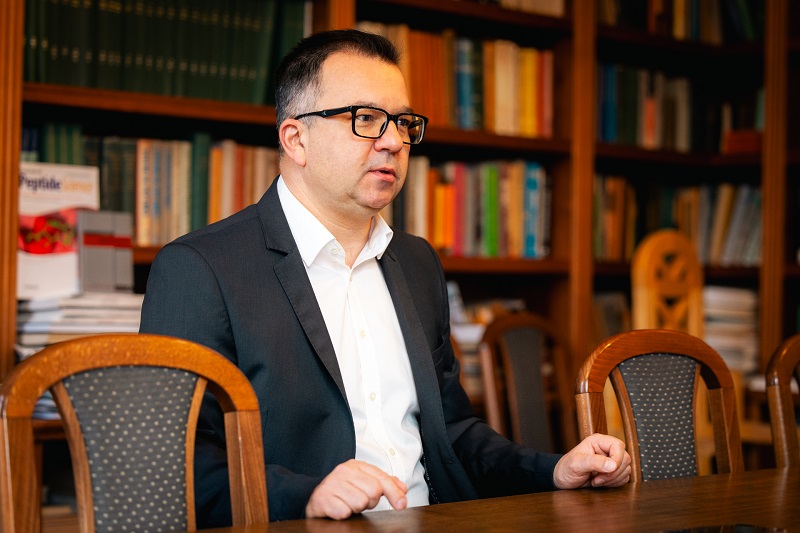
Prof. Tamás Martinek. Photo by Ádám Kovács-Jerney
“It is important to recognize that startups tend to fail according to an exponential decay pattern: over time, the number of surviving companies is effectively halved at regular intervals. From a very large initial pool, only a small fraction ultimately succeeds in translating a product into real-world use and bringing it to market. Why is this the case? Well, each company must reach clearly defined milestones within a given timeframe, yet the probability of success is never 100 percent – it is always significantly lower. It is therefore entirely natural for a venture to fail, for instance by not progressing beyond a fourth milestone. This is precisely why companies that manage to meet all predefined milestones become so valuable: by that stage, no major barriers remain ahead. They have reached a highly improbable state – in other words, they have survived. We, too, are confident in a successful outcome,” summarizes Tamás Martinek.
Another ‘gold nugget’
Tamás Martinek adds that demonstrating the effectiveness of the technology is expected to take approximately one to four years. During this phase, the team must reach a series of key milestones and validate the functional viability of their intellectual property. If these efforts are successful, the next step would involve clinical trials and testing in humans, a process that could require an additional eight to ten years.
“Our role, as one element within this broader process, extends only until our technology is successfully integrated into the system. Once that happens, we can already regard it as a success. That said, unexpected developments can occur even at the most unlikely moments. It is possible that our in-house compound development – originally intended solely to demonstrate feasibility – may open up new opportunities. We may be fortunate once again and uncover another rare ‘gold nugget’,” says Professor Martinek.
Original Hungarian article by Tímea Fülöp
Feature photo: Prof. Tamás Martinek. Photo by Ádám Kovács-Jerney