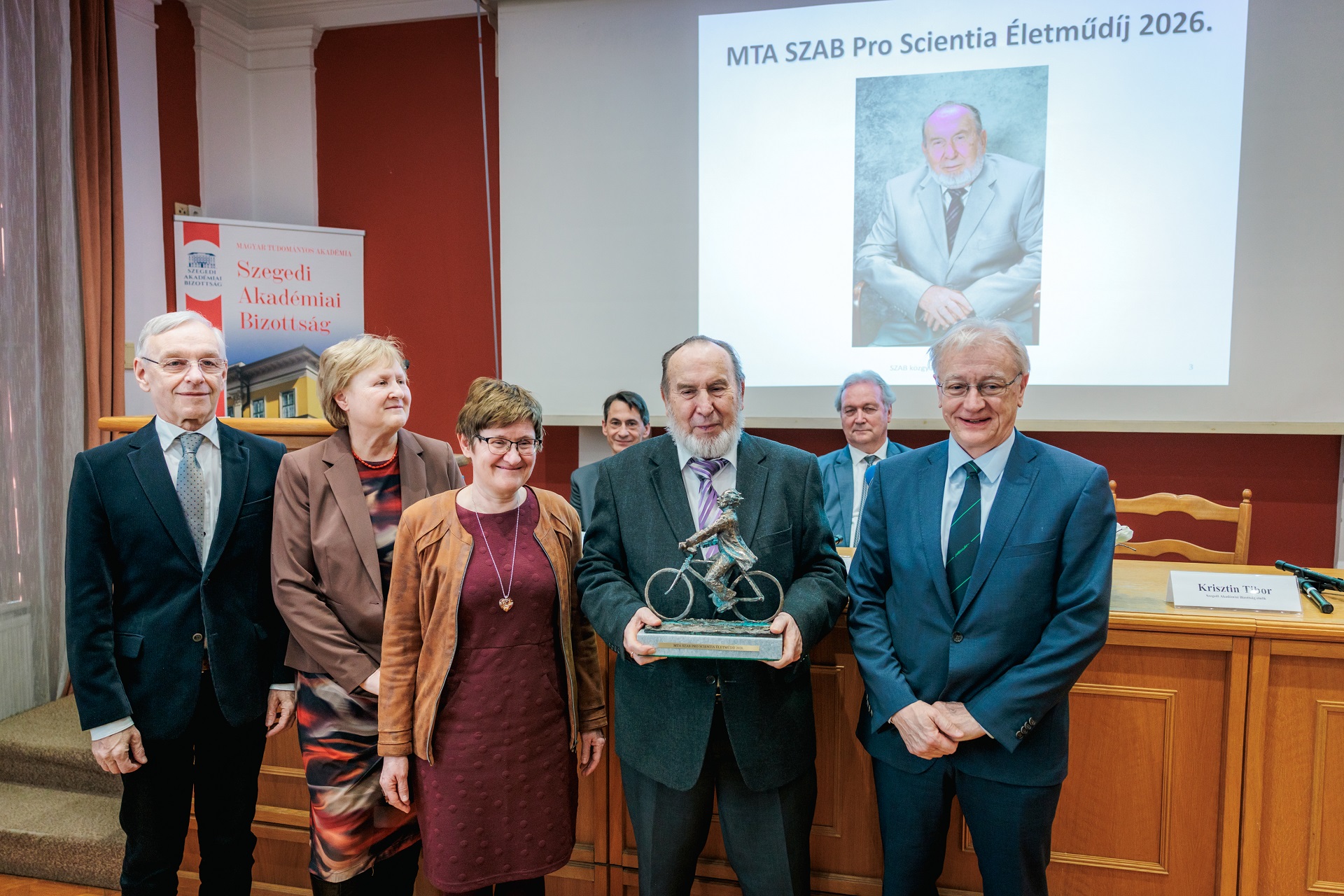
Since its establishment in 1961, the Szeged Regional Committee of the Hungarian Academy of Sciences (MTA SZAB) has played a defining role in shaping the scientific life of the Southern Great Plain region of Hungary. As Tibor Krisztin, president of the Regional Committee, noted in his opening remarks, the committee works in close partnership with the region’s universities, research institutes, and public stakeholders. Through its programs and grant initiatives, it strives to enhance the community-building power of science and its lasting contribution to society as a whole.
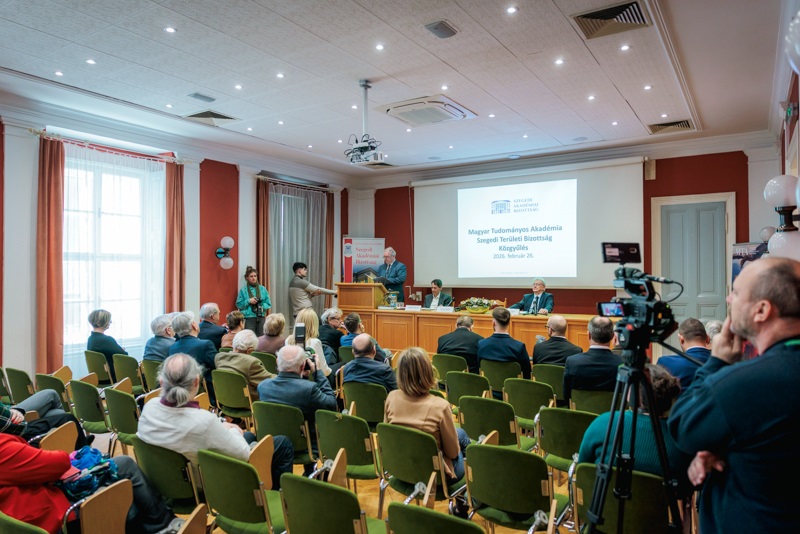
Tamás Freund, President of the Hungarian Academy of Sciences – whose term concludes in May 2026 – attended the general assembly of the Szeged Regional Committee (MTA SZAB) on February 26, 2026. Photo: István Sahin-Tóth
The symbiosis of trees and the Hungarian Academy of Sciences
Opening his remarks with an image borrowed from nature, Tamás Freund, President of the Hungarian Academy of Sciences, compared the scientific community to a forest.
“In forests, trees are interconnected through their root systems and support one another,” the President of the Academy explained. “Why are trees such social organisms? Well, because together they function more effectively. A single tree cannot create a forest or shape a local climate on its own. Yet collectively, trees form an ecosystem that protects and sustains its members.”
Tamás Freund used this metaphor to reflect on the role of the Hungarian Academy of Sciences and the community it fosters. Notably, the Academy celebrated its bicentennial last year, while this year marks another milestone: the 200th anniversary of the Academy’s library. Both institutions, he noted, remain vibrant hubs of activity and central to the Hungarian scientific community.
“The Academy is like a forest of scientific communities,” the President of the Academy continued. Specifically, the Academy’s public body has nearly 19,000 members, who all share a responsibility for advancing Hungarian science. Their work depends on cooperation and mutual support. Within this ‘forest of Hungarian science,’ regional scientific communities form their own local ecosystems – interconnected networks that together sustain the broader ecosystem of Hungarian research.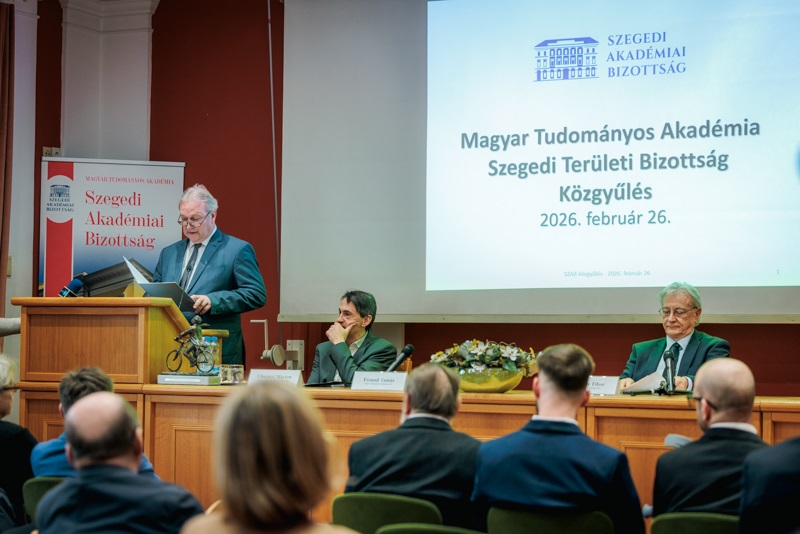
“Founded through public support, the Academy exists to serve the national community. Although its headquarters rises on the banks of the Danube in Budapest, the Hungarian Academy of Sciences is not a capital-centered institution. Within the country’s scientific ecosystem, every region is a unique, equal, and indispensable part – something clearly demonstrated by the events of the bicentennial celebrations of the Academy,” said Tamás Freund, President of the Hungarian Academy of Sciences. Photo: István Sahin-Tóth
Tamás Freund highlighted several of the lasting contributions made by the Academy’s regional organizations over the past 65 years. Among them, he pointed to the work of interdisciplinary committees, grant and award programs designed to support young researchers, and the tradition of providing scientific advice – an activity pioneered by the regional committees long before it became an established function of the Academy.
Reflecting on the achievements of the Szeged Regional Committee, the President of the Hungarian Academy of Sciences emphasized its role in promoting research on the region’s hydrogeological conditions, as well as its strong partnerships with research communities in neighboring countries and its close cooperation with local governments and businesses.
In his address, Tamás Freund also highlighted the Science-Friendly Cities initiative. Launched by the Hungarian Academy of Sciences in 2025, the program aims to help participating cities and towns make better use of scientific knowledge, expertise, and professional networks. The program encourages communities to apply scientific insights to improve local life, support families, strengthen traditions, and foster small, science-minded communities that contribute to a more informed society and nation. As the initiative will be implemented through the Academy’s regional committees, the President of the Hungarian Academy of Sciences called on the Szeged Regional Committee to play an active role in advancing the program.
Looking ahead, Tamás Freund expressed hope that once future directions and priorities are defined, the strong symbiosis among Hungary’s scientific communities will continue to support the work of the Academy’s new leadership.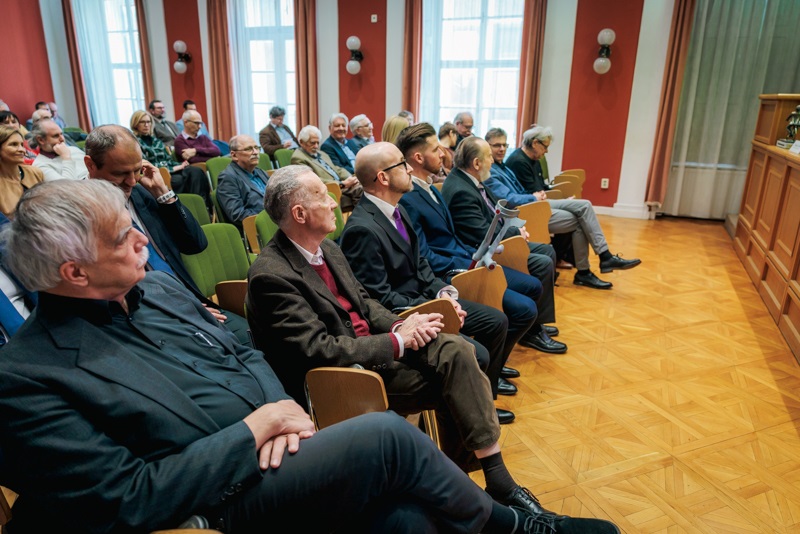
Six decades in science
At the assembly, Tibor Krisztin, President of the Szeged Regional Committee of the Hungarian Academy of Sciences, announced that the 2026 Pro Scientia Lifetime Achievement Award of the Hungarian Academy of Sciences’ Szeged Regional Committee had been conferred upon Dénes Dudits, a distinguished Hungarian plant geneticist and biotechnology researcher and a full member of the Hungarian Academy of Sciences. Following the announcement, he delivered a laudation honoring the awardee and his outstanding scientific career.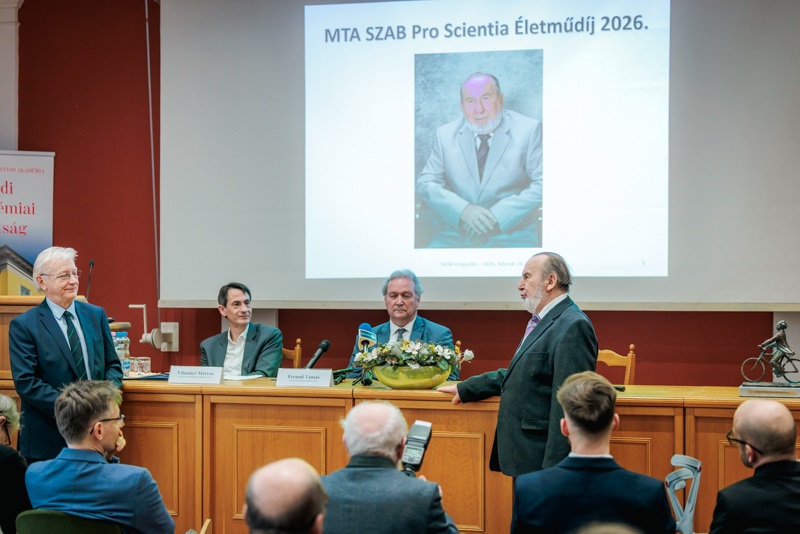
A ceremonial moment at the general assembly of the Szeged Regional Committee of the Hungarian Academy of Sciences (MTA SZAB): Tibor Krisztin, President of SZAB (left); Márton Vilmányi, Scientific Secretary of SZAB (center left); Tamás Freund, President of the Hungarian Academy of Sciences (center right); and Dénes Dudits, member of the Academy (right). Photo: István Sahin-Tóth
Dénes Dudits has lived and worked in Szeged since 1970, where he built a distinguished scientific career at the Biological Research Center. Born in Mosonmagyaróvár in 1943, he graduated from the Gödöllő University of Agricultural Sciences in 1966. At the Institute of Genetics of the Biological Research Center in Szeged (SZBK), he established the wheat tissue culture and cell genetics laboratory, laying the foundations for internationally recognized research in plant biotechnology. In 1982–1983, he further expanded his scientific network as a visiting professor at Harvard University and Massachusetts General Hospital.
At SZBK, Dénes Dudits also founded the Plant Cell Division and Differentiation Research Group. From 1989 to 1999, he served as Director of the Institute of Plant Biology, and between 1997 and 2009 he led the entire Biological Research Center as Director General. Under his leadership, SZBK developed into one of the region’s most advanced centers for molecular biology and gained recognition as a European Union Center of Excellence.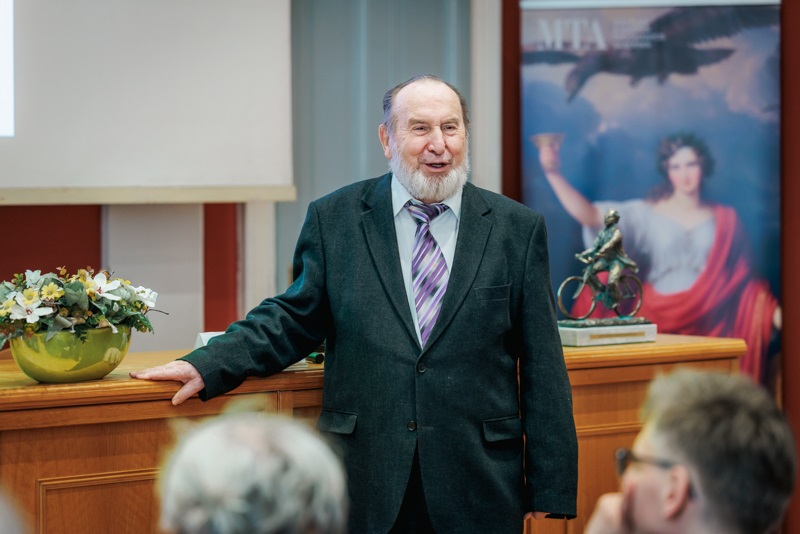
In recognition of his scientific achievements, Dénes Dudits was elected a corresponding member of the Hungarian Academy of Sciences in 1990 and a full member in 1995. Between 2008 and 2014, he served as Vice President of the Academy overseeing the life sciences, also supporting the work of its regional committees. Photo: István Sahin-Tóth
Dénes Dudits has made a defining contribution to the development of modern plant cell biology in Hungary. His research has addressed key areas including somatic hybridization, stress biology and climate adaptation, as well as gene technology and its ethical implications. Over the course of his distinguished career, he has authored 272 scientific publications, cited more than 11,000 times.
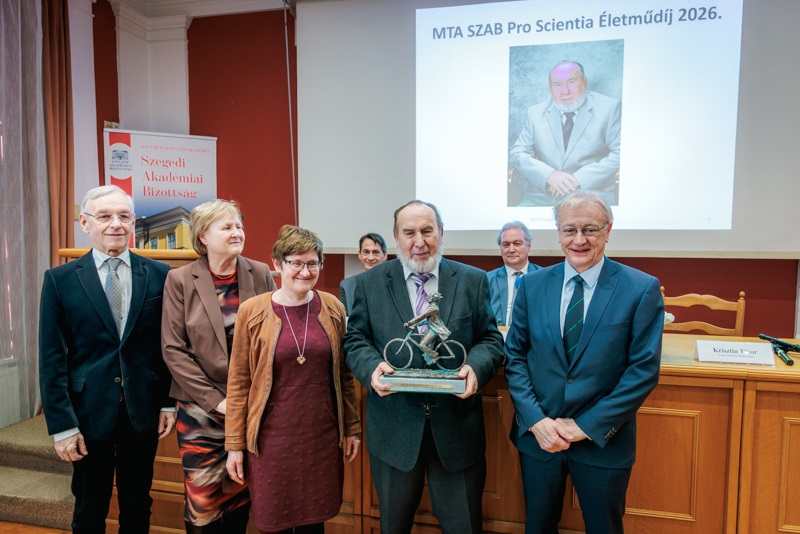

Ferenc Nagy, member of the Hungarian Academy of Sciences and current Director General of the HUN-REN Biological Research Center in Szeged, congratulated Dénes Dudits, former Director General of the Research Center and recipient of the MTA SZAB Pro Scientia Lifetime Achievement Award. Photo: István Sahin-Tóth
2025 in review, plans for the jubilee year
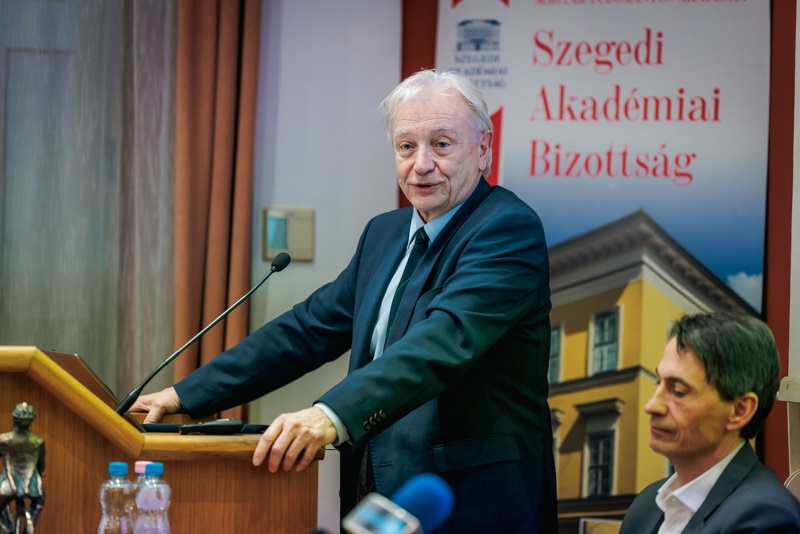
Tibor Krisztin reviewed the most important events and achievements of SZAB since the February 2025 general assembly. Beside him is Márton Vilmányi, Scientific Secretary of SZAB, who compiled the report based on summaries submitted by the committee’s working groups. Photo: István Sahin-Tóth
Bringing science closer to the public remained a central mission for the Szeged Regional Committee of the Hungarian Academy of Sciences throughout 2025. On the Day of the City of Szeged, the committee joined the popular ‘Street of Civilians’ event, inviting visitors to explore the world of science in an open and accessible setting. The same spirit also inspired the organization of several exhibitions: a display at the University of Szeged’s József Attila Study and Information Center highlighting members of the Hungarian Academy of Sciences connected to the university; a SZAB exhibition presenting objects linked to past and present members of the committee; and a collection of panels and memorabilia showcased at the Academy’s headquarters in Budapest. Together, these initiatives offered the public a vivid glimpse into both the recent achievements and the enduring traditions of Hungarian science.
Encouraging the next generation of researchers has likewise become an important priority. SZAB launched an innovative initiative inviting high school students to submit essays on scientific topics, with the best works earning additional admission points at the University of Szeged. The first award ceremony became an especially memorable occasion when Nobel laureate Katalin Karikó addressed the large audience of students and their teachers with a lecture titled ‘A Biologist’s Thoughts on Research and Learning.’
At the same time, the Committee continued to strengthen its ties within the region’s intellectual and civic life. SZAB signed a cooperation agreement with one of Szeged’s most historic civic organizations, the Dugonics Society, further expanding its network of partners.
The bicentennial year of the Hungarian Academy of Sciences also provided an opportunity for SZAB to take its programs beyond the city. In partnership with the University of Szeged, the Committee presented an exhibition on the life of Hungary’s first female Nobel laureate at several regional venues – first at the Aranymonostor Visitor Center in Bugac, located on the site of a medieval settlement on the Great Hungarian Plain, and later at Neumann János University in Kecskemét. The university’s modern campus also hosted the opening event of the Southern Great Plain’s regional program series for the Hungarian Science Festival, as well as the ceremony presenting the Southern Great Plain Innovation Award.
Alongside these initiatives, several well-established SZAB traditions continued in 2025. Among them were the popular wine competition ‘Wines of Scientists, Scientists of Wines,’ the informal conversation series ‘Members of the Academy Without Neckties,’ and the public lecture program ‘Scientists for Your Health.’
SZAB has long provided a space where science and the arts intersect, and one of the cultural highlights of the year was a concert held in the ceremonial hall of the Hungarian Academy of Sciences titled ‘Hungarians Have Two Languages – the Other One is Music.’
As Márton Vilmányi, Scientific Secretary of SZAB, noted, “the SZAB Scientists’ Club Association, which organizes the traditional New Year’s reception and lecture series, remains highly active, alongside the committee’s 14 disciplinary sections and their working groups, which host a wide range of events.” Altogether, these initiatives – from book launches and workshops to exhibitions, symposia, and multi-day scientific conferences – account for several hundred programs each year and draw thousands of participants.

Members of the Szeged Regional Committee of the Hungarian Academy of Sciences (MTA SZAB) approved the general assembly report by a show of hands. Photo: István Sahin-Tóth
The fight against superbugs
“The spread of antibiotic-resistant bacteria is one of the major health challenges of our time,” said Balázs Papp, corresponding member of the Hungarian Academy of Sciences and senior research fellow at the HUN-REN Biological Research Center in Szeged. “But what can be done when traditional drug development struggles to keep pace with rapidly emerging superbugs that resist multiple antibiotics? And what new strategies might genomics offer in this fight?”
In his lecture titled “Evolutionary Genomics Against Superbugs,” Balázs Papp presented two complementary research projects designed to tackle this pressing problem. Together, they aim both to predict how dangerous superbugs evolve and spread and also to support the development of more targeted therapeutic strategies.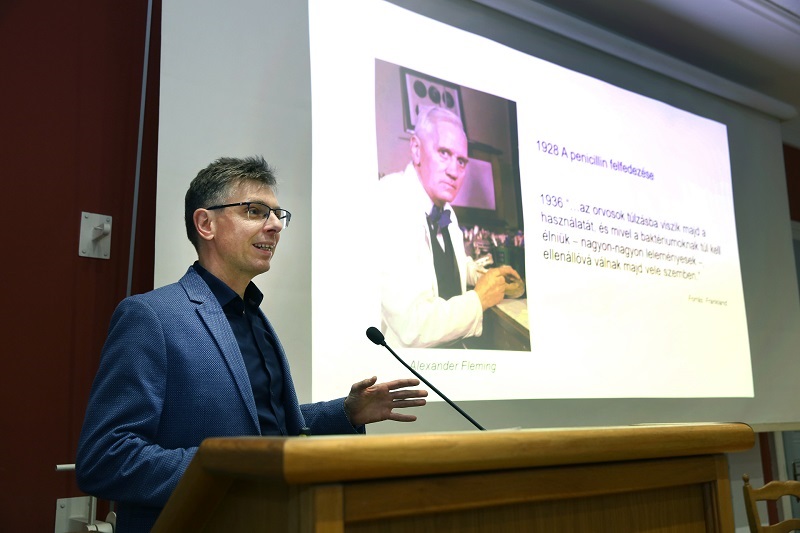
At the end of his lecture, Balázs Papp emphasized that the ‘teams of teams’ model – multiple laboratories working together as a unified research community – has proven highly effective in their work. Bridging disciplines, he noted, is often what makes major breakthroughs possible. As an example, he pointed to the discovery of penicillin: although Scottish bacteriologist Alexander Fleming identified the first antibiotic in 1928, transforming it into a life-saving therapy required the collaboration of Australian pharmacologist and pathologist Howard Florey and German-British biochemist Ernst Chain. Their joint effort was ultimately recognized with the 1945 Nobel Prize in Physiology or Medicine, awarded to all three scientists. Photo: Béla Dusha
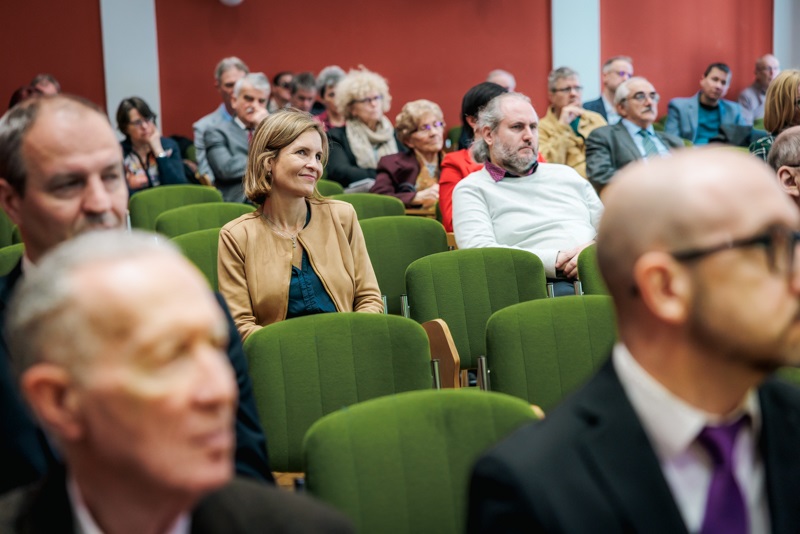
The second part of the lecture introduced a new genomics-based strategy for phage therapy. This approach offers a promising alternative for treating infections that no longer respond to conventional antibiotics. Phage therapy uses bacteriophages – viruses that specifically target and destroy bacteria while remaining harmless to humans. Its clinical use, however, has long been limited by the fact that a single bacteriophage typically works against only a very small number of bacterial strains.
By analyzing genomic data, Dr. Papp’s research team found that in a given geographic region only a handful of bacterial variants tend to dominate. This insight opens the door to developing region-specific phage preparations tailored to the strains most likely to cause infections locally, potentially enabling phage therapy to be used far more widely in clinical practice.
The research illustrates how breakthroughs can emerge when previously distant fields – in this case evolutionary genomics and phage therapy – are brought together.
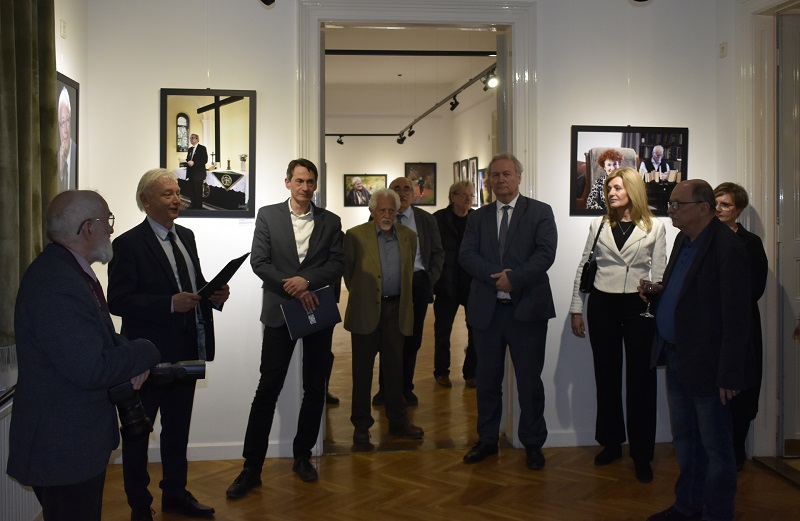
As SZAB President Tibor Krisztin noted at the opening of the photo exhibition, photographer Béla Dusha’s images bring the community of the Szeged Regional Committee of the Hungarian Academy of Sciences into focus through the ‘human faces’ of members of the Academy. Photo: Tibor Orosz
“Science often appears abstract – a realm of theories, datasets, and scholarly publications. Through these photos, however, we encounter faces and human presence: individuals who question, doubt, debate, and rethink what is known. For them, research is not merely a profession but an inner calling and a profound responsibility,” said Tibor Krisztin at the opening of the exhibition by renowned Szeged photographer Béla Dusha. According to the President of SZAB, the photographs on display are far more than simple portraits.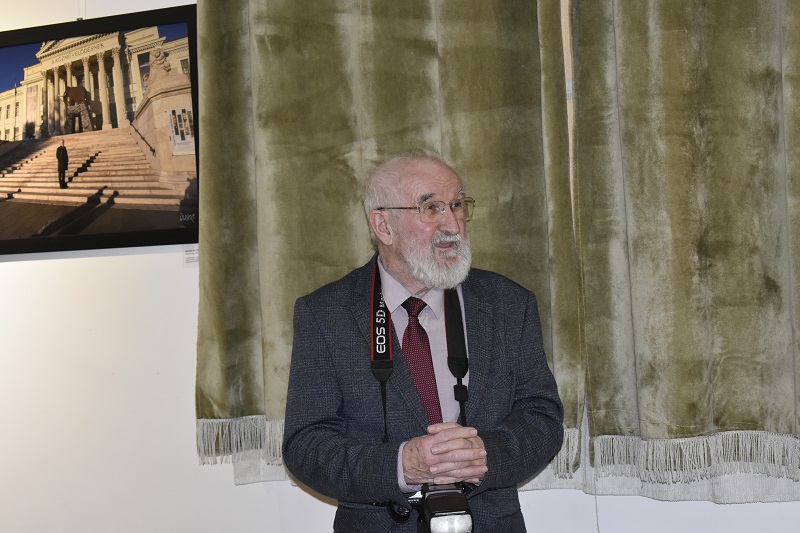
The special photographs of Szeged-based members of the Hungarian Academy of Sciences were taken by photographer Béla Dusha. The exhibition is open until March 23, 2026, in the ground-floor gallery space of the SZAB headquarters. The portrait exhibition will also be on display in the atrium of the University of Szeged’s main building on Dugonics Square between March 25 and April 10, 2026. Photo: Tibor Orosz
“These portraits create a dialogue – between the photographer and the subject, and between the scientist and the viewer,” reflected the President of SZAB. “The exhibition captures a moment in the life of a scientific community, while the photographs themselves stand as works of art. Each image reveals something of the concentration, curiosity, and quiet passion that drive scientific discovery.”
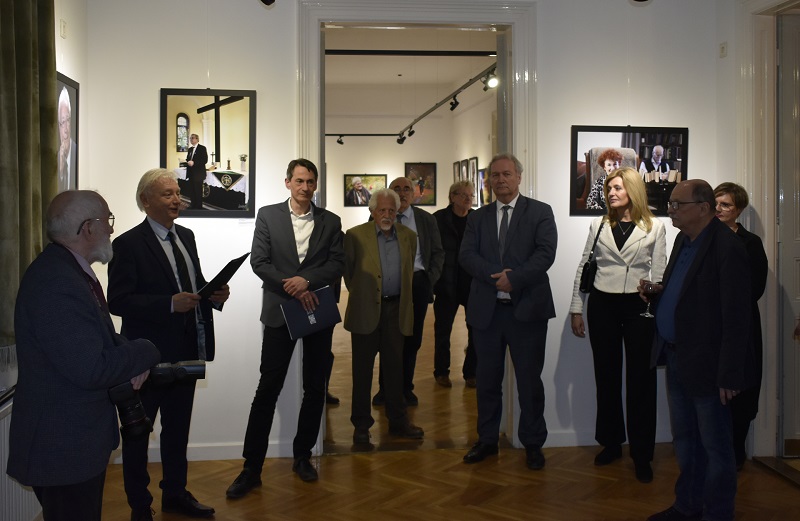
Guests at the opening of the photo exhibition included several of the portrait subjects themselves, along with researchers from the University of Szeged and the Biological Research Center in Szeged. Photo: Tibor Orosz
For years, Béla Dusha had envisioned a project that would reveal not only the human faces of Szeged-based members of the Academy but also their passions and the places that matter most to them. The resulting exhibition presents portraits of 37 scientists – offering glimpses into their personal worlds alongside their professional achievements.
Currently on display in the ground-floor gallery of the SZAB headquarters and, from March 25, in the atrium of the University of Szeged’s main building on Dugonics Square, the photographs will also form part of a forthcoming album. Created through the collaboration of Béla Dusha, Ilona Újszászi, and Ferenc Kiss, the volume ‘Szeged’s Academy Members in Four Dimensions’ is intended to celebrate the 65th anniversary of the Szeged Regional Committee of the Hungarian Academy of Sciences and its community of members.
Original Hungarian article: SZTEinfo – Ilona Újszászi
Photos by István Sahin-Tóth, Tibor Orosz, Béla Dusha