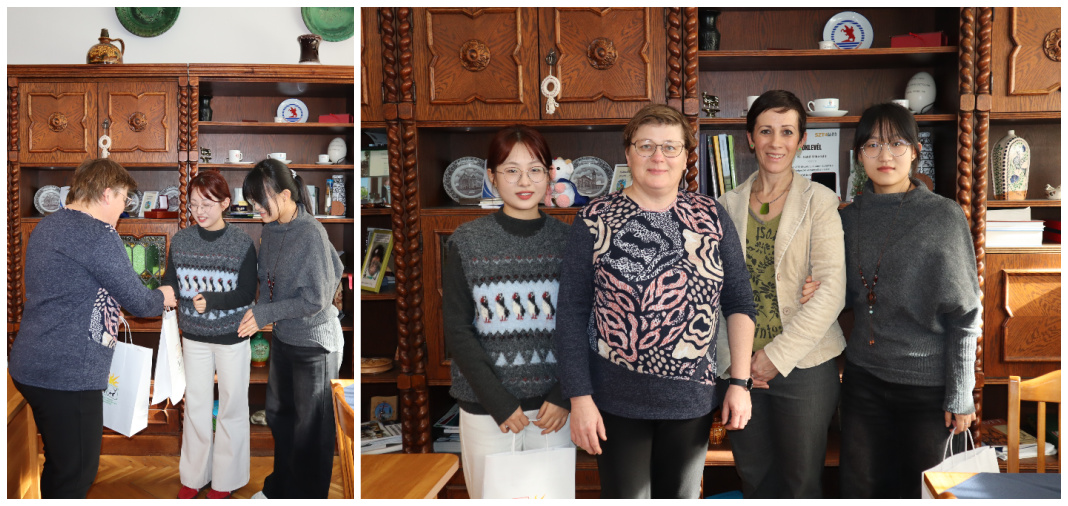
A newly established collaboration between the University of Szeged (SZTE) and Shandong Agricultural University (SDAU) marks the beginning of a new phase in academic exchange for SZTE. As part of the partnership, Boyu Sun and Yuemeng Shang, first-year MSc students at SDAU’s College of Animal Science & Veterinary Medicine, will spend the spring semester at the University of Szeged’s Faculty of Agriculture in the city of Hódmezővásárhely, continuing their studies there until May 6, 2026.
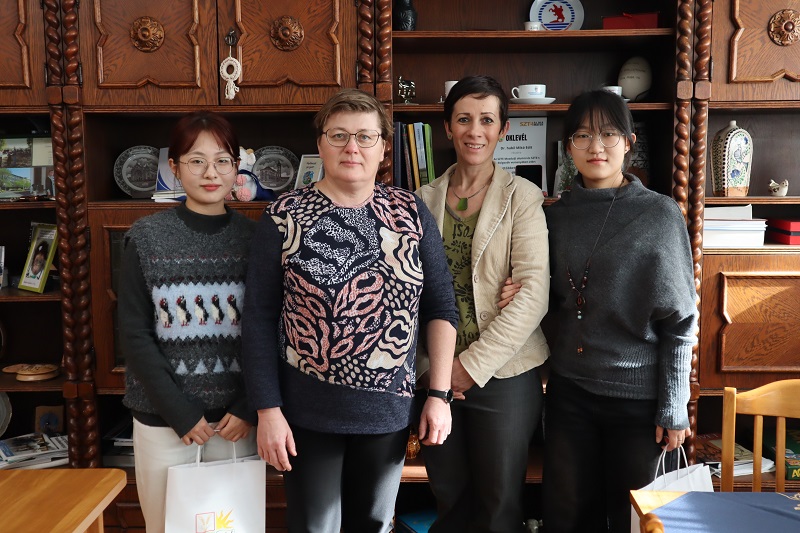
Dr habil. Edit Mikó, Dean of the Faculty of Agriculture, University of Szeged, and Magdolna Gera, Erasmus Coordinator, welcome the new MSc students from China.
“We come from Tai’an, in Shandong Province – one of the most populous provinces in China. Everything still feels new to us. This is our first time abroad, and we have never been to Europe before,” said Boyu Sun and Yuemeng Shang. “We arrived just a few days ago and are staying at the Faculty of Agriculture’s student residence. Our first impression of Hungarians is that they are friendly – and very tall,” they added with a smile.
The two students also shared that they are eager to explore Hungary during their stay. At the top of their list is a visit to Budapest, including a cruise along the Danube. Closer to home, they look forward to discovering more of Szeged and unwinding at the city’s renowned Anna Thermal Bath. They also plan to connect with the Confucius Institute at the University of Szeged in order to engage with the local Chinese community and participate in cultural programs.
At the Faculty of Agriculture, the visiting students will be supported by Luyao Wang, a third-year student in the Agricultural Engineering BSc program, who will assist them in settling into campus life. Their academic and professional activities will be supervised by Associate Professor Dr. Myrtill Kocsisné Gráff, who will serve as their mentor throughout the semester.
“We were selected for the program by our International Mobility Office on the basis of our academic achievements. We were delighted to join the Faculty in Hódmezővásárhely, as it offers us an excellent opportunity to enhance our English language skills. At the same time, SZTE’s well-structured academic programs and modern, well-equipped laboratories provide an outstanding environment for both academic study and research,” the Chinese students said.
Boyu Sun and Yuemeng Shang also highlighted their shared research interests. Both focus on bioactive compounds derived from natural plants and their applications in poultry science. Their work investigates how plant-based extracts and their antimicrobial components affect laying hens, ultimately influencing egg quality and production efficiency. “The courses we are taking here are closely aligned with our field of research, including poultry farming modules taught in English, which directly support our academic interests,” Yuemeng Shang explained.