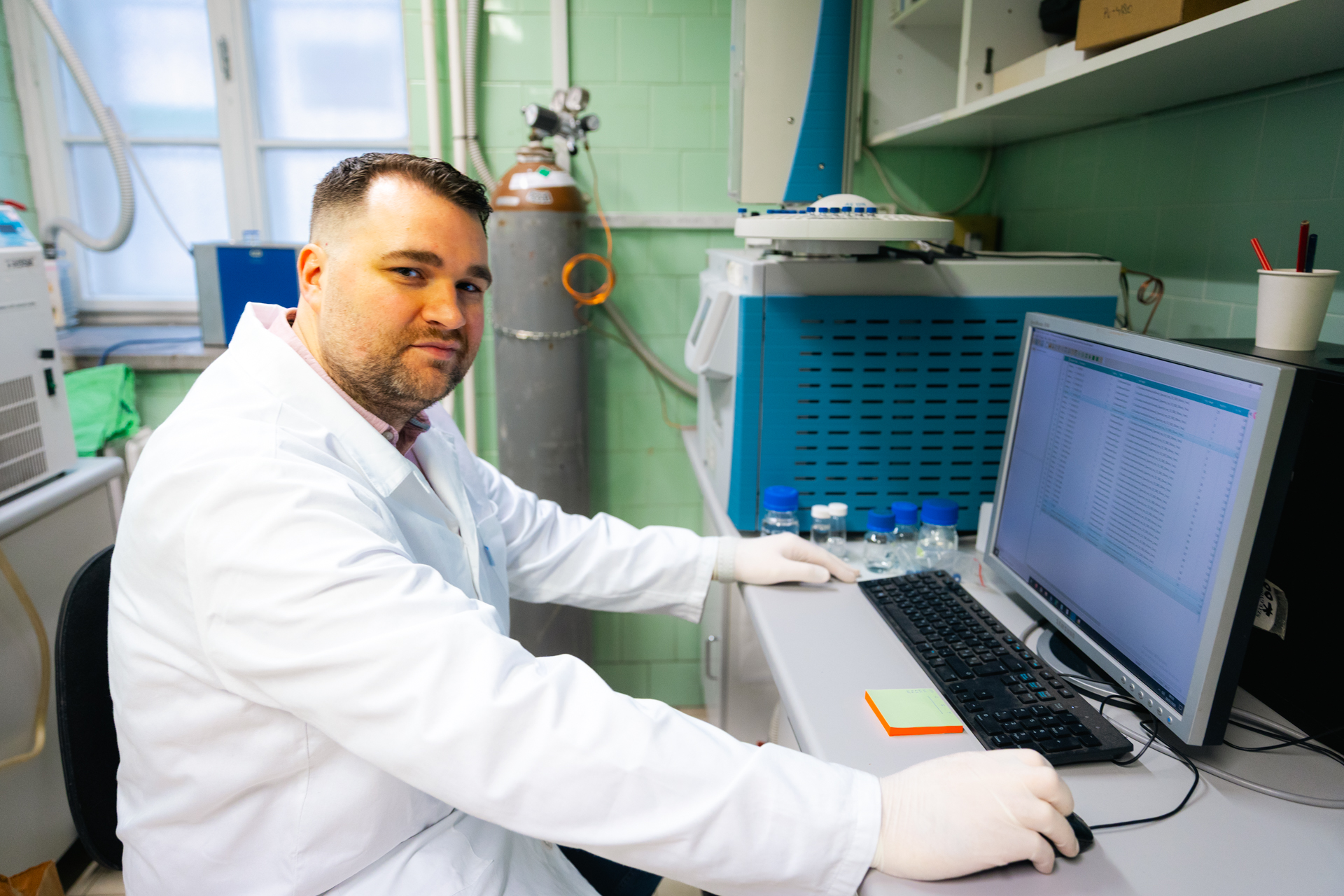
Innovation Awards – such as the Proof of Concept grant – play a vital role in transforming university research into tangible, market-ready solutions, says Dr. György Orsy. “Experience in Western countries shows that many of the most significant innovations originate within universities,” he notes. “Such recognition provides the momentum and the framework for promising ideas to mature – whether through patents, licensing agreements, or industry partnerships. This is a crucial step that accelerates the translation of research into real-world applications while also generating substantial economic value. New technologies and protected intellectual property lay the groundwork for competitive, high-value collaborations between academia and industry.”
It pays to be bold
Dr. György Orsy says that receiving the Proof of Concept grant is a strong affirmation that his research is moving in the right direction. Recognition at this level provides fresh momentum – it reinforces the importance of thinking boldly, experimenting with emerging technologies, and moving beyond conventional approaches.
For Dr. Orsy, however, the highlight of the Innovation Day ceremony was receiving the PoC certificate in the presence of Nobel Laureate Katalin Karikó, professor at the University of Szeged. “I had the privilege of attending her lecture at the ceremony. Meeting her and receiving the award in her presence was an extraordinary experience,” he recalls. “It was truly a memorable and deeply meaningful moment.”
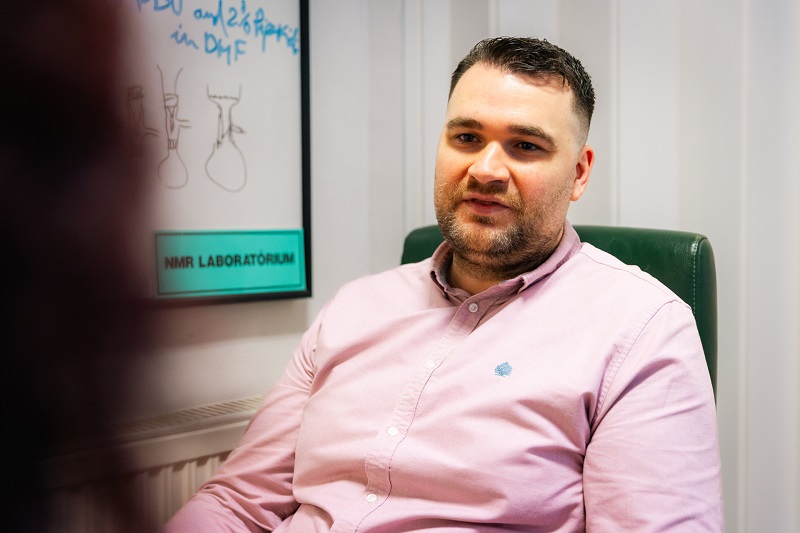
Dr. György Orsy. Photo: Ádám Kovács-Jerney
Indole: The two-faced molecule
Indole is an extraordinarily versatile organic compound that drifts through the sweet scent of jasmine, gardenia, and orange blossom, yet its significance extends far beyond fragrance. It plays a central role in plant growth, shapes hormonal processes in animals and humans, and even helps regulate the complex ecosystem of the gut. Few molecules move so seamlessly between the worlds of nature, biology, and medicine.
Indole’s scent changes dramatically depending on its concentration. In small amounts, it releases a pleasant, floral aroma – which is why it is widely used in the perfume industry. In higher concentrations, however, it contributes to the characteristic odor of human waste. This striking contrast is what gives indole its reputation as a ‘two-faced molecule.’ Its aroma functions as a kind of chemical signal, offering insights into the state of the gut microbiome and the efficiency of protein metabolism. In this way, indole plays a role in maintaining intestinal integrity, modulating immune responses, and supporting the intricate communication network between the gut and the rest of the body.
Beyond its sensory paradox, indole forms the structural backbone of numerous molecules essential to human life. Serotonin – often referred to as the ‘happiness hormone’ – is built on an indole core and plays a key role in regulating mood, appetite, and the body’s response to stress. Melatonin, which governs the sleep–wake cycle, likewise arises from the same fundamental molecular framework. From emotional balance to restorative sleep, indole quietly underpins some of the body’s most vital biological processes.
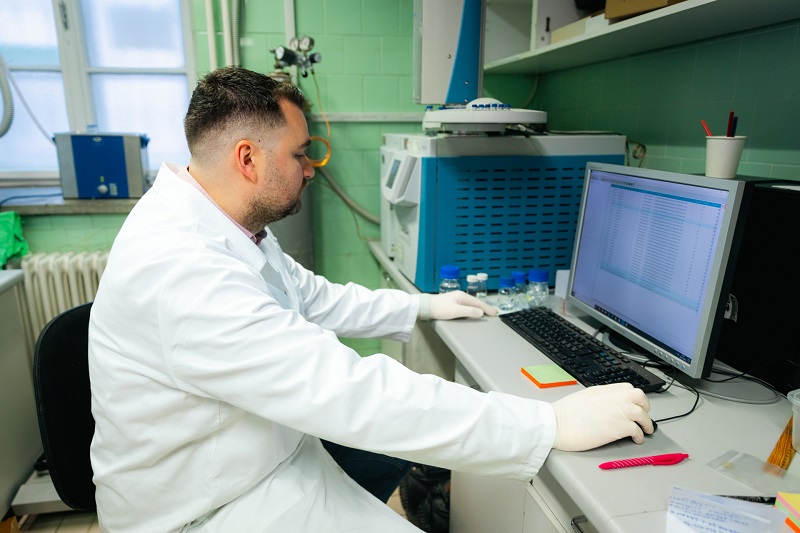
Dr. György Orsy. Photo: Ádám Kovács-Jerney
A universal building block
It is no coincidence that indole and its derivatives play a central role in modern pharmaceutical research. However, producing these molecules in an environmentally responsible manner and at industrial scale requires innovative chemical solutions. This is precisely what researchers at the University of Szeged are working toward: in their project, they are making the production of these essential compounds sustainable through continuous-flow green chemistry technology.
As Dr. György Orsy explains, indole is in many respects one of the most important universal building blocks of the modern chemical industry. In itself, it can be regarded as an intermediate compound that, through chemical modification, can give rise to countless vital substances most commonly used as raw materials in the pharmaceutical industry. As a result, today, the key question is how these compounds can be produced in a sustainable way.
A breakthrough in this area is being delivered by the project run by Dr. Orsy and his colleagues – associate professor Dr. György Szőllősi, Doctor of the Hungarian Academy of Sciences, co-leader of the project and its professional advisor, as well as PhD candidate Lili Kóczán and laboratory technician László Pusztai. Their approach departs from traditional batch production methods – the classic ‘flask-and-stirring’ process. Instead, they employ so-called continuous-flow technology, in which reactants move through a closed tube system rather than being mixed in a flask. This allows for precise control of temperature and pressure, resulting in a much cleaner end product and significant energy savings, while complying with EU standards.
At the heart of the development lies green chemistry technology. In practical terms, the researchers use more affordable and relatively harmless starting materials, along with solvents that are more stable, reusable, and biodegradable. Another major advantage of the technology is that potentially hazardous substances are generated within the closed tube system and are converted by the end of the process into a harmless, high-purity product. As a result, the procedure itself becomes significantly safer.
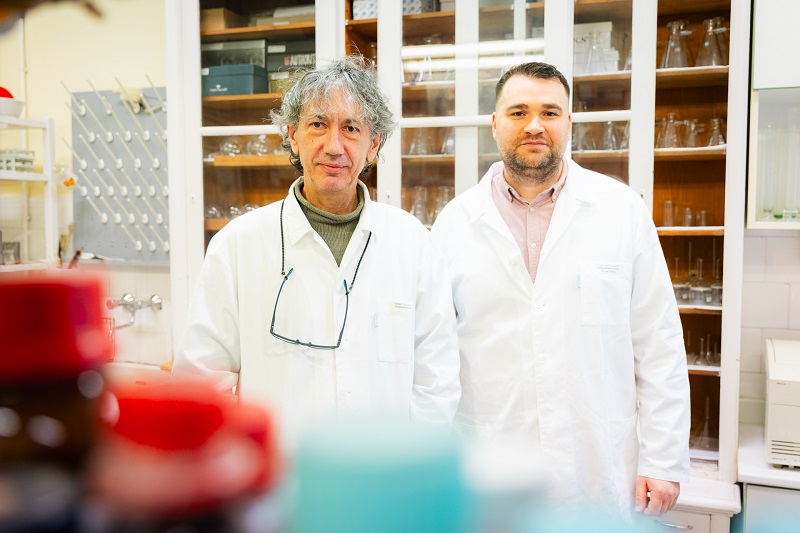
Dr. György Szőllősi and Dr. György Orsy. Photo: Ádám Kovács-Jerney
The ideal choice
For Dr. György Orsy, continuous-flow chemistry is more than a research focus – it has been a defining thread throughout his career. After earning his pharmacy degree at the University of Szeged, he pursued his PhD in the same field, laying the foundation for his later innovations.
He then spent three years with the Artificial Transporter Research Group – formerly part of the Hungarian Academy of Sciences and now operating within the Institute of Materials and Environmental Chemistry at the HUN-REN Research Centre for Natural Sciences – where he further deepened his expertise while broadening his scientific perspective.
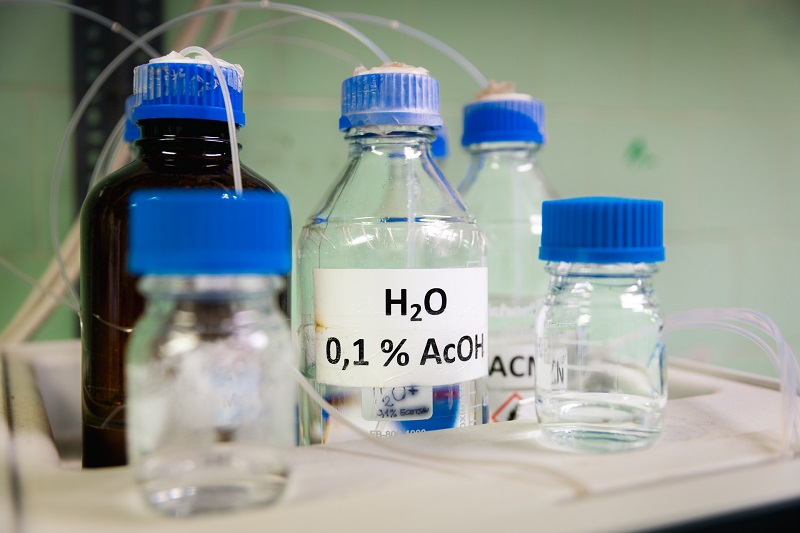
Photo: Ádám Kovács-Jerney
Fighting antibiotic resistance and cancer
Dr. Orsy emphasizes that this latest innovation may have its greatest impact in the production of pharmaceutical raw materials. From the outset, the team aimed to develop a broadly applicable solution for the synthesis of indole compounds – an approach that makes the technology both versatile and commercially valuable.
“A wide range of indole derivatives serve as the foundation for antibacterial and antiviral agents, as well as compounds with antitumor activity,” he notes. “Their bioactivity has been well documented in the scientific literature.”
Cancer therapy and antibiotic development stand out as particularly urgent fields. The diversity and complexity of cancer demand a continuous stream of novel therapeutic strategies. In the field of antibiotics, meanwhile, resistance remains the most critical challenge. Bacterial strains continually adapt, gradually becoming resistant to existing drugs – turning the search for new treatments from a scientific objective into a global imperative.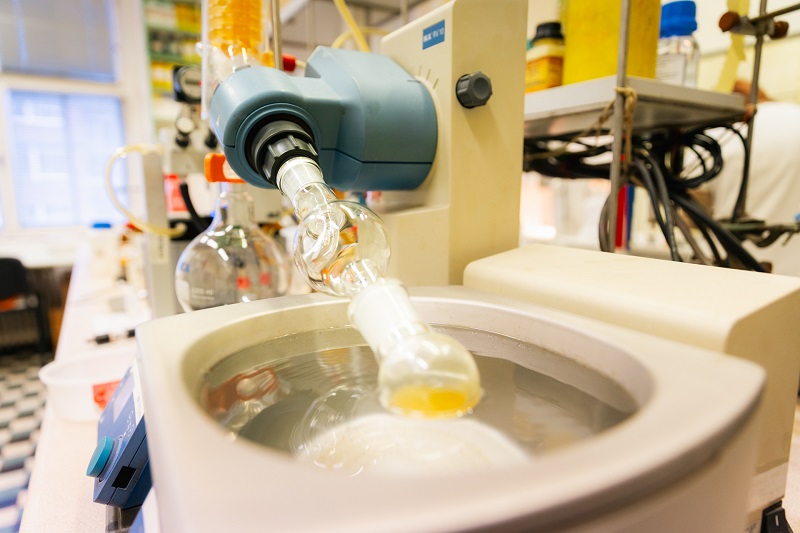
Photo: Ádám Kovács-Jerney
Inspiring the next generation of researchers
As a university-based research group, György Orsy and his team view education and discovery as inseparable. In this environment, students are not mere observers – they are active contributors. PhD candidates participate in designing and conducting foundational experiments, performing key reactions, and advancing the daily work of the laboratory. These hands-on experiences are essential in shaping highly skilled professionals by the time they graduate and in preparing them for future postdoctoral careers.
The researcher believes the exchange is mutual. The curiosity, energy, and fresh perspectives of young scientists often inject new momentum into a project. For him, teaching and collaborating with students is far more than an academic obligation – it is a continuous source of inspiration that fuels both scientific progress and personal motivation.
“As educators, our responsibility is not simply to deliver dry course material, but to make knowledge come alive,” Dr. Orsy says. “Students need to understand the ‘why’ behind what they are learning and see how it connects to real-world challenges. I was fortunate to learn from professors who taught with genuine passion. They shared their own stories and made it clear why each topic mattered. Enthusiasm is contagious – and often, that is what truly captures students’ imagination and draws them into research.”
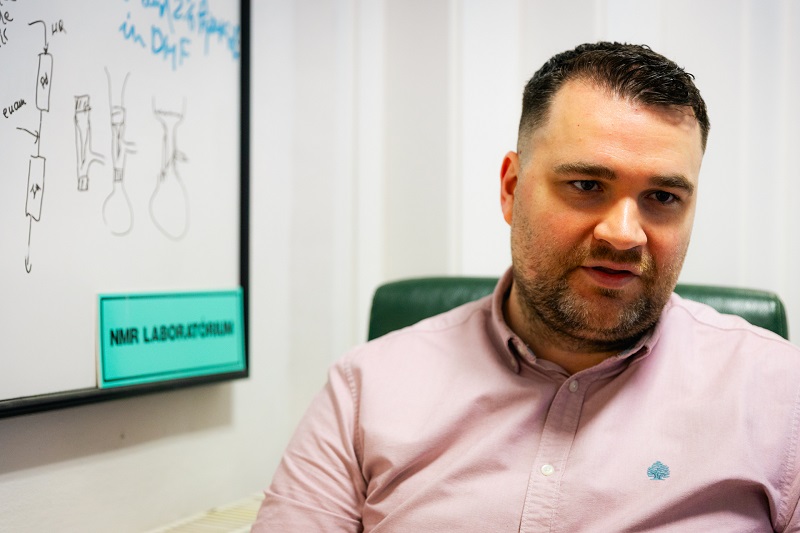
Dr. György Orsy. Photo: Ádám Kovács-Jerney
Driven by passion, powered by perseverance
Dr. György Orsy notes that research, by its very nature, is built on trial and error. Behind every promising result lie numerous setbacks and experiments that simply do not work. Yet these unsuccessful attempts often provide the most valuable insights, ultimately propelling a project forward. Meaningful progress requires passion, resilience, and the determination to keep searching for the right path – even when the outcome remains uncertain. Failure, he emphasizes, is not the opposite of success in a scientific career; it is part of the same journey. Learning to confront, process, and overcome setbacks is just as important as celebrating breakthroughs.
“Every major scientific achievement rests on a foundation of unsuccessful attempts. Take Albert Szent-Györgyi, for example: only a small fraction of his experiments resulted in genuine breakthroughs, yet those discoveries ultimately paved the way for his Nobel Prize in Physiology or Medicine. Perhaps the greatest challenge in research is facing, day after day, the reality that something has not succeeded. In those moments, you must reassess, refine your approach, and continue moving forward until you find the answers. That ongoing challenge – the determination to try again – is both what drives and sustains a researcher,” Dr. György Orsy concludes.
Original Hungarian article by Tímea Fülöp
Feature photo: Dr. György Orsy. Photo by Ádám Kovács-Jerney