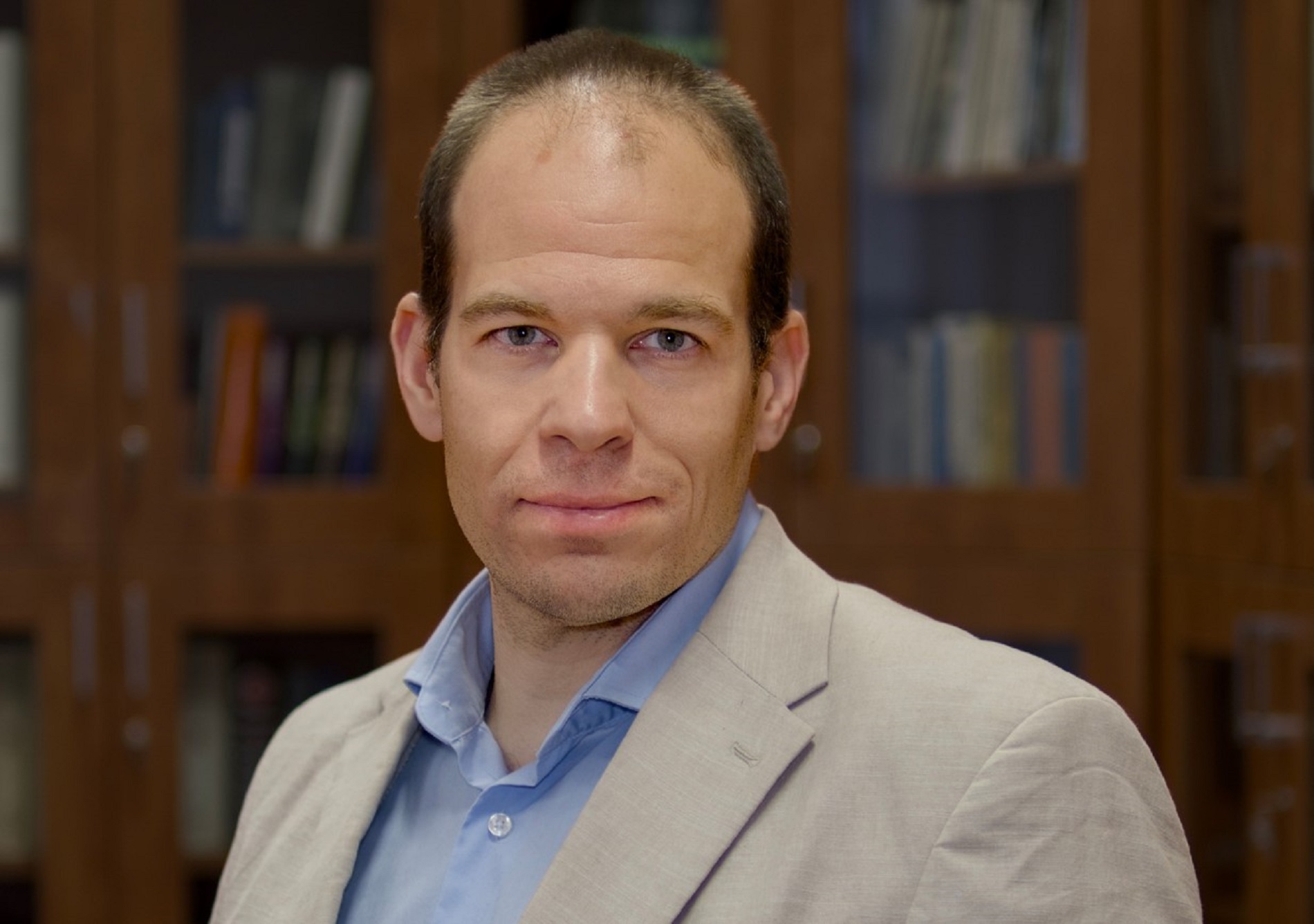
The catalytic brick project offers a compelling example of how innovation progresses from concept to market. First, in 2020, Dr. András Sápi received the SZTE Innovation Award in the Proven Development category. By 2025, he was recognized for Outstanding Utilization, following the successful market launch of the technology through the spin-off company Verdant Catalyst Kft.
In this interview, the chemist discusses the origins of the catalytic brick, reflects on his career in research and teaching, and outlines his vision for the next stages of his development efforts.
From industrial need to practical solution
Research ideas do not always originate at the lab bench. Sometimes they emerge from a tangible, real-world challenge. It was precisely such a situation that gave rise to the catalytic brick, which began with an industrial inquiry aimed at addressing a pressing environmental problem.
Across Europe, emissions from wood-burning and mixed-fuel heating systems represent a significant environmental concern, accounting for nearly 50 percent of particulate matter and carbon monoxide pollution. Although the European Union has introduced increasingly stringent regulations, many households continue to rely on wood-fired furnaces, fireplaces, and mixed-fuel heating systems.
“When wood is burned, large amounts of pollutants are released into the air unless they are effectively converted or neutralized. In our case, the industrial demand focused on how these systems could be improved to reduce emissions,” the researcher explains.
The solution took the form of a specially engineered catalytic brick that can be integrated into furnaces and fireplaces, significantly reducing harmful emissions. By now, the innovation has moved well beyond the laboratory. It has been incorporated into the latest product lines of several furnace manufacturers and successfully brought to market through the spin-off company Verdant Catalyst Kft.
Although the invention is entirely a Hungarian development, international collaborations have played an important role in refining it. “In many of our projects, we work together with international partners. This way, we do not need to understand every aspect ourselves. But by combining different areas of expertise, we can truly move forward,” the chemist emphasizes.
The researcher also points out that the development process was long and complex, spanning the journey from initial concept and laboratory testing to large-scale production and market launch. A key role in this progression was played by the University of Szeged’s Directorate for Innovation, which provided essential management and business expertise to support commercialization. Essentially, it was due to this coordinated effort that the catalytic brick evolved from a promising research achievement into a commercially available product with tangible real-world impact.
Residential applications and improved efficiency
Interest in the catalytic brick is not limited to industrial partners – it is also growing in the residential, business-to-consumer (B2C) market. Homeowners, for example, can install the catalytic brick in their own fireplaces, where it delivers clear and measurable benefits. The technology also reduces the risk of carbon monoxide poisoning, lowers harmful emissions, and improves the efficiency of heating systems.
“The same amount of heat can be generated using less wood. That’s not only an environmental benefit but an economic one as well – everyone appreciates having more money left in their wallet,” the researcher notes.
Engaging students – education in action
For András Sápi, innovation does not end with market success. Teaching is equally central to his work. Holding a teaching qualification, he considers it a personal mission to inspire young people to engage with the natural sciences. He regularly delivers lectures at primary and secondary schools on environmental protection and plastic waste management. In addition, he has organized environmental competitions at the University, creating opportunities for students to present their own solutions to real-world challenges.
Actively involving students in real research projects is especially important to the researcher. “My favorite part of university teaching is working on joint projects with students. It is during project work and thesis research that they truly recognize the value of their knowledge. They are not simply preparing for exams or completing lab assignments – they are tackling complex, real-life problems,” he says.
In fact, some of Dr. Sápi’s thesis writers have also contributed to the development of the catalytic brick, and the project is currently being continued in collaboration with one the researcher’s students.
Looking ahead: future-oriented research
András Sápi says his dedication to a scientific career was defined to a great extent by his mentors and former supervisors. He completed his master’s thesis under the guidance of Prof. Dr. Zoltán Kónya, full professor and Vice-Rector for Science and Innovation at the University of Szeged, who first introduced him to nanotechnology research. That early experience proved decisive in shaping the direction of his career.
Reflecting on his motivation, the researcher explains: “It was exciting to work on a project that could contribute something new to humanity. In fact, what drives me is the desire to make the world a better place. Indeed, anyone who chooses a career in chemistry or research must not give up. You cannot focus only on immediate financial returns. You have to move forward, even after setbacks,” he emphasizes.
Dr. Sápi also notes that he is particularly proud of another award-winning innovation project, in which used plastics were recycled through 3D printing. That initiative is now being commercially utilized by an industrial partner, Easy Fresh Kft.
Alongside these achievements, the researcher continues to pursue several promising research directions. One focuses on the conversion of carbon dioxide, aiming to produce synthetic fuels using solar energy, water, and carbon dioxide (CO₂).
As for the success of the catalytic brick, its impact clearly extends beyond scientific recognition and industrial application. For Dr. Sápi, the true accomplishment lies in ensuring that research and education progress hand in hand. Working side by side with his students, he tackles real-world challenges while giving young people the opportunity to see how their knowledge can generate value far beyond the laboratory.
András Sápi’s work is driven by a commitment to innovation, sustainability, and intellectual curiosity – whether the goal is cleaner air, recycled plastics, or synthetic fuels. Looking ahead, he aims to further strengthen the spin-off company built around the catalytic brick, while expanding his research into new areas, including battery recycling and the development of related diagnostic technologies. This latest Innovation Award therefore recognizes not only a single successful project, but also a broader approach to science – one rooted in responsibility, perseverance, and the conviction that meaningful progress toward a more livable and sustainable world is achieved step by step, day by day.
Original Hungarian article by Anna Bús