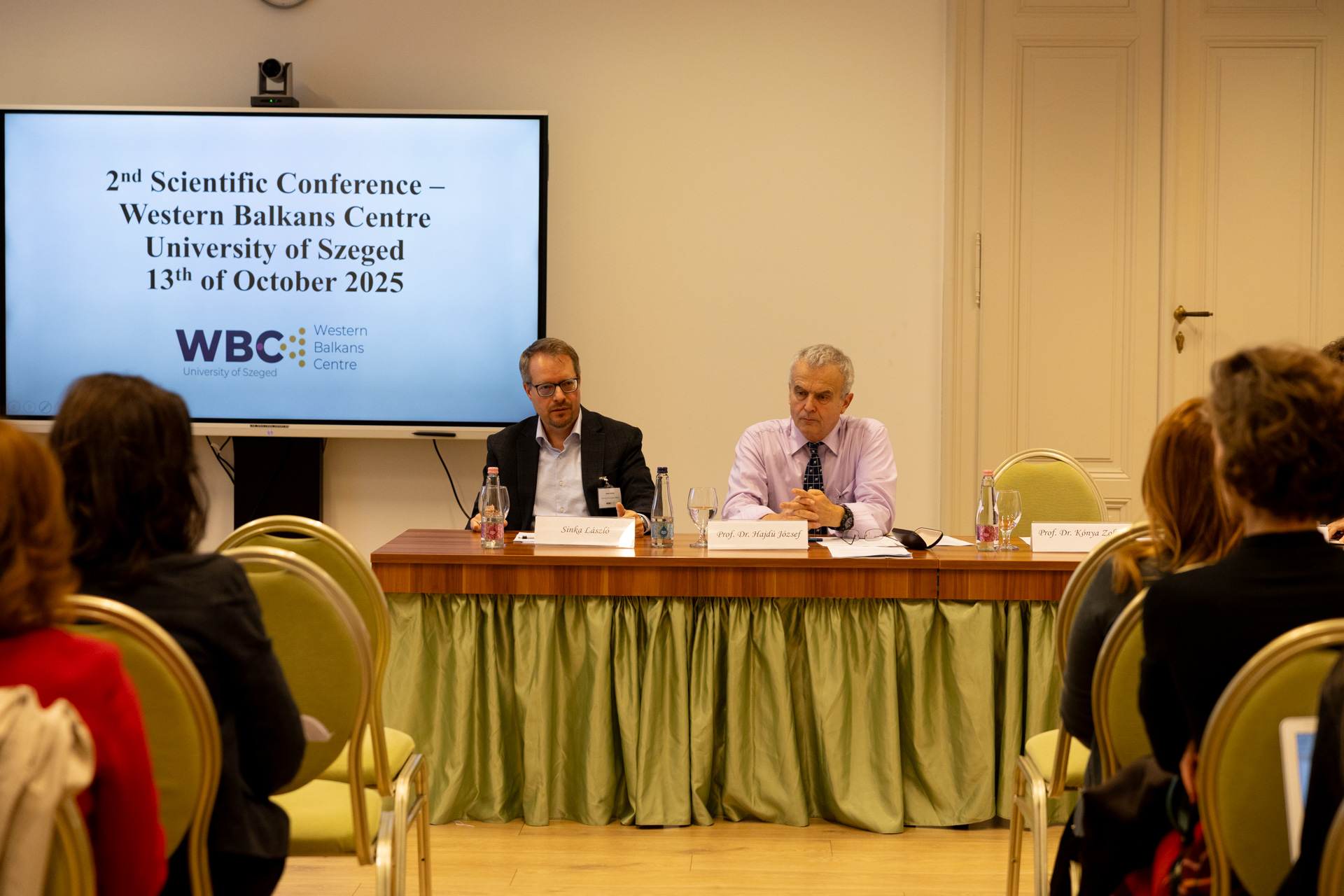
On Monday, October 13, the Western Balkans Competence Center held its second international scientific conference in Szeged. The event brought together seven professors from six Western Balkan countries, alongside six lecturers from Szeged. This year’s gathering spotlighted the research of fifteen PhD students, whose work was advanced through a paired-mentoring model that connected scholars from Szeged with colleagues from abroad. Their joint efforts brought the region’s most pressing social challenges into sharper public focus – and aimed to outline viable pathways toward addressing them.
Members from three faculties associated with the Western Balkans Competence Center at the University of Szeged – the Faculty of Law, the Faculty of Arts and Social Sciences, and the Faculty of Economics – met with representatives of partner institutions across the Western Balkans for their second joint event, where they presented the results of their collaborative research. Although several new scholars came onboard this year, the meeting still felt like a reunion, as a close-knit team once again filled the ground-floor conference room of the University’s Main Building.
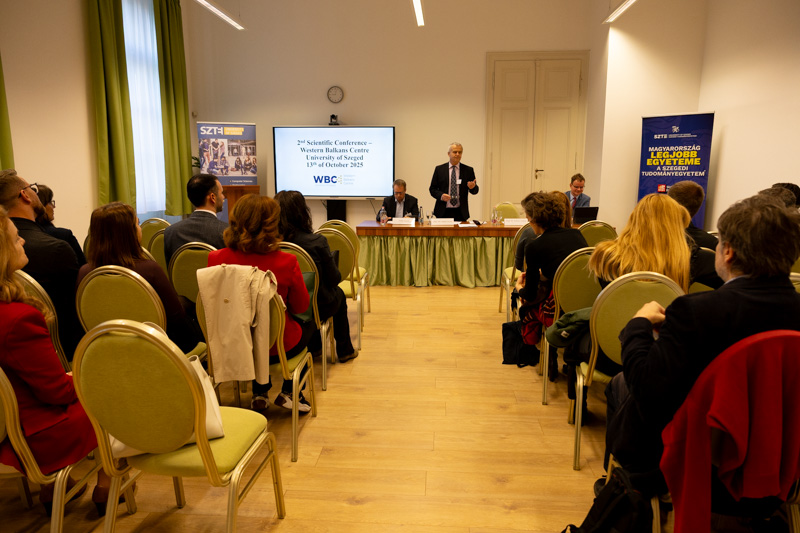
Prof. Dr. József Hajdú, Head of the Western Balkans Competence Center, opened the event by welcoming the attendees and thanking them for coming together once again as a group that has since grown into a genuine scholarly community. He extended a warm greeting to both the new members and those who had been involved from earlier stages, noting that a busy – yet exciting – day of academic exchange lay ahead.
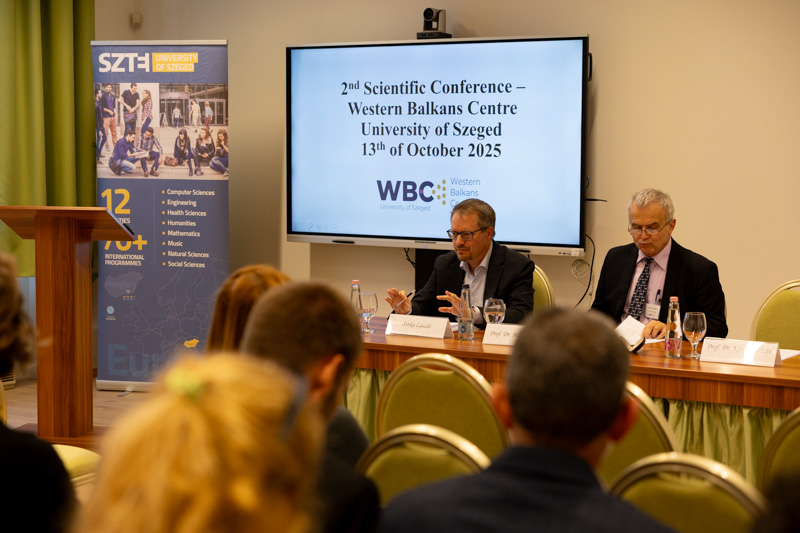
This year’s guest speaker, László Sinka – counsellor at the Hungarian Ministry of European Affairs – delivered a thought-provoking opening address in which he outlined both the situation in the Western Balkans and the wider challenges facing the European Union’s enlargement policy. Although his assessment was far from optimistic, it offered a clear explanation of the key factors driving the stagnation of the region’s accession efforts. The speaker then linked these issues to broader questions about the EU’s future and explained how related concerns continue to shape enlargement.
Although the conference lasted only one day, it featured twelve presentations delivered by representatives of the eight universities participating in the international consortium: the University of Novi Sad, the University of Tirana, the University of Podgorica, the American College Skopje, the University of Belgrade, the University of Sarajevo, the University of Pristina, and the University of Szeged.
The presentations covered a wide range of fields, including history, religious and political studies, international relations, and several areas of law such as criminal, constitutional, and international law. Taken together, they perfectly complemented one another and offered a comprehensive, finely detailed picture of the region’s most pressing social issues. Expanded versions of these contributions will be published later this year in BLESS, the electronic journal launched by the consortium last year.
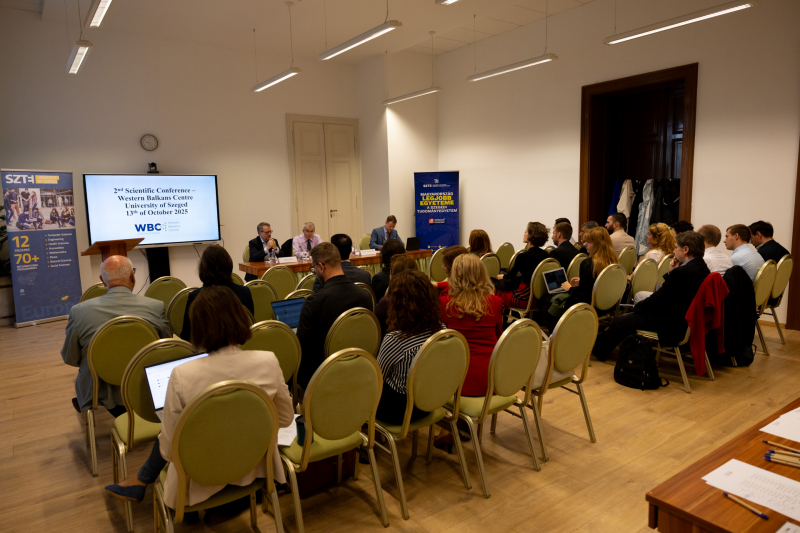
At the end of the day, participants also had the opportunity to discuss plans for the next three-year period. Based on the proposals prepared by the coordination team in Szeged, a written vote was held to determine which options would be incorporated into the new program and in what order of priority. What is certain is that, once approved, these plans will be implemented by a research community distinguished by both expertise and commitment.