The University of Szeged hosted its 25th Intensive Summer University for learners of Hungarian in July 2025. The four-week program, running from mid-July, focused on language acquisition while also offering students a wide array of cultural experiences.
From students to retirees: Learning in the classroom and on literary walks
The program was open to all age groups – from university students to retirees. This year, 63 participants traveled to Hungary from 14 countries, including China, the United States, Iran, and Canada. Language instruction was offered across five proficiency levels in an intensive format: two 90-minute classes each morning, followed by afternoon practice sessions. The structured curriculum fostered rapid progress in an immersive environment. Beyond the classroom, the program team organized a wide range of activities, from film clubs and folk-dance evenings to excursions and cultural programs. Participants explored Szeged’s landmarks – including the Synagogue, the Reök Palace, the Franciscan Monastery, and the Castle Museum – and took part in guided literary walks and sightseeing tours. These experiences added depth to their studies and made their time in Hungary all the more memorable.
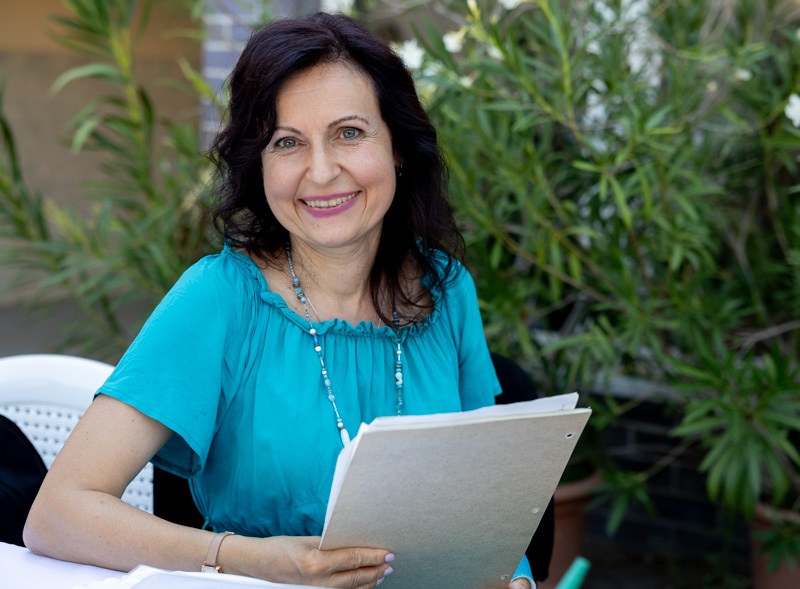
Dr. Anett Árvay, linguist, has served as lead organizer of the Hungarian Studies Summer University programs at the Faculty of Humanities and Social Sciences for several years.
Photo by Anita Kovács
“The program is intentionally diverse – we make changes every year to keep the experience fresh for returning students. That’s why even the films we screen are updated annually,” explained Dr. Anett Árvay, head of the Hungarian Studies Program at the Faculty of Humanities and Social Sciences.
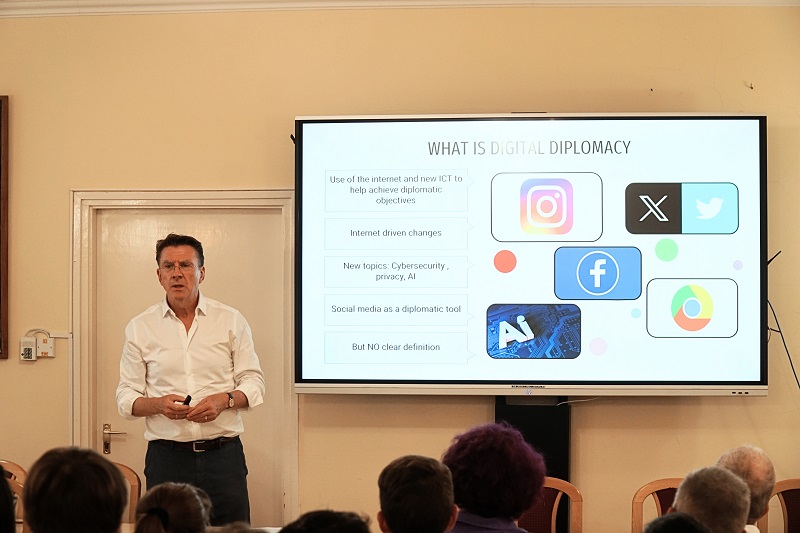
This summer, the literary walk in Szeged proved once again to be a highlight. Participants discovered the city’s rich literary heritage through the works of poets closely tied to Szeged – including Attila József and Gyula Juhász. The program also featured a special guest: former British ambassador Iain Lindsay, who, fluent in Hungarian, gave a lecture on his motivations and personal experiences with language learning.
Iain Lindsay, former British ambassador at the Summer University in Szeged
Photo by Nikolett Lengyel
Beyond the tourist experience
Running alongside the four-week Hungarian Language Summer University, a complementary Hungarian Language and Culture course welcomed students from the University of Manitoba, Canada. Over three weeks, participants explored diverse facets of Hungarian culture through English-language instruction.
The group spent one week in Budapest and two weeks in Szeged, attending lectures delivered by teaching staff from the University of Szeged’s Faculty of Humanities and Social Sciences. The curriculum covered a wide range of topics, including Hungarian history, literature, film, visual culture, music, cultural geography, and the history of theater.
“We wanted to go beyond the usual tourist experience, giving Canadian students a deeper understanding of Hungarian culture. Our aim was to present a broad spectrum of cultural life with academic rigor,” said Dr. Anett Árvay, speaking about the Summer University Program for Canadian Students.
Among the participants from the University of Manitoba were Noa Adam and Shayne Ostrowski. Both were initially drawn to the program by the opportunity to explore a new country and culture, but they were also pleased to get a taste of learning the Hungarian language.
“I came to Hungary because I was very interested in Hungarian culture, yet I didn’t know much about it. I thought this summer university program would be an excellent opportunity to get to know Europe. Before this, I had only been to the United Kingdom, and I wanted to explore Eastern Europe as well,” said Noa Adam, who is a classics major with a minor in archaeology at the University of Manitoba.

Noa Adam expressed a strong desire to return to Hungary, having greatly enjoyed his time in the country.
Photo by Anita Kovács
Noa observed that Hungarians are deeply familiar with their history, engaged with current affairs, and eager to shape a better future. He was particularly fascinated by Hungarian culture – noting the music, architecture, and history, as well as traditional dishes such as Szeged-style fish soup and goulash.
“In a new country, you also learn a bit about yourself.”
“Every time you discover a new country, a new city, or a new culture, it offers a chance to gain insight not only into others but also into yourself. I strongly believe in encouraging students to go somewhere that might not feel completely comfortable at first – whether that’s Hungary or any other place they haven’t visited before. The point is to step outside their comfort zone,” said Shayne Ostrowski.
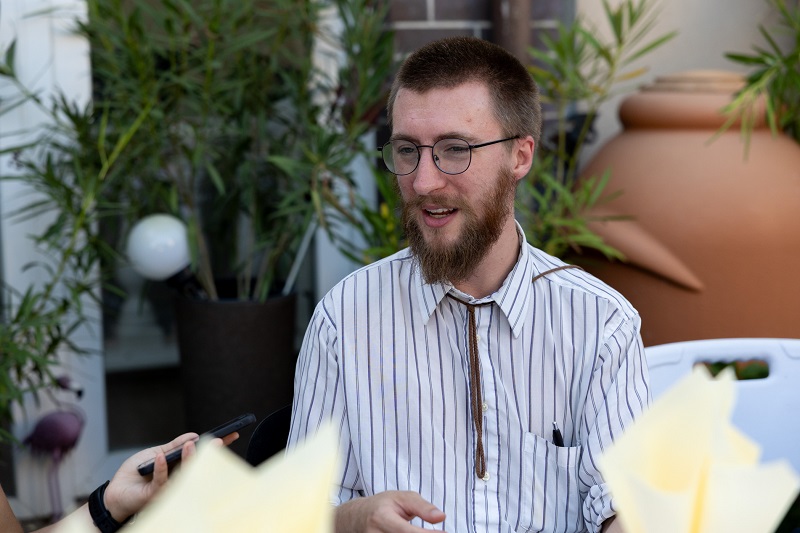
For Shayne Ostrowski, the literary walk was the highlight of the program.
Although Shayne had previously traveled in Western Europe, he had never been to Hungary – and quickly grew fond of the country, especially the city of Szeged. He admitted that he was initially apprehensive about the language-learning component of the program, finding Hungarian quite difficult. Yet he ended up thoroughly enjoying it and now hopes to continue studying the language so that one day he can read the works of Sándor Petőfi in the original.
“I’m really interested in literature, and although we didn’t have a dedicated literature course, I found it both refreshing and inspiring to see how well people know their literary heritage and how much respect they have for their writers,” added Shayne, who is currently studying Russian literature and language in preparation for beginning his master’s program in Canada this coming January.

Stephanie Zimmerhackl chose the Summer University specifically to learn Hungarian.
Photo by Anita Kovács
Stephanie Zimmerhackl, a sociology student from Germany, joined the four-week intensive program with a clear goal: to improve her Hungarian. She began studying the language four years ago, inspired by her best friend, who is Hungarian.
Stephanie admitted that Hungarian is a demanding language – especially with its verbal prefixes and complex conjugation rules – but said she enjoys the challenge. In fact, she had previously taken Arabic courses at her home university.
“This month-long program was definitely worthwhile,” she said. “In the language classes, I was able to review a lot of things I had forgotten, and now I feel like I really know them again. I even got comfortable speaking. Before this, I never dared to speak Hungarian because I was too shy.”
Scholarships for international and diaspora students
Students majoring in Hungarian studies at foreign universities can attend the Summer University with a Tempus Scholarship. This summer, scholarship holders came from cities such as Prague and Warsaw. The Diaspora Scholarship, meanwhile, supports students with Hungarian roots who wish to explore their heritage, offering them the opportunity to take part in the Summer University as well.

At the farewell dinner of the University of Szeged’s Summer University, Hungarian and English blended in conversations.
Photo by Anita Kovács
Anett Árvay emphasized that organizing the Summer University takes months of preparation each year. Planning typically begins as early as October, in collaboration with the International Office of the Faculty of Humanities and Social Sciences at the University of Szeged. She added that as long as there is interest, they intend to continue the tradition.
The program is also valuable for Hungarian students, offering hands-on experience and internship opportunities. Master’s students in Hungarian Studies and undergraduates specializing in Hungarian as a foreign language are able to observe morning language classes and take on internship tasks during the afternoon sessions.
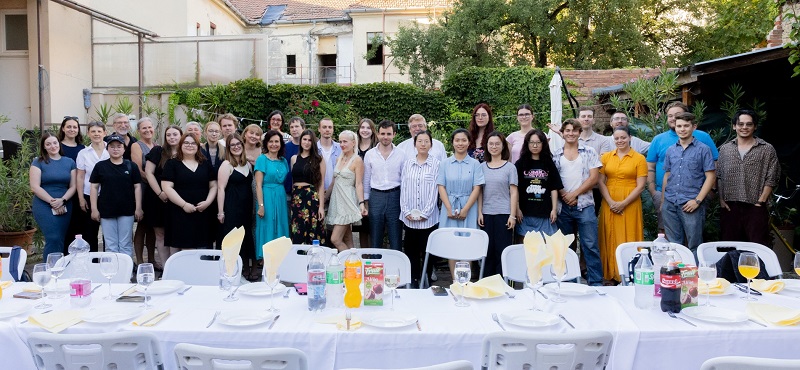
Foreign students from fourteen countries took part in the 25th Hungarian Studies Summer University at the University of Szeged.
Photo by Anita Kovács
“The Szeged program’s strength lies in its first-rate and diverse cultural content – for us, this is just as important as the language itself,” said Anett Árvay. “All courses are taught by faculty members of the University of Szeged’s Faculty of Humanities and Social Sciences, who have an excellent command of English and are researchers in their fields. This combination sets the Szeged Summer University apart.”
Original Hungarian text by Sára Bisztriczki
Photos by Anita Kovács