Long-duration space missions – including future expeditions to Mars – will depend heavily on protecting astronaut health, which in turn is critical to the success of the entire mission. Recognizing this, scientists at the University of Szeged have developed a research project that may play an important role in meeting this need. Such research is essential, as astronauts are exposed to intense physiological and psychological stress during spaceflight, and these extreme conditions can disrupt the human microbiome – the complex community of microorganisms that supports digestion, immune defense, inflammation control, and numerous metabolic processes. When this balance is disturbed, astronauts may become more vulnerable to infections, inflammatory responses, digestive problems, and a wide range of metabolic disorders.
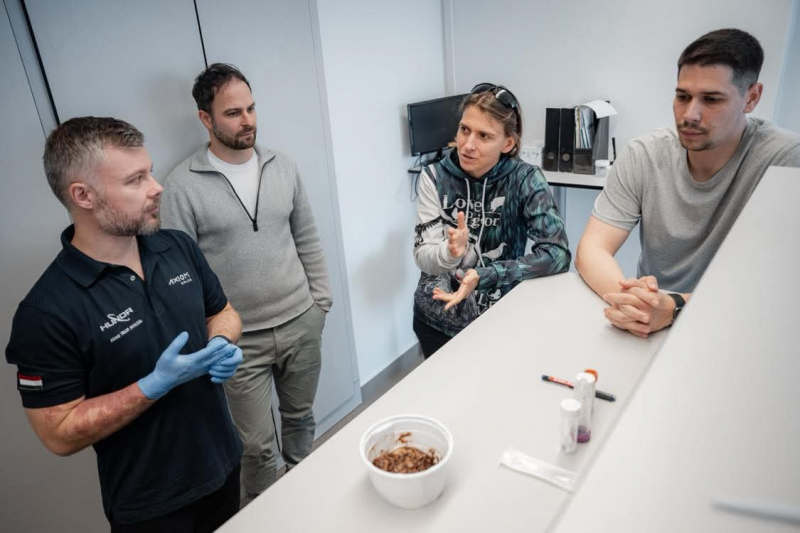
At work. From left to right: Ádám Schlégl, István Prazsák, Dóra Tombácz, and Ákos Dörmő
Led by Dr. Dóra Tombácz, Associate Professor at the Institute of Medical Biology of the University of Szeged’s Medical School, the Hungarian research team designed a project to examine how microgravity, cosmic radiation, dietary changes, and other mission-specific stressors jointly influence the gut and oral microbiota, as well as the microbial composition of urine (the so-called urobiome). In short, the research aims to uncover how spaceflight reshapes the human microbiome.
The SZTE researchers joined the HUNOR program (Hungary’s national astronaut initiative established to support space research, astronaut training, and scientific experiments conducted in orbit) after their project – “Mapping Astronaut Meta-GenOmics: A Microbial Profiling Research” (MAGOR) – was selected for inclusion.
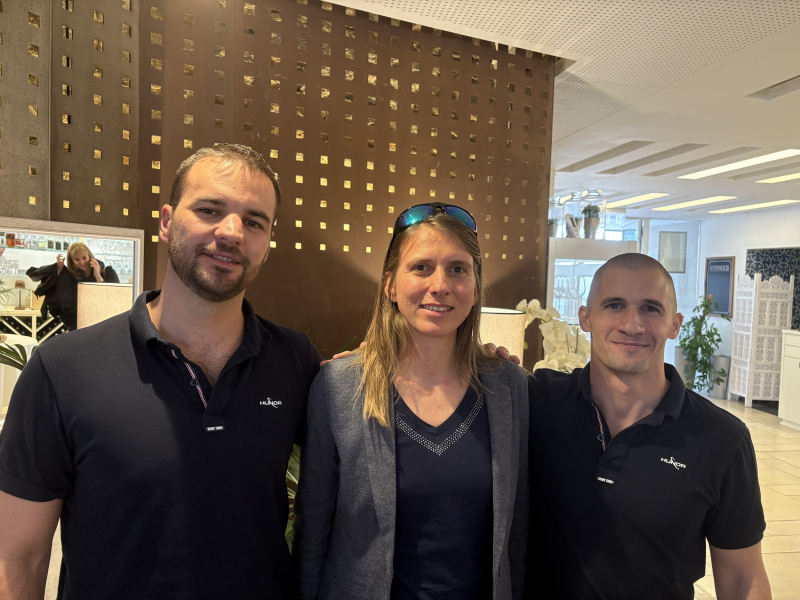
Dóra Tombácz with Tibor Kapu and Gyula Cserényi during the two astronauts’ visit to Szeged
The Szeged-based researchers were informed of their project’s approval in June of last year, leaving them less than twelve months to prepare before the work commenced as part of the Axiom-4 mission to the ISS this summer. The preparation phase required not only full compliance with the strictest ethical standards but also the development of a thoroughly detailed methodology – covering everything from the frequency and procedures of sample collection to the processing of the returned materials. The research was carried out in close professional collaboration with experts from the HUNOR program.
The research examines changes in the gut, urine, and oral microbiome. For this reason, samples from the participating astronauts were collected before launch, at multiple points during their stay in space, and after their return to Earth. The Szeged team aims to understand the scale and nature of microbiome shifts during short-duration spaceflights, how these changes differ across the gut, oral, and urinary microbial communities, and whether the time-series samples collected before, during, and after the mission reveal patterns that could guide targeted preventive or therapeutic strategies – such as dietary modifications or probiotic interventions. In the long term, such insights may also prove valuable for extended missions, including future expeditions to Mars.

István Prazsák, Gábor Gulyás, and Dóra Tombácz at the Huniverzum exhibition, in front of a replica of the ISS module where parts of the experiments were carried out
“Our goal is to complete the analysis of all incoming samples and data by late spring or early summer next year, by which time we expect to publish at least one paper summarizing our results. This research is pioneering in several ways. Earlier studies of a similar nature did not have access to the advanced technologies we can now use; in addition, our work includes not only DNA-based but also RNA-based analyses. We are also examining the urinary microbiome under spaceflight conditions – a completely new direction that may yield highly valuable insights. While previous research focused solely on bacterial communities, our project employs methods that enable us to map the full spectrum of viruses as well, collectively known as the virome. Taken together, these advances provide a foundation for future therapeutic studies that could significantly improve the protection of astronaut health during space missions and, in turn, support mission success. However, it is important to note that extreme stress on Earth can also disrupt the human microbiome – and the knowledge gained from this project may help us address such changes more effectively in the future,” said Dr. Dóra Tombácz.
Source: SZTEinfo
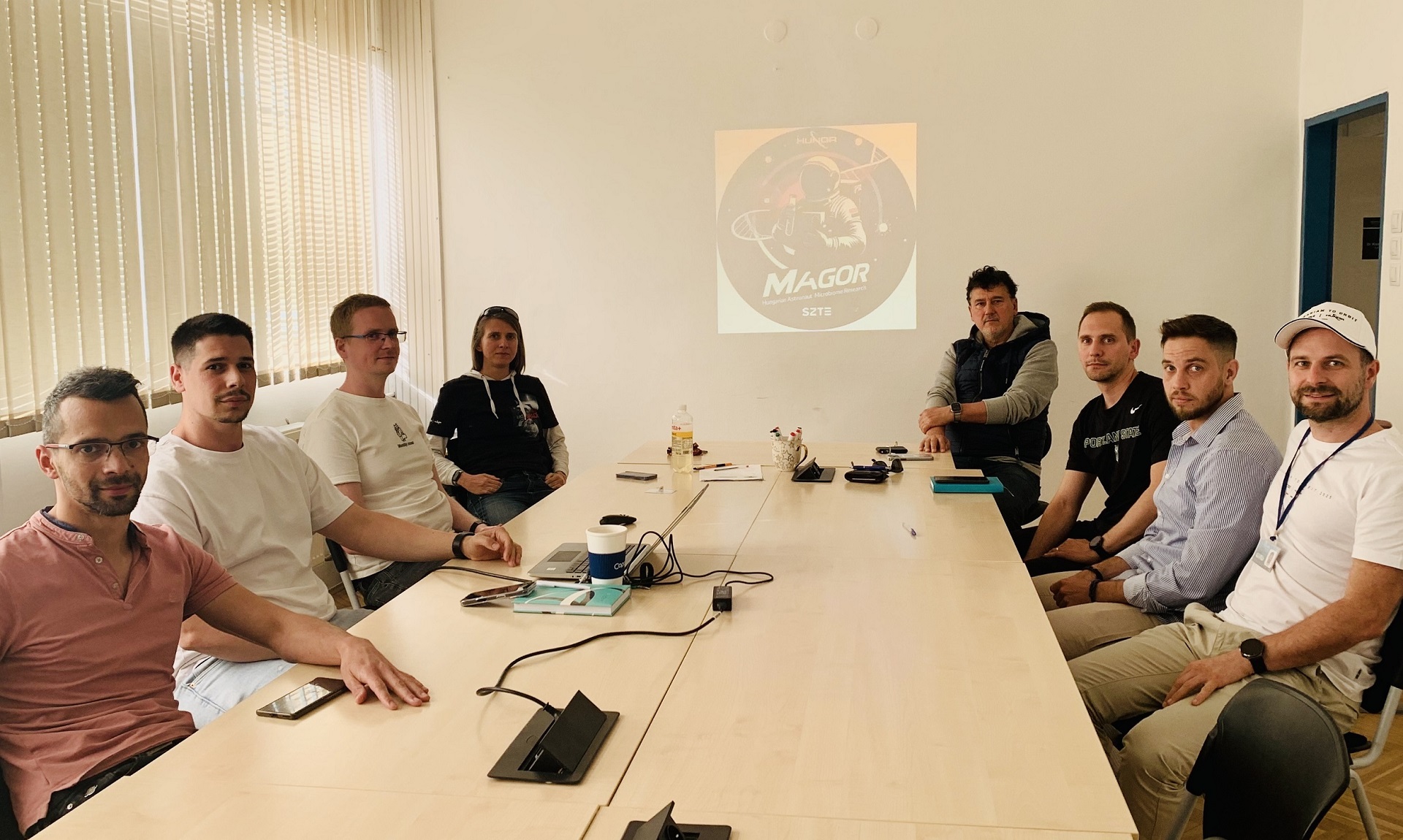
Feature photo: Members of the MAGOR team, from left to right – Balázs Kakuk, Ákos Dörmő, Gábor Gulyás, Dóra Tombácz, Zsolt Boldogkői, Zsolt Csabai, Tamás Járay, and István Prazsák