At a dinner held in honor of literary Nobel laureate László Krasznahorkai, Sweden’s Ambassador to Hungary also welcomed Katalin Karikó, the biochemist awarded the 2023 Nobel Prize in Physiology or Medicine. The special occasion brought together two Nobel Prize-winning Alumni of the University of Szeged’s predecessor institution, József Attila University, highlighting a shared academic legacy that spans disciplines and generations. Against this backdrop, the article explores how the University of Szeged continues to engage with, preserve, and promote the internationally acclaimed work of its distinguished writer alumnus, László Krasznahorkai.
“It creates trust and a shared sense of identity when we say: I was a student, instructor, or researcher at the József Attila University of Szeged, or JATE. Indeed, JATE refers both to the institution and to an entire era. That is why, for me, it is not only my university years beginning in 1973 that are significant, but also the 37 years between 1962 and 1999 when the University of Szeged was known as József Attila University,” Katalin Karikó said at the press conference held to present the first recipients of the JATE Award, explaining why she chose the JATE name for the distinction, which she established using funds from her Nobel Prize.
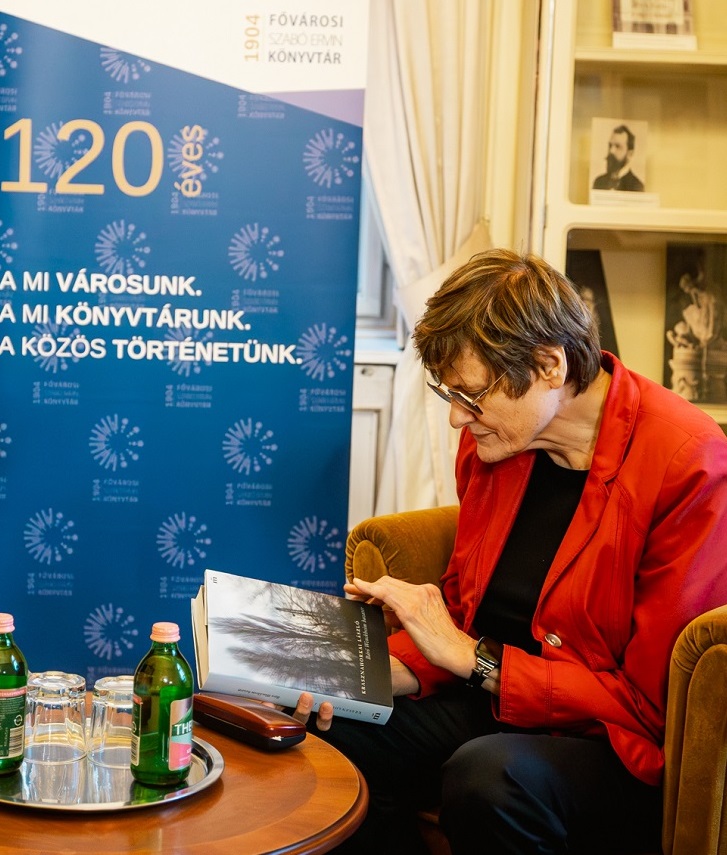
Katalin Karikó with an autographed copy of László Krasznahorkai’s Baron Wenckheim’s Homecoming
Photo: István Sahin-Tóth
Heartfelt congratulations
On October 9, 2025, the day the Nobel Prize in Literature was announced, Swedish Radio contacted Katalin Karikó, the first Hungarian woman scientist to receive a Nobel Prize, for an interview.
“They asked where I keep my Nobel Prize, what I did with the prize money, and whether I knew that a fellow Hungarian, Krasznahorkai, had been awarded the Nobel Prize in Literature. I told them that Krasznahorkai and I attended JATE, the institution now known as the University of Szeged, at the same time,” Professor Karikó recalled.
The scientist later congratulated László Krasznahorkai by email on receiving the Nobel Prize in Literature. “The literary Nobel laureate replied to my message. He signed his email: ‘László Krasznahorkai (former Covid patient)’,” Karikó added.

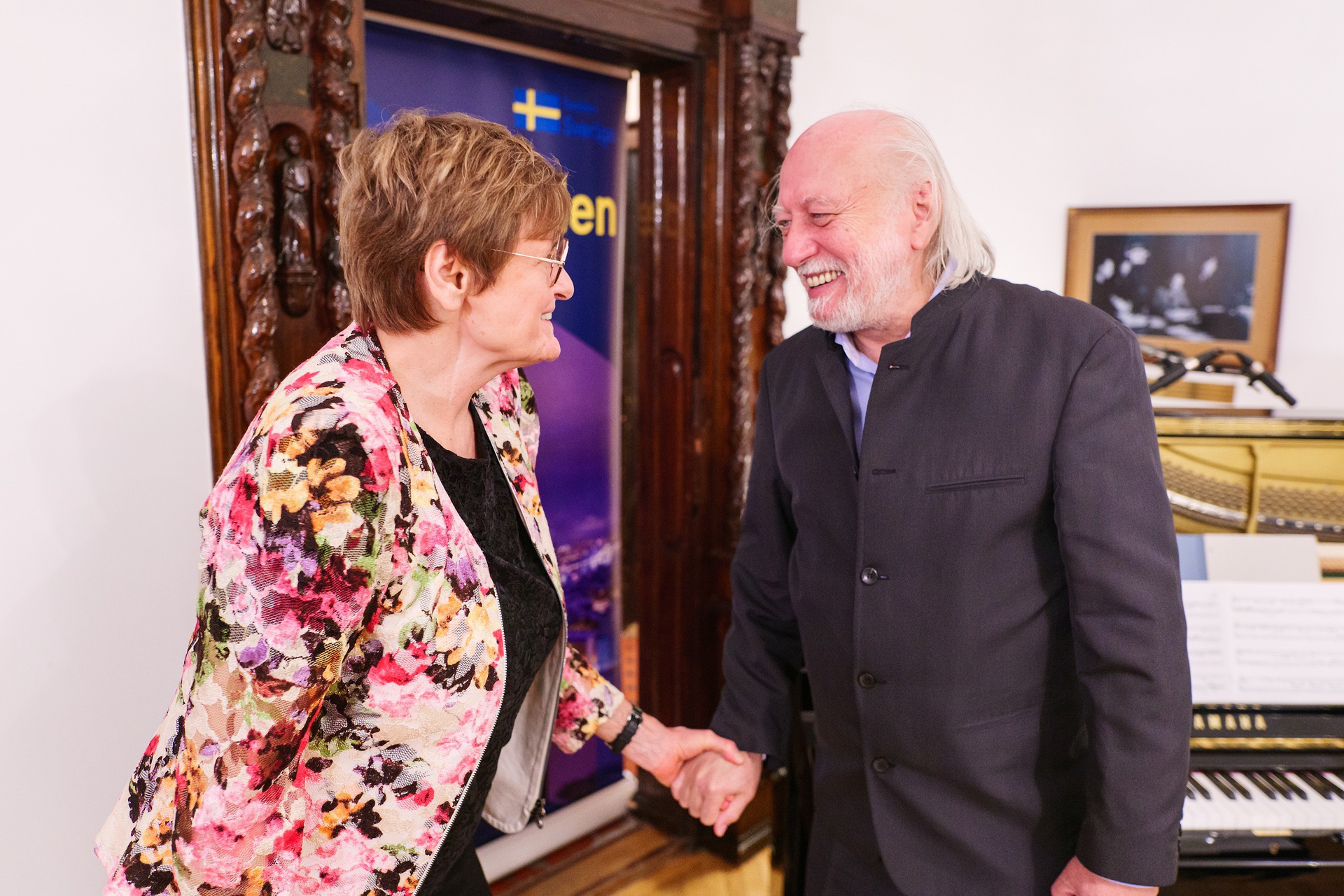
Two former JATE students whose studies in Szeged began in 1973: Katalin Karikó, Nobel laureate in 2023, and László Krasznahorkai, Nobel laureate in 2025, were delighted to meet, with the Swedish Ambassador’s Nobel evening providing them a unique opportunity for a friendly conversation.
Photo: Olivér Sin / Embassy of Sweden
At a Nobel Prize celebration, the two Nobel laureates with shared academic roots in Szeged had the opportunity to meet in person. Katalin Karikó, now Professor at the University of Szeged and recipient of the 2023 Nobel Prize in Physiology or Medicine, and László Krasznahorkai, awarded the 2025 Nobel Prize in Literature, both began their studies in 1973 at the university’s predecessor institution, József Attila University (JATE). Their meeting and handshake highlighted the enduring academic and personal ties forged in Szeged, reconnecting paths that first crossed decades earlier.

Photographs taken at the Nobel Prize Award Ceremony on December 10 – depicting Hungarian Nobel laureates Ferenc Krausz (Physics, 2023), Katalin Karikó (Physiology or Medicine, 2023), and writer Imre Kertész (Literature, 2002) together with King Carl XVI Gustaf of Sweden – are preserved as treasured keepsakes at the Swedish Ambassador’s residence.
Photo: Olivér Sin / Embassy of Sweden
From the traditional October announcement of the Nobel Prize decisions to the award ceremony held on December 10 in Stockholm, each year’s laureates are featured across a wide range of public settings and platforms.
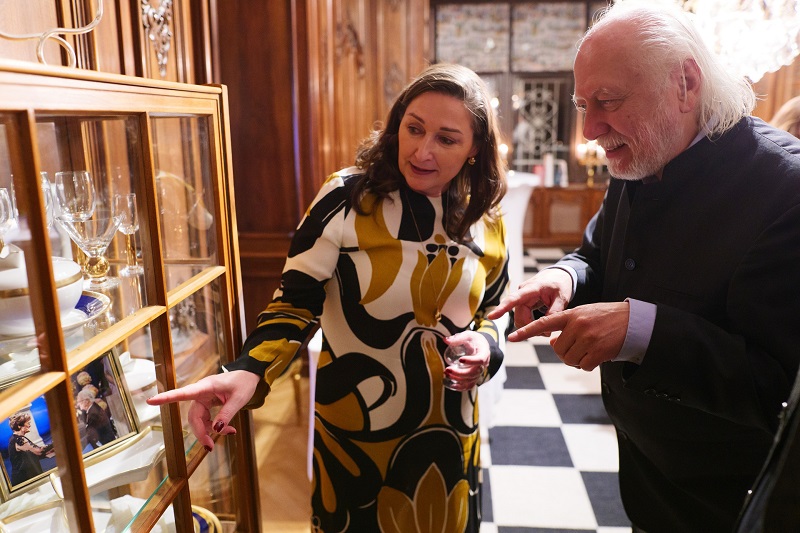
Diana Madunic, Sweden’s Ambassador to Hungary, displayed a photograph of Katalin Karikó and the Swedish monarch, taken at the Nobel Prize Award Ceremony on December 10, 2023, during the celebratory event held in honor of László Krasznahorkai, the 2025 Nobel laureate in Literature.
Photo: Olivér Sin / Embassy of Sweden
It is customary for the Swedish embassy in the laureate’s country of residence to host a celebration in honor of the current Nobel Prize laureate.
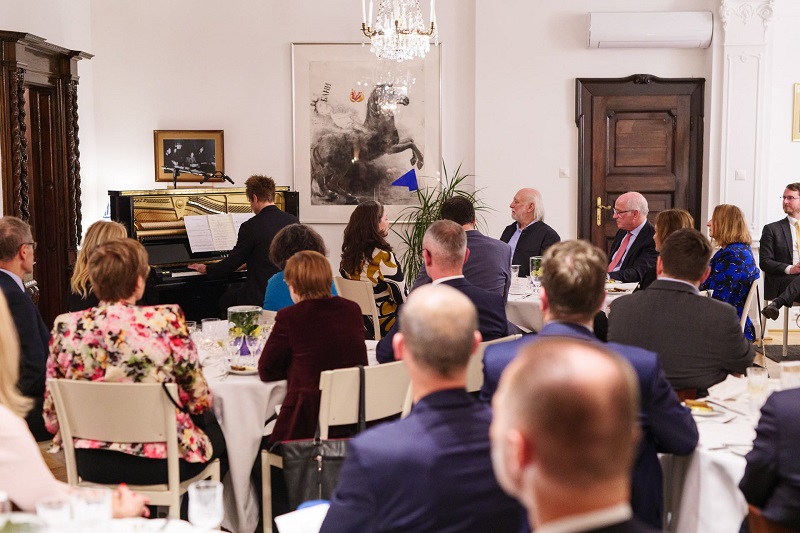 On November 20, 2025, Sweden’s ambassador to Hungary hosted a formal dinner in honor of László Krasznahorkai, the 2025 Nobel laureate in Literature.
Photo: Olivér Sin / Embassy of Sweden
On November 25, 2025, the Embassy of Sweden in Budapest shared on its social media that, ahead of Nobel Week in Stockholm, Ambassador Diana Madunic had hosted a friendly dinner on November 20 in honor of this year’s Nobel laureate in Literature, László Krasznahorkai.
The Swedish diplomatic briefing and the accompanying photographs offer a glimpse into the atmosphere and details of the occasion.
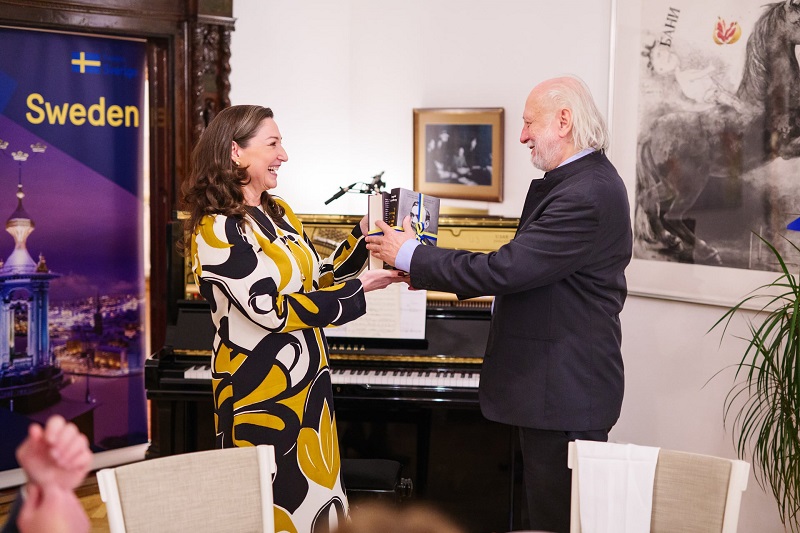
Sweden’s Ambassador to Hungary, Diana Madunic, presented László Krasznahorkai with a copy of the biographical novel NOBEL – The Mysterious World of Alfred by Ingrid Carlberg at a ceremony held in Budapest in honor of the Nobel laureate.
Photo: Olivér Sin / Embassy of Sweden
Hungarian Nobel laureates were also invited to the event.
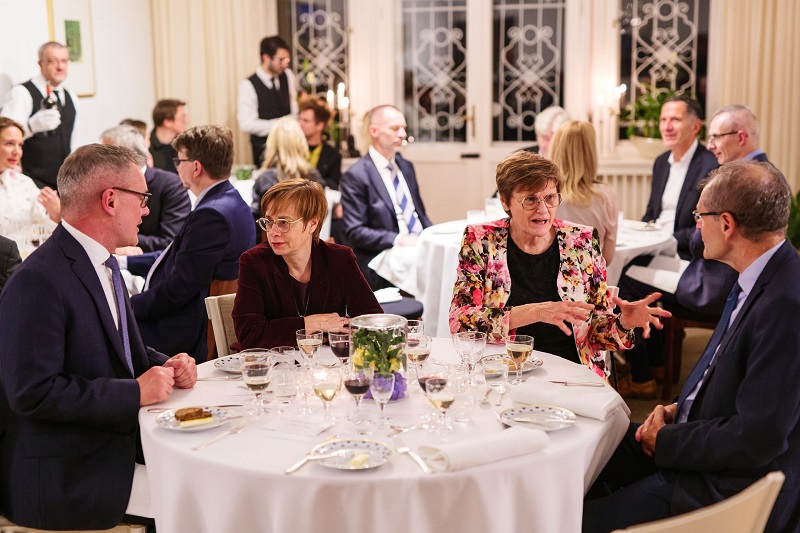
Katalin Karikó, the first Hungarian woman to receive a Nobel Prize, attended the dinner celebrating her former fellow student László Krasznahorkai, awarded the Nobel Prize in Literature, while she was in Hungary for university engagements in Szeged.
Photo: Olivér Sin / Embassy of Sweden
“It was an honor for us to welcome Katalin Karikó, recipient of the 2023 Nobel Prize in Physiology or Medicine, whose presence made the evening even more inspiring and truly memorable for everyone,” reads a statement published on the social media page of Sweden’s diplomatic mission.
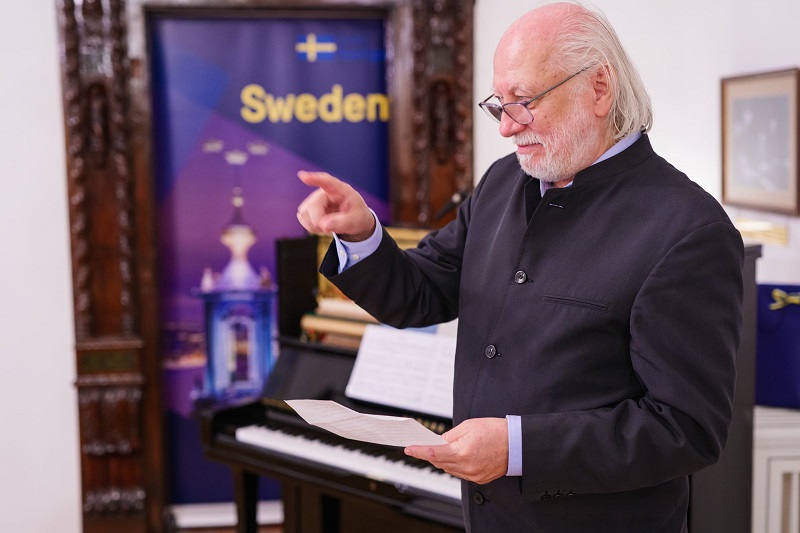
At the celebration held at the Swedish ambassador’s residence, Nobel laureate László Krasznahorkai read excerpts from his book The World Goes On (Hungarian title: Megy a világ).
Photo: Olivér Sin / Embassy of Sweden
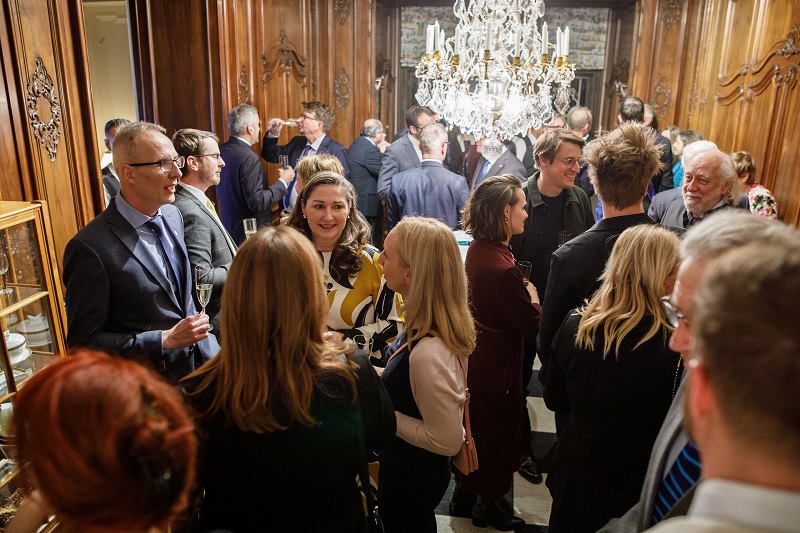
The informal gathering and dinner, hosted by Ambassador Diana Madunic, brought together the literary Nobel laureate’s closest colleagues, friends, and creative partners.
Photo: Olivér Sin / Embassy of Sweden

The Swedish ambassador’s Nobel evening also provided an opportunity for a meeting between two former JATE students who both began their studies in Szeged in 1973: Katalin Karikó, Nobel laureate in 2023, and László Krasznahorkai, Nobel laureate in 2025.
Photo: Olivér Sin / Embassy of Sweden
“The Nobel Prize-winning research biologist – who perhaps understands better than anyone what awaits a laureate in Stockholm – warmly welcomed this year’s Nobel laureate in Literature,” the Embassy of Sweden told the University of Szeged’s Press Office.
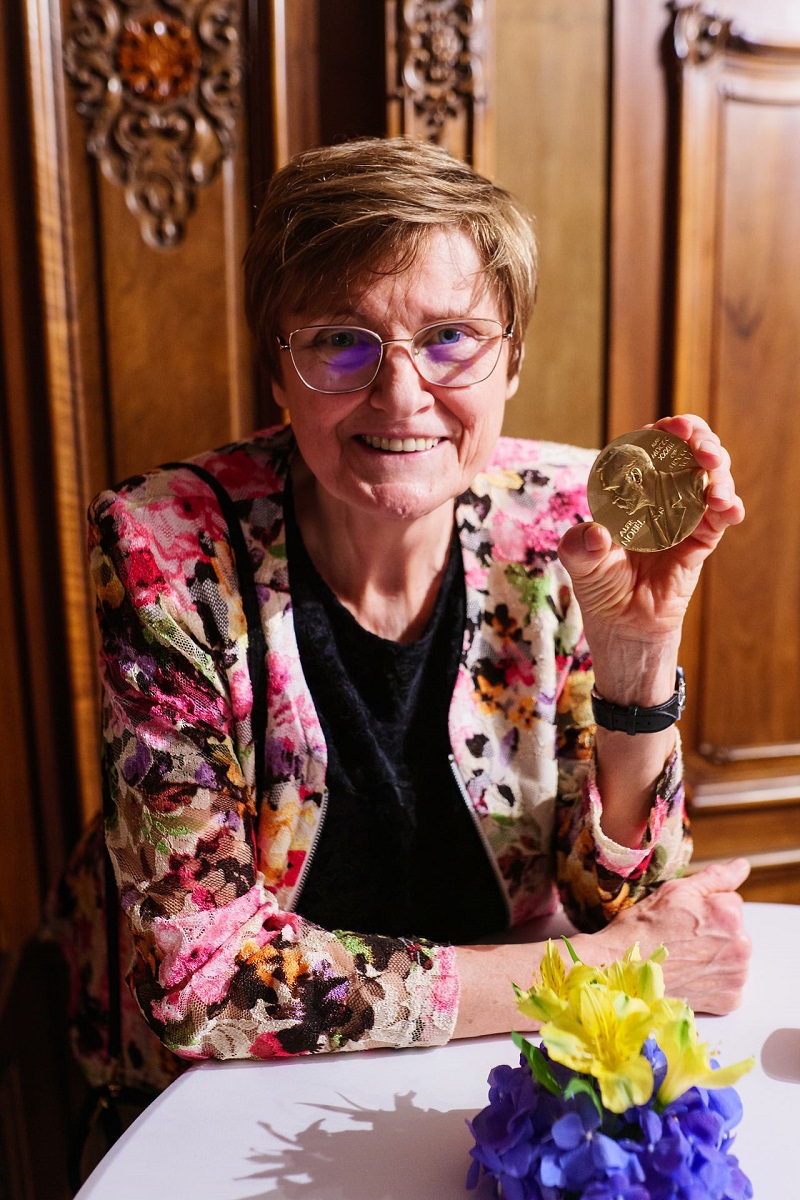
Katalin Karikó, the 2023 Nobel laureate and a professor at the University of Szeged, shared her experiences of the Nobel festivities at the event hosted by the Swedish Embassy – just days before Nobel Week 2025, held from December 6 to 12.
Photo: Olivér Sin / Embassy of Sweden
Krasznahorkai’s early writings in the Szeged student magazine IMPULZUS
According to László Krasznahorkai’s official biography, also available on the website of the Hungarian Digital Literary Academy, his academic trajectory includes formative years in Szeged, followed by further studies in Budapest:
“He was born on January 5, 1954, in Gyula. (…)
1973–1976: JATE Faculty of Law, Szeged.
1976–1978: ELTE Faculty of Law, Budapest. (…)
1978–1983: ELTE Faculty of Humanities, Hungarian Language and Literature and Cultural Education program (thesis on Sándor Márai’s literary work in exile).”
Interestingly, some scholarly sources have incorrectly identified Tebenned hittem (I Believed in You), the short story published in Mozgó Világ in 1977, as László Krasznahorkai’s first work to appear in print. In fact, his earliest published writings date back to his law studies in Szeged, where they appeared in IMPULZUS, the mimeographed student magazine of JATE’s Faculty of Law and Political Sciences, produced in a print run of 300 copies.
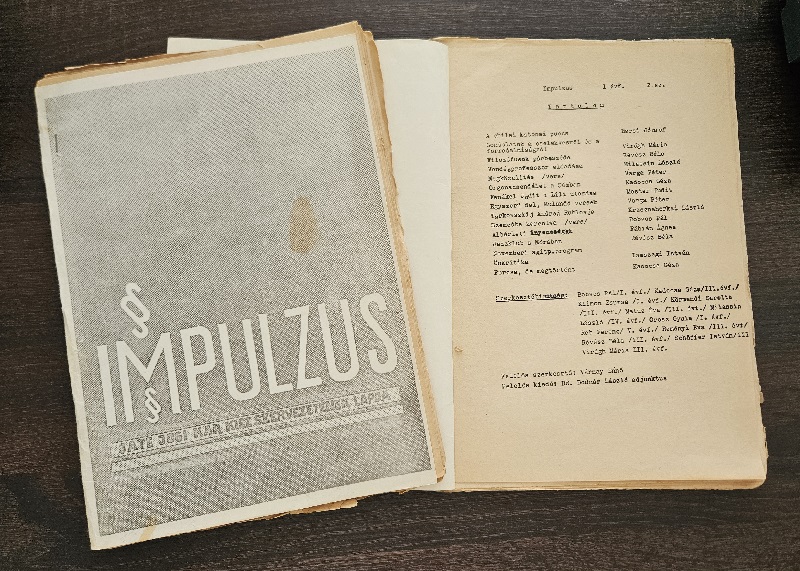
The cover and table of contents of IMPULZUS, the student magazine of JATE’s Faculty of Law and Political Sciences
Photo: Ilona Újszászi

Several surviving copies of the student magazine have been preserved by its founding editor-in-chief, Professor Ernő Várnay, legal scholar.
Photo: Ilona Újszászi
The digitized issues of IMPULZUS – including two articles by law student László Krasznahorkai – are available in the Contenta repository of the University of Szeged’s Klebelsberg Library and Archives.
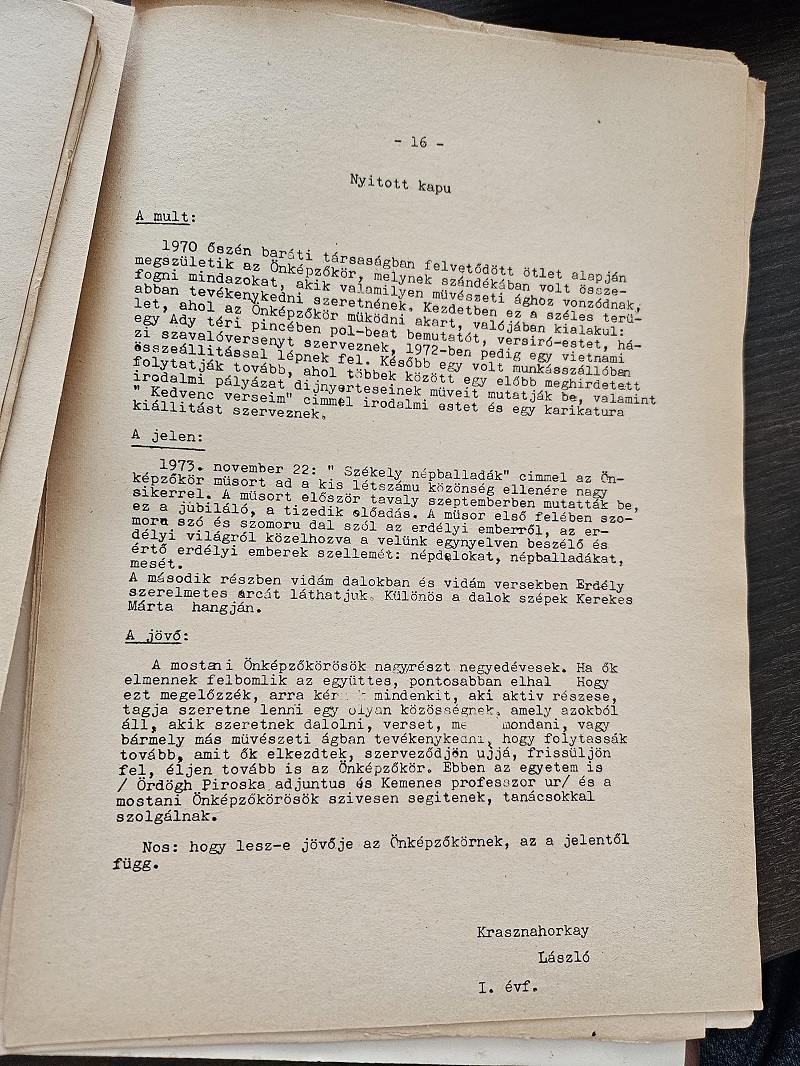
In his article Nyitott kapu (Open Gate), published in the first 1973 issue of IMPULZUS, László Krasznahorkai – then a first-year student at JATE’s Faculty of Law and Political Sciences – argued for the importance of the self-education movement and the need to preserve it.
Photo: Ilona Újszászi
In the second 1973 issue of IMPULZUS, László Krasznahorkai, in his article Tarkovszkij ’Andrej Rubljov’-ja (Tarkovsky’s ‘Andrei Rublev’), reflects, among other themes, on the challenges of the creative path.
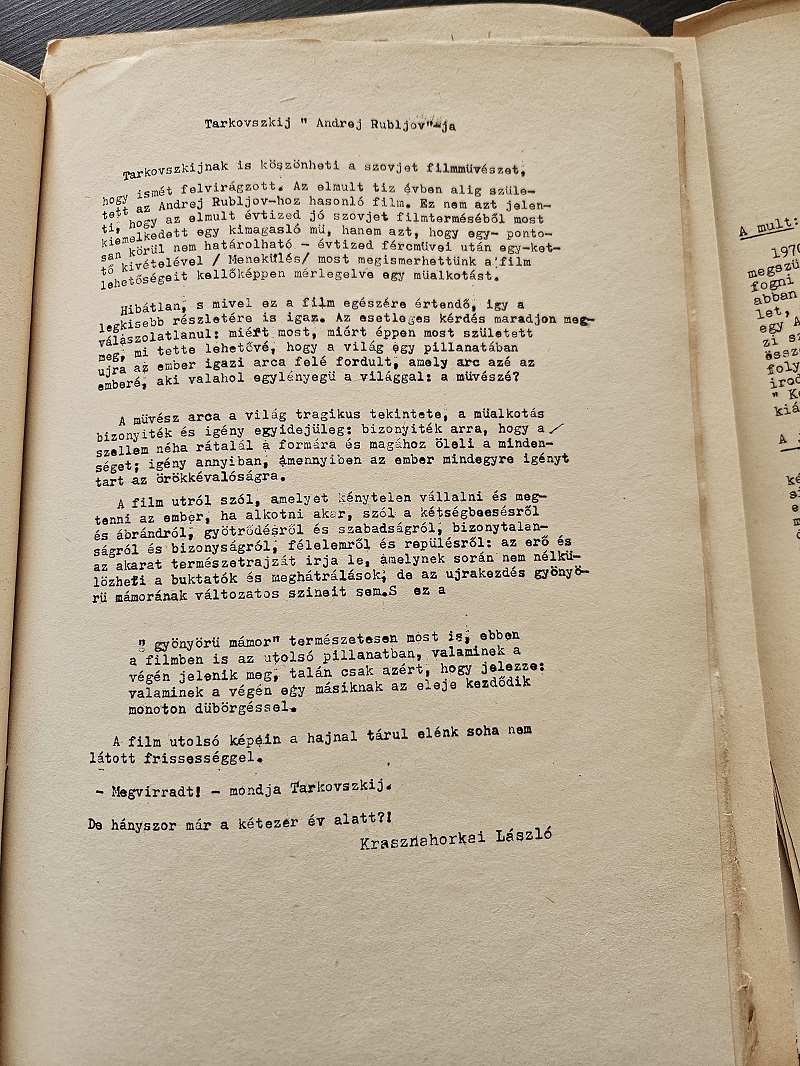
“The film is about a path one is compelled to choose and walk if one wishes to create; it speaks of despair and longing, torment and freedom, uncertainty and conviction, fear and flight. It traces the natural history of strength and will, a journey that cannot do without pitfalls and retreats, nor without the beautiful intoxication of new beginnings in all their varied colors,” the young Krasznahorkai writes.
“The artist’s face is the tragic gaze of the world, and the work of art is simultaneously evidence and demand: evidence that the spirit sometimes finds form and embraces the universe; demand in the sense that humans continually lay claim to eternity,” writes the 19-year-old law student, already foreshadowing the mindset and stylistic sensibility of the 71-year-old Nobel Prize-winning author.
Observant eyes on the milestones of the author’s oeuvre
Over the years, the University of Szeged has welcomed back its former student, László Krasznahorkai, on multiple occasions as his national and international recognition grew. Among the preserved records of these encounters is the audio recording of the 1996 Móra Student Residence Hall Evenings event featuring the writer, now available in digital format through the Contenta repository of the SZTE Klebelsberg Library and Archives.
Researchers, faculty members, and students at the University of Szeged have long followed – and continue to follow – Krasznahorkai’s career, which has since been crowned with the Nobel Prize. It is fair to say that the Faculty of Humanities and Social Sciences at SZTE hosts the most significant domestic literary research group dedicated to the Krasznahorkai oeuvre. As reported on SZTE’s news portal, in 2024 literary scholar Gábor Szabó, Associate Professor at the Department of Hungarian Literature, published the monograph Kilátás az utolsó hajóról. Krasznahorkai László prózavilága (View from the Last Ship: The Prose World of László Krasznahorkai), written in Hungarian, offering an in-depth analysis of the novelist’s literary art.
The depth of scholarly engagement is further reflected in the fact that László Krasznahorkai’s name appears in the titles of around two dozen theses preserved in SZTE’s Repository of Theses. His work has also been the subject of doctoral research, including the dissertation A szépség beállítása – Krasznahorkai László regényuniverzumáról (Setting Beauty: On the Novel Universe of László Krasznahorkai).
Taken together, Krasznahorkai’s achievements are a great source of pride for the SZTE community. That pride found formal expression following the announcement of the Nobel Prize, when the leadership of the University of Szeged extended its congratulations to the Nobel Prize-winning author.
Krasznahorkai at JATE’s first alumni reunion
As part of the University of Szeged’s University Day program, on November 14, 2025 – ahead of the ceremony held to award the first JATE Prize, founded by Katalin Karikó – Ágnes Erdélyi, former mentor at SZTE’s Móra Ferenc Student Residence Hall, conducted a special literature class on the writings of László Krasznahorkai. The session was attended by two classes from SZTE’s high school for teaching practice, as well as interested alumni. In fact, Ágnes Erdélyi has met Krasznahorkai on several occasions and previously organized discussions with him both at the residence hall and at Szeged’s iconic Grand Café.

Ágnes Erdélyi discussed László Krasznahorkai’s writing in a special literature class for students of SZTE Báthory István High School and Primary School for Teaching Practice, held in connection with the first JATE alumni reunion as part of the University of Szeged’s University Day program.
Photo: Mónika Szalay
Reflecting on the special literature class devoted to the Nobel laureate’s work, Ágnes Erdélyi wrote on her social media page:
“I concluded ‘a one-class introduction to the Hungarian master of the apocalypse’ by noting how interesting it is that in his distinguished oeuvre there is only one true love story – namely, in the volume Az urgai fogoly (The Prisoner of Urga), where a character named Krasznahorkai experiences a deep and steadfast love for a Beijing opera singer, whose fragile beauty simply blinded him.”
She then recalled a personal memory that gave the discussion an added resonance:
“Many years ago, at a literary evening held at the Impala House in Szeged, a reader posed a question to László Krasznahorkai that was anything but straightforward – indeed, almost unanswerable: What is the meaning of life, what is most important in life? Krasznahorkai replied without hesitation: love. And in that moment – during this special literature class – the ‘harmony of the universe’ was restored.”
A highlighted initiative of SZTE’s first JATE alumni reunion was the inauguration of the Alma Mater #könyvespolc (#bookshelf) collection. At the ceremony, held on November 14, 2025, at the staircase landing leading to the reading rooms of SZTE’s Klebelsberg Library and Archives, Prof. Dr. Márta Görög, the University of Szeged’s Representative for Alumni Affairs, emphasized the diversity of the collection:
“The authors of the books placed on the shelf include both emerging literary voices and internationally recognized creators,” she said. She specifically mentioned László Krasznahorkai, who published his first review in SZTE’s student magazine – a copy of which has now been placed on the shelf. “This means that works by two Nobel laureates are already included in the collection, as Katalin Karikó’s signed volume, Breaking Through: My Life in Science, is also part of the series.”
Literary exchanges between Nobel laureates
“I read scientific literature for several hours a day, while I rarely read fiction,” Katalin Karikó has said in several previous interviews. In Szeged, as a friendly gesture, she received two signed volumes by her fellow JATE alumnus, László Krasznahorkai: the short story collection Kegyelmi viszonyok (Relations of Grace), which offers a glimpse into Krasznahorkai’s literary world, and his latest novel, A magyar nemzet biztonsága (The Security of the Hungarian Nation).
Krasznahorkai also signed his novel Báró Wenckheim hazatér (Baron Wenckheim’s Homecoming) for the mRNA researcher and 2023 Nobel laureate in Physiology or Medicine. The inscription reads:
“To Katalin Karikó, with sincere admiration and as a grateful vaccine subject – László Krasznahorkai, Budapest, November 11, 2025.”
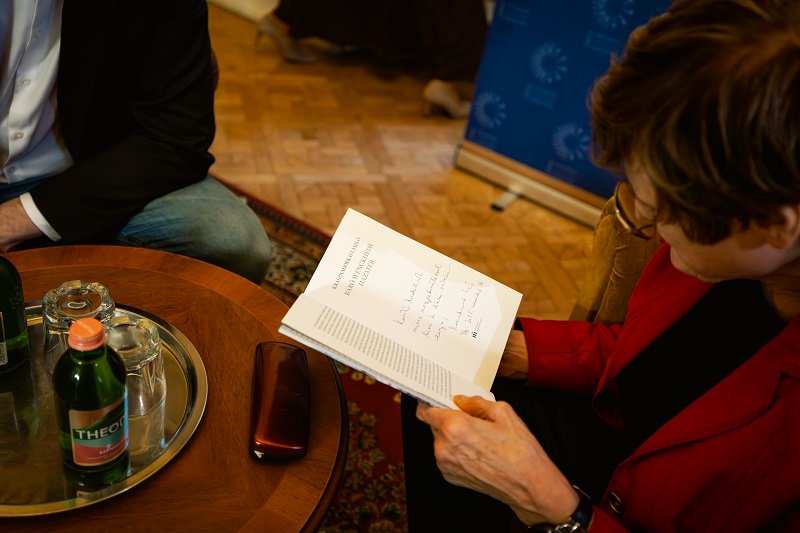
Katalin Karikó received a signed volume by literary Nobel laureate László Krasznahorkai during her visit to a Budapest library on Budapest Day, November 17, 2025.
Photo: István Sahin-Tóth
Gergely Karácsony, Mayor of Budapest, presented László Krasznahorkai’s novel Báró Wenckheim hazatér (Baron Wenckheim’s Homecoming) to Katalin Karikó in the palace built by Count Frigyes Wenckheim, which today houses the Metropolitan Szabó Ervin Library.

As a guest of the Budapest library, Katalin Karikó signed her memoir for László Krasznahorkai. Gergely Karácsony, Mayor of Budapest, undertook to ensure that the signed copy would be delivered to the writer.
Photo: István Sahin-Tóth
“From one Nobel laureate to another – it was an honor for me to hand over László Krasznahorkai’s signed volume to Katalin Karikó, and the scientist’s signed book will soon reach the author as well,” the mayor wrote on his social media page. Beneath a photo taken with the Nobel laureate scientist, Gergely Karácsony added: “Science and literature often draw from the same source – from questions, doubt, openness, and the desire to understand the world and each other.”
Later, the Nobel laureate biologist spoke about her own life and her connection to literature as part of the Budapest library’s discussion series titled For Me, Reading…
Original Hungarian article by Ilona Újszászi
Photos by István Sahin-Tóth and Ilona Újszászi (University of Szeged),
and Olivér Sin (Embassy of Sweden)
Feature photo – Handshake: At the Swedish Embassy’s Nobel evening, two former students starting their studies at JATE in 1973 met in person for the first time – Katalin Karikó, 2023 Nobel laureate and SZTE professor, and László Krasznahorkai, 2025 Nobel laureate in literature.
Photo: Olivér Sin / Embassy of Sweden