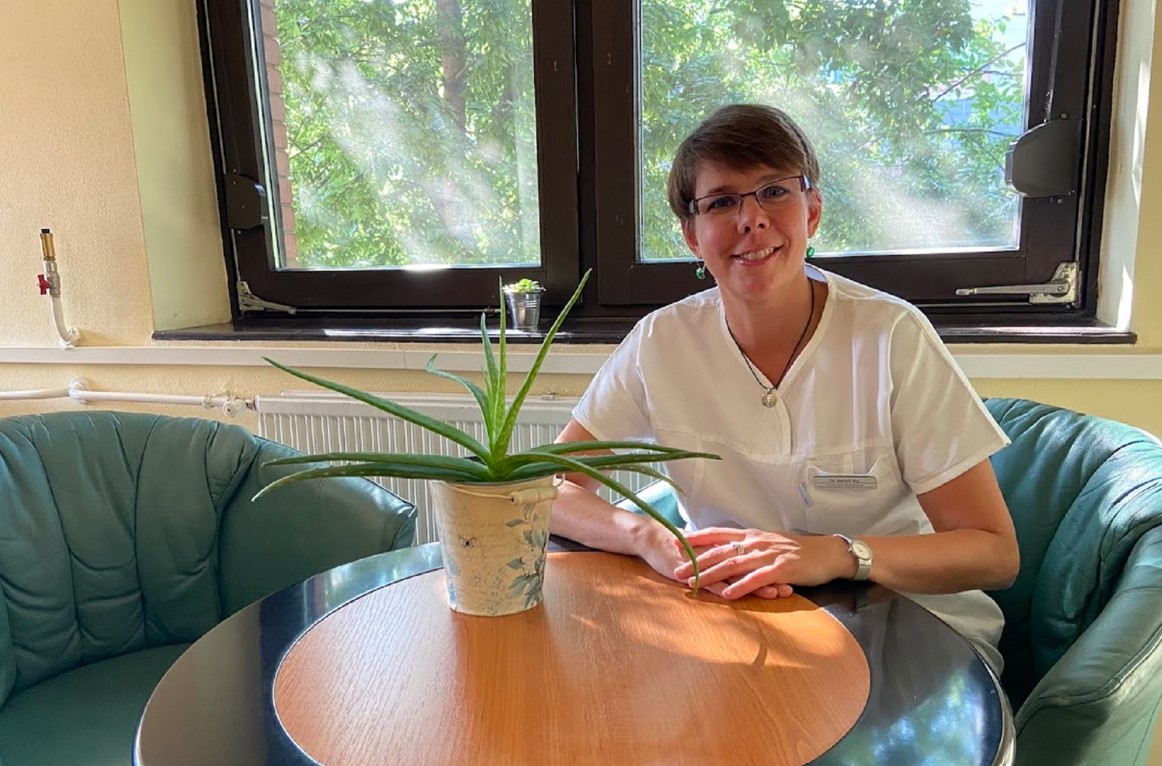
Starting in July 2025, Dr. Ria Benkő – associate professor at the Faculty of Pharmacy’s Institute of Clinical Pharmacy and chief pharmacist heading the Clinical Pharmacy Institute at the Albert Szent-Györgyi Clinical Center – will serve as president of the European Drug Utilisation Research Group (EuroDURG). She spoke with us about this prestigious recognition and the responsibilities her appointment entails.
The organization’s mission: promoting efficient and rational medicine use
EuroDURG is a professional organization dedicated to advancing the appropriate use of medicines. It serves as the European branch of the International Society for Pharmacoepidemiology (ISPE). Its primary goal is to analyze and better understand how medicines are used – in order to promote more rational practices. In many cases, this means using fewer medicines or applying them in a more conscious and carefully considered manner.
EuroDURG operates independently, free from the influence of pharmaceutical companies or any external pressure. Its members are volunteers from numerous European countries. Their work is grounded in drug utilization research – an eclectic scientific field that draws not only on quantitative statistical data but also on tools such as in-depth interviews and questionnaire-based surveys. The findings of these analyses can inform health policy decisions and are also suitable for evaluating the effectiveness of specific changes or policy measures.
As Dr. Ria Benkő explained, drug utilization research is a relatively young scientific field, with a history of just around 40 years. Interestingly, EuroDURG itself was founded in 1996 in Balatonaliga, Hungary. Most recently, the organization released the second edition of its comprehensive handbook on the topic – Drug Utilization Research: Methods and Applications (Wiley) – which presents the field’s methodology in detail, highlights its application in key areas, and summarizes the findings of studies conducted to date. Most members of EuroDURG are university lecturers, clinical experts, or members of national academies – often combining these roles – and the network also includes colleagues working at drug regulatory authorities or health insurance providers.
“Members of the organization examine every aspect of medicine use: which pharmaceutical products are available, what physicians or pharmacists recommend, what patients choose to buy for themselves, how well patients adhere to their prescribed therapy, what side effects may occur during use, and what factors influence prescribing, consumption, or even discontinuation of therapy. Their analyses also extend to how closely healthcare professionals follow clinical guidelines – for example, whether they apply first-line therapies. The ultimate goal of their work is to ensure that the medicines available to us are used as rationally and cost-effectively as possible. This means selecting the most appropriate active substances for the right indications, in the right doses and formulations – maximizing therapeutic benefits while minimizing side effects,” the head of the research group explained.
The first president from Central and Eastern Europe
Dr. Ria Benkő first joined EuroDURG around 2005 and, just a few years later, began serving as secretary. She held this position for 15 years, gaining extensive experience with the organization’s operations and workflows. Looking back on her long involvement, she noted that her nomination for the presidency came from fellow members. The appointment itself was no surprise: in keeping with EuroDURG tradition, a successor is selected midway through the outgoing president’s three-year term. As a result, she had already spent the past year and a half preparing to step into the leadership role.
“It is an enormous honor to have been chosen by the committee – especially since no president has ever been elected from Eastern or Central and Eastern Europe before. At the same time, it also presents a major challenge in Hungary: the discipline is more advanced and better established in other countries, with stronger professional support, higher recognition, and a broader community of experts. In many Western countries – such as Germany, the UK, Italy, or the Scandinavian nations – the president’s work is supported by a dedicated national organization and a large number of active professionals. That kind of support is less common in our region, which will make my task more difficult in certain respects,” Dr. Benkő explained.
Despite the challenges, Dr. Benkő is beginning her presidency with an enthusiastic international team and is already exploring ways to further strengthen the research group during her term. “What has proven successful and functions well must certainly be preserved – including the recurring summer schools and the triennial conferences. I would like to bring the next conference closer to Central Europe to encourage professional activity both in our region and across the continent. Looking ahead, it will be especially important to strengthen ties with partner organizations. We already have partners in Africa and South America, and I hope to build more active relationships with them – for instance, by supporting one another’s conferences or launching joint projects,” the president revealed.
Dr. Benkő went on to say that one of her key goals is to expand and strengthen the professional community in Central and Eastern Europe. “At present, relatively few publications originate from this region, and joint publications are even rarer. We have already organized joint conferences and co-authored or edited volumes, but in terms of scientific articles, there has not been much collaboration. I would like to witness that change and hope to see more joint publications in the future.”
Forward-looking collaboration with SZTE
Dr. Ria Benkő also intends to put her presidential experience to good use at the University of Szeged. She revealed that, in collaboration with colleagues from SZTE’s Directorate of IT and Services, she is working on the development of an online system that will allow the university’s clinics to directly access drug utilization reports.
“We are actively working to bring this project to life. Once completed, clinic directors will be able to monitor monthly trends in medication use within their respective departments. They will see which drugs are used most frequently, which active substances are most commonly applied within specific therapeutic areas or drug classes, and what the average volume and value of medicines used per patient looks like at their clinic. This kind of data can be extremely valuable, and the resulting professional analyses could serve as a foundation for future improvements,” the president explained.
Based on Dr. Ria Benkő’s experience, this type of information can be highly useful in practice. It can greatly assist clinic directors in making informed decisions about where improvements or interventions are needed – or, conversely, what is working well and worth continuing. In addition to its practical relevance, the project also opens up academic opportunities. PhD students at the University of Szeged can take part in EuroDURG’s analyses and research, gaining valuable experience in this field.
“I am optimistic that this will be a successful period. I am working to identify synergies where I can simultaneously support the progress of my PhD students and advance the interests of the organization. I’m looking for research areas, for example, where both sides can benefit from the outcomes,” Dr. Ria Benkő concluded.
Original Hungarian article by Tímea Fülöp
Feature photo by Tímea Fülöp
Pictured: Dr. Ria Benkő