The Annual Meeting of the Hungarian Society of Physiology took place in Szeged and was jointly organized with three other Hungarian associations – the Hungarian Biophysical Society, the Hungarian Society for Microcirculation and Vascular Biology, and the Hungarian Society of Bioinformatics. What made this year’s conference particularly noteworthy was the inclusion of experts in biophysics and bioinformatics for the first time, further strengthening the event’s interdisciplinary profile. Several additional organizations contributed by hosting dedicated program sections, among them the Hungarian Anatomical Society, the Hungarian Society for Experimental and Clinical Pharmacology, and the Wien–Innsbruck–Szeged–Heidelberg (WISe-WISH) scientific platform. Their involvement contributed significantly to the diversity of perspectives presented at the conference.

The English-language conference took place at Hunguest Hotel Szeged.
Photo: István Sahin-Tóth
The University of Szeged has long played a leading role in interdisciplinary research and collaboration – a position reaffirmed by the presentations delivered by several SZTE experts at the scientific forum held from September 2 to 5, 2025.
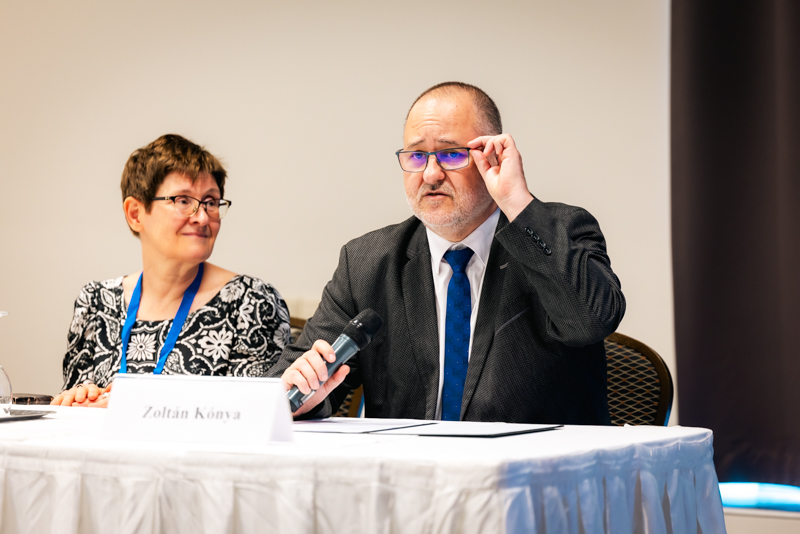
“We not only educate future experts and explore new avenues of cooperation but also put the latest therapies and methods into practice at our university clinics. Our university boasts a tradition of excellence spanning decades in the fields of physiology and pathophysiology – a tradition marked by Nobel Prizes. We take great pride in the Nobel Prizes of Albert Szent-Györgyi and Katalin Karikó, as well as in the achievements of every researcher who has helped secure our place among the world’s leading institutions in this field,” said Prof. Zoltán Kónya, Vice Rector for Science and Innovation at SZTE, in his opening remarks.
World-renowned scientists
Following last year’s international mRNA conference that brought together the world’s most renowned researchers in the field in Szeged, this gathering also reflected a world-class standard. The professional significance of the event was underscored by the presence of distinguished guests such as Nobel laureate Stefan Hell from the Max Planck Institute, Wolf Prize winner Botond Roska from the Institute of Molecular and Clinical Ophthalmology Basel, and SZTE alumnus Norbert Pardi, colleague of Katalin Karikó at the University of Pennsylvania. Their lectures and participation offered experts an exceptional opportunity to learn from and be inspired by researchers at the very forefront of science.
Sharing knowledge – merging strengths
“For the first time, our societies joined forces by merging their annual and biennial meetings into a single large-scale scientific event. In doing so, we created a platform that not only showcases the rich tradition of Hungarian life sciences but also strengthens ties between our national research community and outstanding international colleagues. For this reason, we chose English as the official language of the conference to ensure accessibility for all participants,” said Dr. Zoltán Rakonczay, head of the Department of Pathophysiology at the SZTE’s Albert Szent-Györgyi Medical School and one of the event’s main organizers.
Engaging program – global perspectives
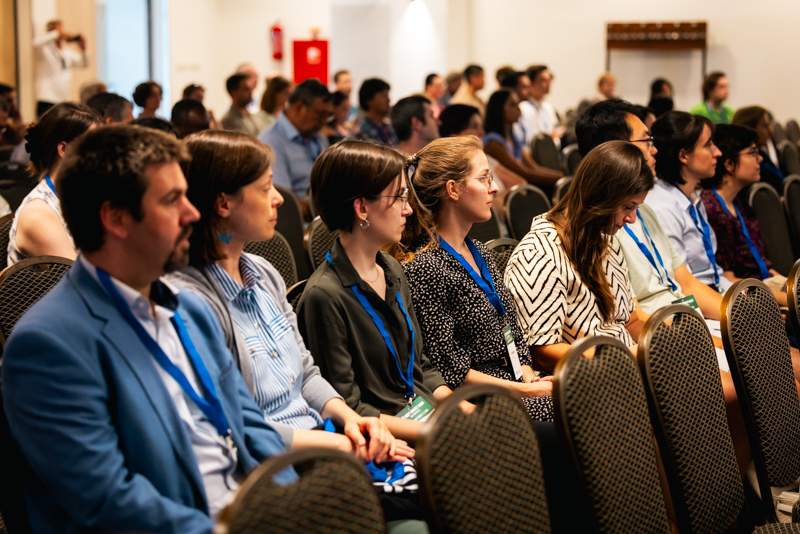
With over 360 participants, the conference stood out as one of the largest and most significant life sciences gatherings in Hungary. The program featured three international keynote lectures, 26 thematic sessions with a total of 76 invited and 68 selected oral presentations, as well as two poster sessions showcasing approximately 120 research posters over two days. Beyond the academic content, a series of social events fostered scientific dialogue, encouraged new collaborations, and promoted broader interdisciplinary exchange. Most sessions drew insight from contributions by distinguished international speakers – underscoring the global relevance and reach of the event.

Dr. Zoltán Rakonczay, head of the Department of Pathophysiology at the SZTE Albert Szent-Györgyi Medical School and one of the main organizers, welcomed participants of the conference in Szeged on September 2, 2025.
Photo: István Sahin-Tóth
Strengthening SZTE’s position
By hosting one of Hungary’s largest life sciences conferences, the University of Szeged reinforced its position as a national and international hub for scientific excellence and strategic collaboration. With the participation of distinguished international speakers, the event offered SZTE researchers a valuable opportunity to engage directly with both academic and industry partners – laying the groundwork for future collaborations.
The program also underscored SZTE’s commitment to nurturing the next generation of scientists. A dedicated competition for young researchers, along with presentations by undergraduate research students and PhD students, provided a platform for early-career scholars to share their work and gain visibility within the scientific community.
Bringing together disciplines such as physiology, biophysics, microcirculation, and bioinformatics, the conference highlighted the university’s interdisciplinary strengths. Both the city of Szeged and the University of Szeged reaffirmed their central role in Hungarian and international life sciences research – a role made all the more visible through this high-profile event.

Norbert Pardi returned to Szeged for the international conference, where he also discussed the ongoing collaboration between the University of Szeged and the University of Pennsylvania with local researchers.
Photo: István Sahin-Tóth
SZTE experts driving the dialogue
Several experts from the University of Szeged played prominent roles as section organizers at the conference, including Dr. Ferenc Bari (Department of Medical Physics and Informatics), Dr. Mihály Boros, Dr. László Juhász and Dr. Andrea Szabó (Institute of Surgical Research), Dr. Eszter Farkas (Department of Cell Biology and Molecular Medicine), Dr. Gabriella Kékesi (Department of Physiology), and Dr. Lóránd Kiss (Department of Pathophysiology). In addition, many faculty members and researchers from SZTE contributed through invited lectures, selected talks, and poster presentations.

Exploring new scientific horizons
The annual meeting focused on cutting-edge advances across the life sciences, with sessions dedicated to some of the most dynamic and interdisciplinary fields of research. Key thematic areas included:
- Neurobiology and diseases – hormonal and neural regulation of neuropsychiatric and neurological disorders
- Inflammation, immunity, and pain mechanisms – the role of cellular and molecular mediators, including TRP ion channels
- Metabolism and obesity – interdisciplinary approaches to diabetes and obesity research
- Microbiome and biological gases – the impact of gut flora and gases such as methane and nitric oxide on health and disease
- Cell and gene therapies (“living drugs”) – emerging therapeutic applications
- Biophysics and structural biology – membrane proteins, molecular structures, and advanced imaging techniques
- Bioinformatics and artificial intelligence – novel tools for studying genomics and cell biology
- Cardiovascular research – microcirculation, ion channels, and cardiac electrophysiology
- Mitochondria and organelles – energy metabolism, cell damage and regeneration
Closing events and interviews
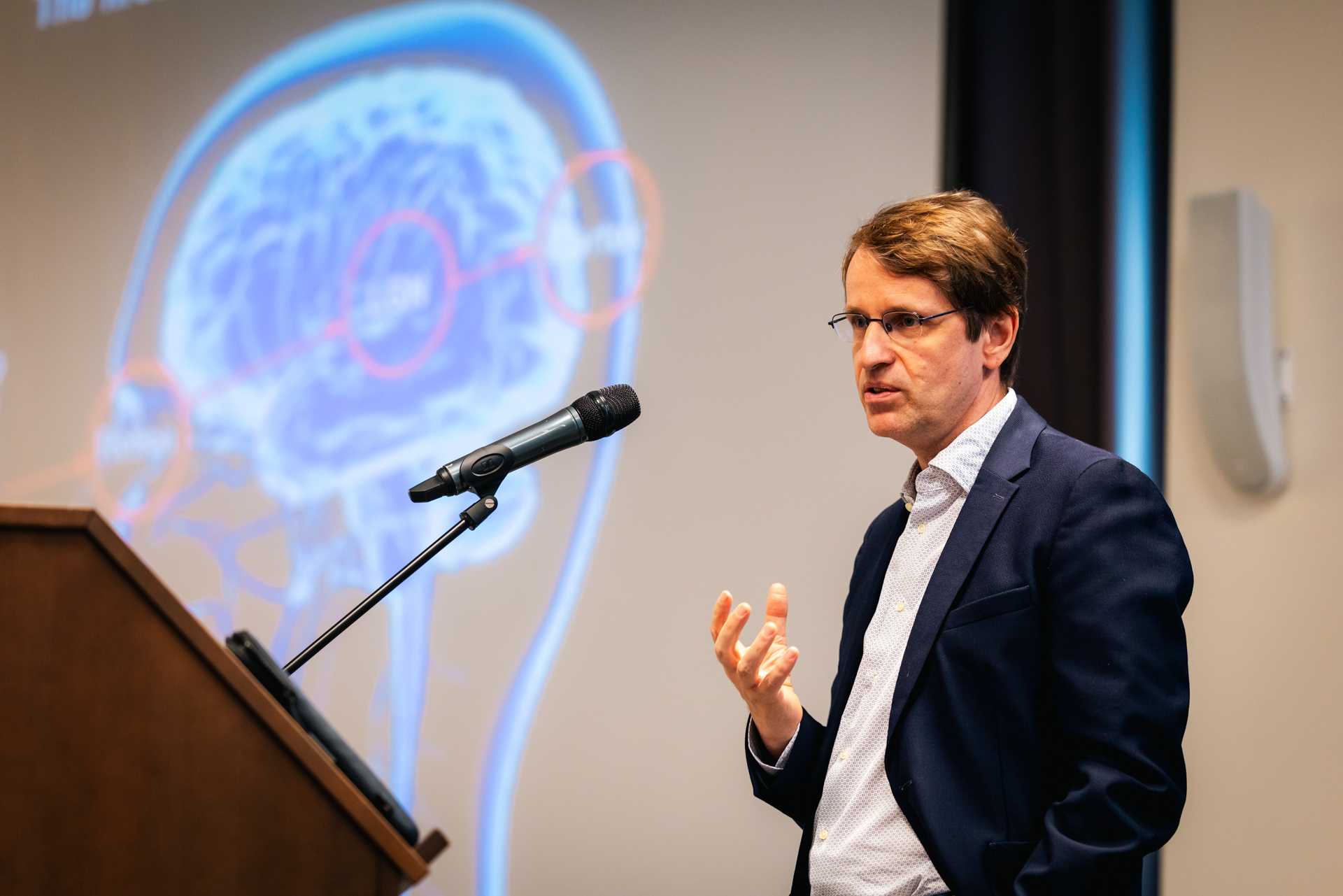
The conference concluded on Friday, September 5, with a commemorative session and the unveiling of a memorial plaque in honor of prominent Hungarian physician, professor, and researcher Gyula Telegdy at the Ilona Banga Health Sciences Education Center. To mark the occasion, the University of Szeged’s Directorate for International and Public Relations also conducted interviews with several participants – including Botond Roska, who is featured in the opening photo. These interviews will be published on the university’s official platforms in the coming weeks.
Original Hungarian article by Ferenc Lévai
Feature photo: Botond Roska, Wolf Prize-winning researcher from the Institute of Molecular and Clinical Ophthalmology Basel, giving a lecture at the Szeged conference on September 2, 2025.
Photos: István Sahin-Tóth