Less than three weeks after receiving Hungary's first smart cochlear implant, 11-year-old Loránd was fitted with the external unit of his new device at the University of Szeged, where the implant was activated and its initial settings programmed.
The state-of-the-art hearing device – introduced globally only recently – was implanted on June 25, 2025, at the Department of Oto-Rhino-Laryngology and Head and Neck Surgery within the Albert Szent-Györgyi Clinical Center of the University of Szeged. The procedure marked the first use in Hungary of the world’s only smart cochlear implant. The recipient, 11-year-old Loránd – or Lóri – has since returned to the clinic to receive the external unit of the device.
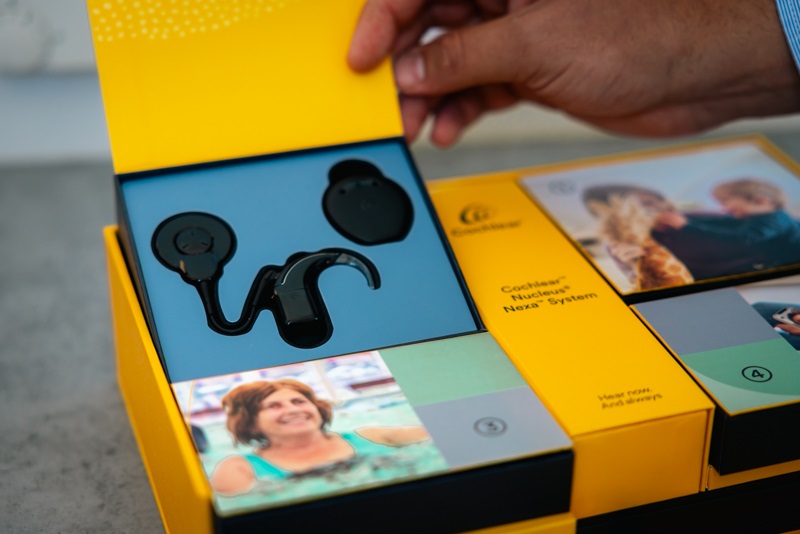
The external unit of the hearing device connects to the internal implant, with several models available – including ones suitable for water sports.
Photo by István Sahin-Tóth
Lóri said he hopes the implant will be of great help at school as well, especially now that he’s entering fifth grade, where subjects increasingly rely on understanding concepts through listening.
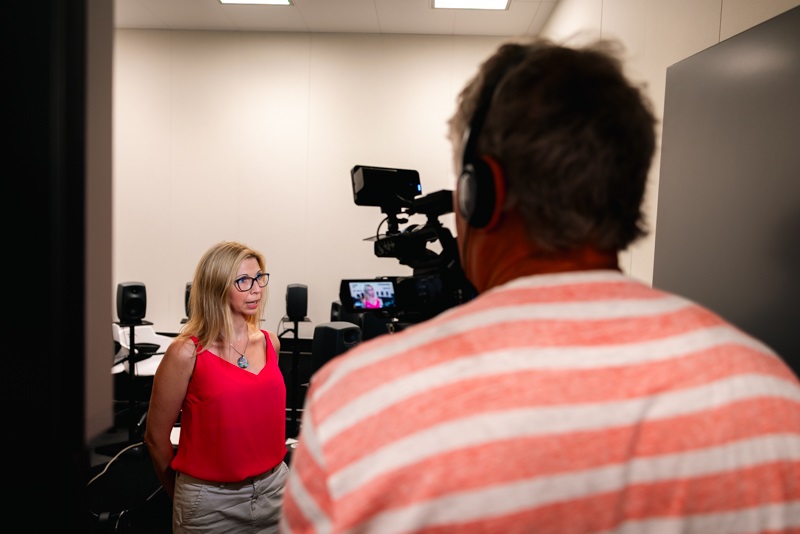
Media interest has remained steady since the implantation. Over the past few weeks, Lóri’s mother, Mónika Hankó, has given interviews to several outlets.
Photo by István Sahin-Tóth
Before the activation of the cochlear implant, Lóri’s parents have publicly shared that the surgery had been a complete success and that his recovery was progressing well.
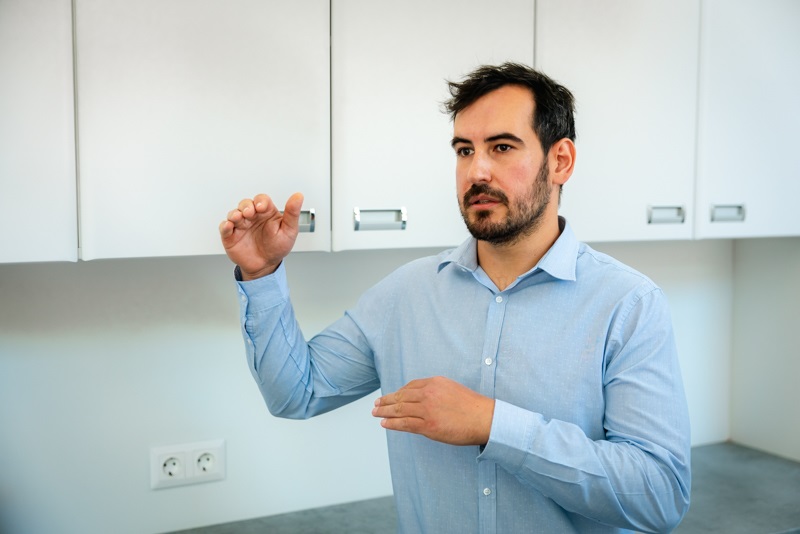
The synchronization of the internal and external processors of the cochlear implant was performed by Dr. Roland Nagy, clinical engineer at the University of Szeged.
Photo by István Sahin-Tóth
“Lóri has now received the external speech processor of the cochlear implant,” said Dr. Roland Nagy, clinical engineer at the University of Szeged. “During programming, we used very soft signals at first, gradually increasing their intensity to help calibrate the processor with Lóri’s input. This process was completed across all 22 electrodes. Once that was done, we switched on the device – and for the first time in his life, Lóri was able to hear through the smart implant. However, this is an electrical form of hearing, which he will need to learn how to interpret. Initially, sounds may feel intense or overwhelming, but even now, with fine-tuning, we can achieve a level that supports adaptation and the early stages of speech comprehension. The goal is for the device not to disturb him, so he can use it comfortably at home – and begin understanding as much speech as possible, even at this early stage.”
After the device was activated, the first voices Lóri heard were those of his parents. The fresh experience felt strange to him – but he enjoyed it nonetheless. For now, the newly implanted system supports the function of the hearing aid he previously wore on the opposite side. Yet even at this early stage, Lóri is beginning to encounter sounds he has never heard before: “Water makes a sound when it comes out of the tap!” he exclaimed.
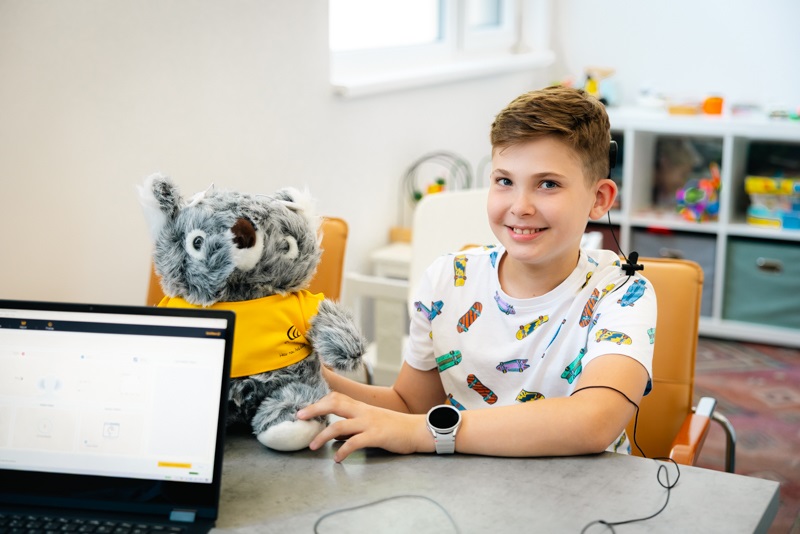
Lóri is about to embark on a journey filled with new experiences.
Photo by István Sahin-Tóth
Two weeks after the initial activation of the cochlear implant, Lori will return for his next adjustment session. After that, monthly calibrations should suffice. Importantly, he is fortunate to have learned to speak with the help of a hearing aid, as this will significantly shorten the rehabilitation process. Even so, adapting to the unique experience of electrical hearing requires time. If all goes well, however, Lóri is expected to enjoy near-perfect hearing within six months – a level far beyond what his previous hearing aid could provide.
Original Hungarian article by Ferenc Lévai
Photos by István Sahin-Tóth