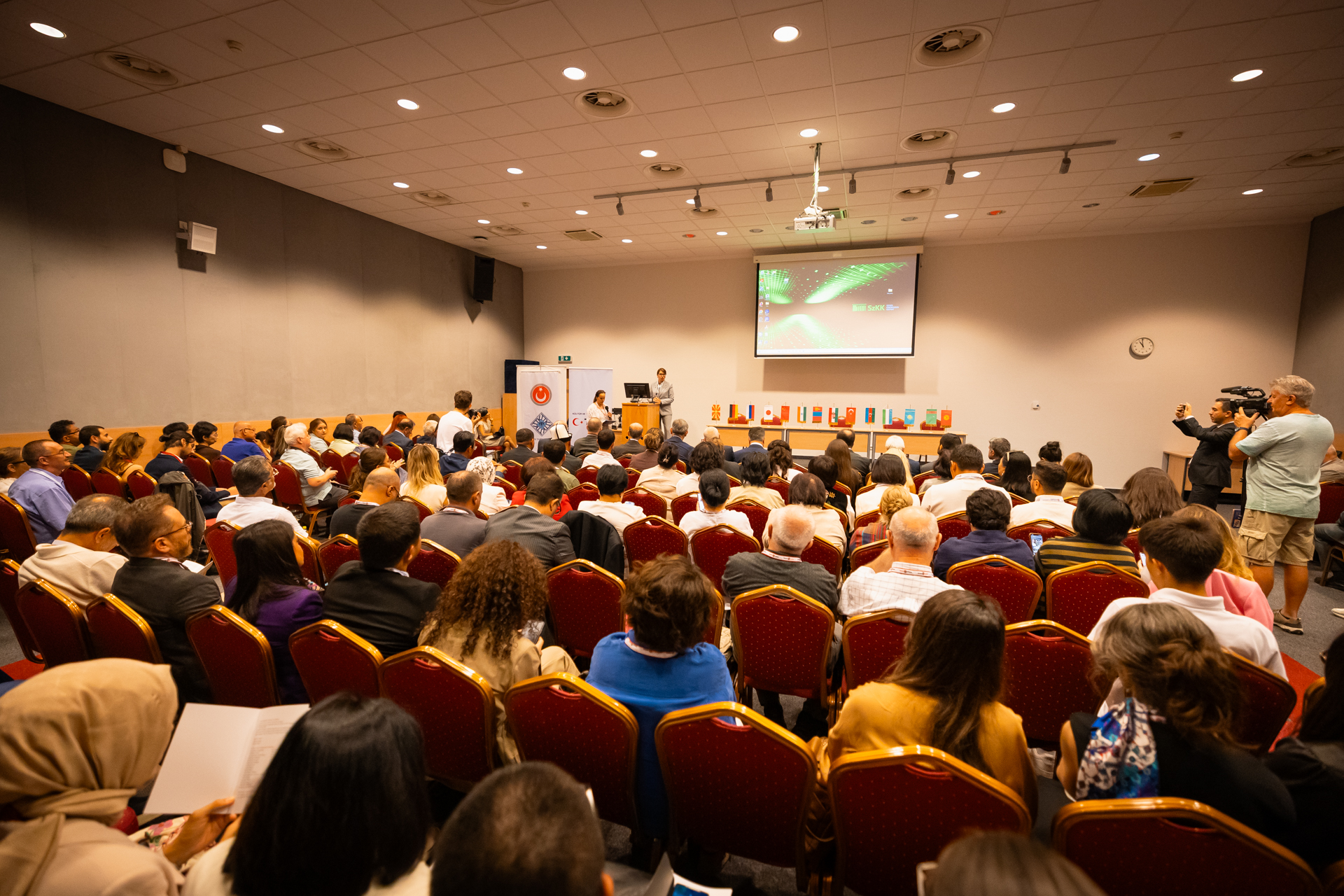
Launched in Turkey and held each year at a different location, the International Altay Communities Symposium is organized by countries that share Altay ancestry as well as linguistic and cultural ties. This year’s event was jointly coordinated by its Istanbul-based founder, Professor of History İlhan Şahin, and Professor Sándor Papp, Head of the Department of Altaic Studies at the Faculty of Humanities and Social Sciences, University of Szeged. In his opening remarks, Professor Papp emphasized that the University of Szeged is the first – and remains the only – higher education institution worldwide to have an independent department devoted to Altaic studies. Building on the reputation of the Szeged research hub and the momentum of the Hungarian–Turkish Year of Science and Innovation, Hungary hosted the gathering of Altay communities for the first time this year. Previous hosts have included Turkey, Kyrgyzstan, Mongolia, Kazakhstan, and Taiwan.
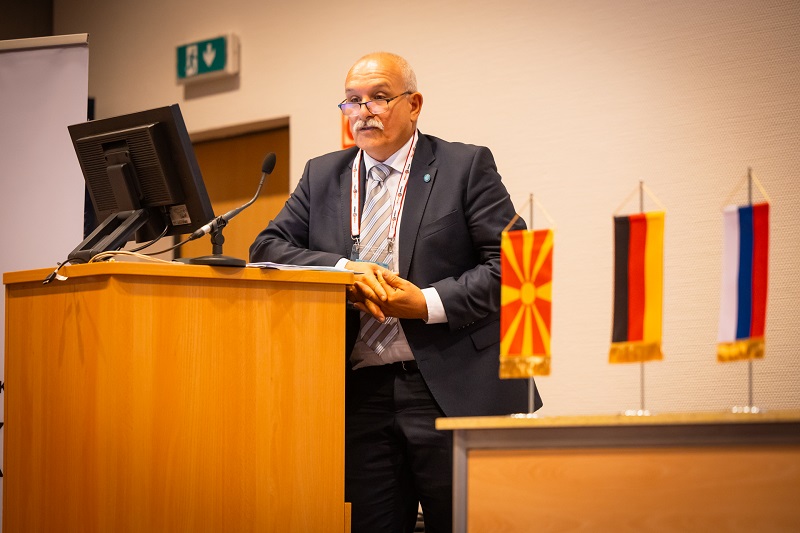
Professor Sándor Papp, Head of the Department of Altaic Studies at the University of Szeged’s Faculty of Humanities and Social Sciences.
Photo by Ádám Kovács-Jerney
Speaking about the theme of the 13th International Altay Communities Symposium, SZTE’s Professor Sándor Papp explained that, according to the linguistic theory of Altay origins, the Altay Mountains are the cradle of the Turkic, Mongolic, and Manchu-Tungusic languages.
“Just as Indo-European languages are believed to have spread from a common homeland, this theory points to the existence of an Altay language family. Even if the theory itself is debated, the existence of linguistic ties between these languages is undeniable. At the same time, the connection is not always a straightforward line of descent. Nevertheless, apart from the Mongols, the peoples belonging to this group share a Muslim cultural background, which has further reinforced their ties. In essence, our conference provides a shared platform for scholars studying the languages, history, and culture of the Altay peoples to come together.”
According to the professor, the discipline is well established in Turkey, Azerbaijan, Kazakhstan, Uzbekistan, and Kyrgyzstan. Yet in the Turkic-speaking countries, research tends to focus primarily on their own national cultures, leaving relatively few opportunities to engage with more distant linguistic relatives. It is for this very reason that the International Altay Communities Symposium was created, with sessions structured so that presentations on related fields of study spark dialogue and debate.
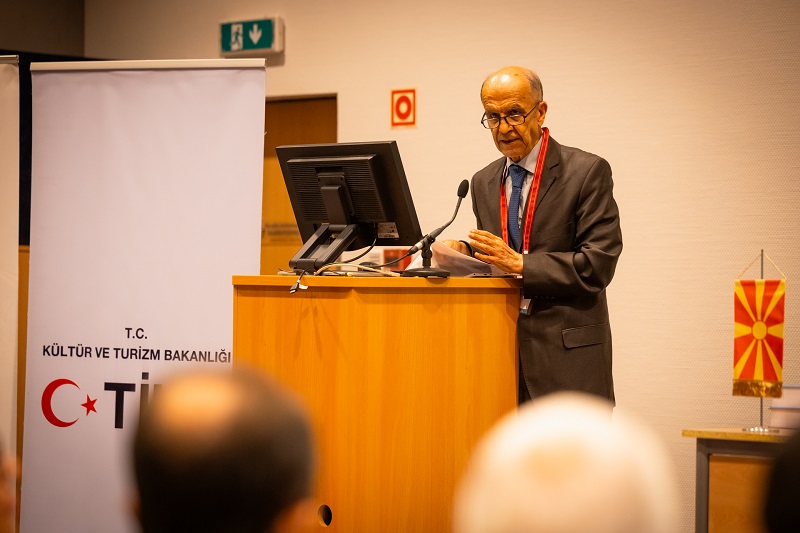
Professor of History İlhan Şahin, founder of the International Altay Communities Symposium.
Photo by Ádám Kovács-Jerney
This year, the conference focused on the ethnographic, anthropological, and historical study of naming practices and social titles. As Professor Sándor Papp noted, the presentations explored which naming priorities emerge at different levels of society, how names are chosen, and what roles nicknames, descriptive epithets, or even derogatory labels play – and what these reveal about a community’s identity.
The University of Szeged was represented at the ceremonial opening of the symposium by Prof. Dr. Zoltán Kónya, Vice-Rector for Scientific Affairs and Innovation, who welcomed the participants.
“Innovation is often seen simply as looking forward; yet at the University of Szeged we believe that true progress rests on a profound connection with the past. Just as our Nobel laureates, Albert Szent-Györgyi and Katalin Karikó, built on existing knowledge to create something entirely new, Altaic studies likewise draw on historical and cultural traditions to generate fresh insights. By understanding where we come from, we are far better equipped to shape the road ahead,” said Prof. Dr. Zoltán Kónya.
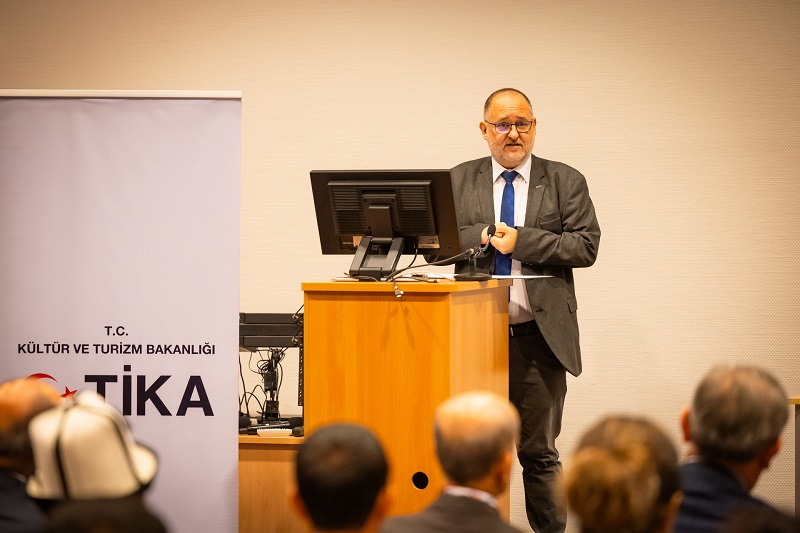
Prof. Dr. Zoltán Kónya, Vice-Rector for Scientific Affairs and Innovation at the University of Szeged.
At the event, Cavidan Gülşen Karanis Ekşioğlu, Ambassador of Turkey to Hungary, also delivered a welcome address.
“Following the 2024 Year of Turkish Cultural Heritage, the 2025 Hungarian–Turkish Year of Science and Innovation focuses on future-shaping cooperation among our educational institutions, universities, research hubs, and companies. This year, working closely with Government Commissioner Péter Hoppál and his team, we are highlighting our shared commitment to science, innovation, and research. It is in this spirit that we deeply appreciate the contribution of Turkish scholars and researchers to this conference,” the ambassador remarked.
On behalf of the Government Commissioner for the Hungarian–Turkish Year of Science and Innovation, turkologist Péter Kövecsi-Oláh addressed the audience:
“Why does Altaic studies matter to Hungarians in the 21st century? Primarily because in Hungary, Altaic research and Turkology are inseparably linked to exploring our national identity, culture, and history – – including linguistic and ethnographic dimensions. In other words, to understand the lives of our ancestors, we must also understand the history and cultural heritage of the nomadic peoples. With this in mind, the Hungarian government places strong emphasis on fostering diplomatic and economic relations with nations and communities beyond the European Union – especially those with whom we share deep historical ties. A good example of this policy was the 2024 Hungarian–Turkish Cultural Year, during which around 160 cultural programs were organized across 17 European cities. Building on this, 2025 has been designated as the Hungarian–Turkish Year of Science and Innovation.”
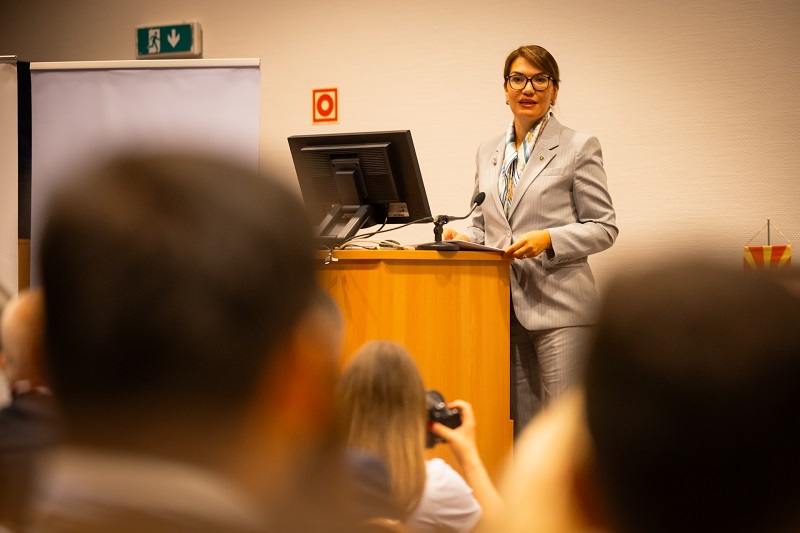
Cavidan Gülşen Karanis Ekşioğlu, Ambassador of Turkey to Hungary.
Photo by Ádám Kovács-Jerney
The ceremonial opening also featured a video message from Professor Emeritus András Róna-Tas, member of the Hungarian Academy of Sciences and founder of the Department of Altaic Studies at the University of Szeged. Speeches were delivered by Abzal Saparbekuly, Ambassador of Kazakhstan to Hungary; Professor Zhanseit Tuimebayev, Rector of Al-Farabi National University in Kazakhstan; Professor Yüksel Özgen, President of the Turkish Historical Society; Professor Halil Eren, former Director of the Research Centre for Islamic History, Art and Culture (IRCICA); Professor István Zimonyi, Program Director of the Altaic Studies Program at the Doctoral School of Linguistics, University of Szeged, and former Head of the Department of Altaic Studies; Professor İlhan Şahin, founder of the International Altay Communities Symposium and Head of the Department of History at Istanbul 29 May University; and Professor Sándor Papp, Head of the Department of Altaic Studies at the University of Szeged.
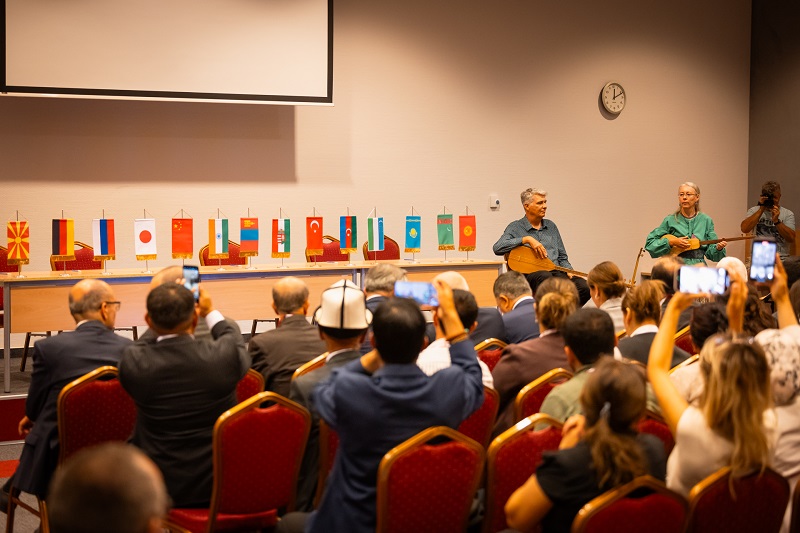
Ágnes Fődi performed Kazakh, Kyrgyz, and Turkish songs for the conference audience.
Photo by Ádám Kovács-Jerney
The ceremony opened with a performance of marosszéki couple dances, traditional Hungarian folk dances from the Marosszék region of Transylvania, presented by Csenge Keresztény and András Szakalisity, dancers of the Möndörgő group from the Délikert Dance Ensemble in Szeged. Following the welcome speeches, Ágnes Fődi performed Kazakh, Kyrgyz, and Turkish songs, accompanying herself on Central Asian plucked instruments and the Turkish flute. She was later joined by Róbert Krisztin on the bağlama, a traditional Turkish string instrument. Both artists are members of the Birlik Hungarian–Turkish Cultural Association in Szeged.
The lectures of the 13th International Altay Communities Symposium were delivered in Turkish and English: on September 4 at the József Attila Study and Information Center, and on September 5 at the headquarters of the Regional Committee of the Hungarian Academy of Sciences in Szeged.
Original Hungarian article by Sándor Panek
Feature photo: The International Conference of Altay Communities kicks off at the University of Szeged.
Photos: Ádám Kovács-Jerney