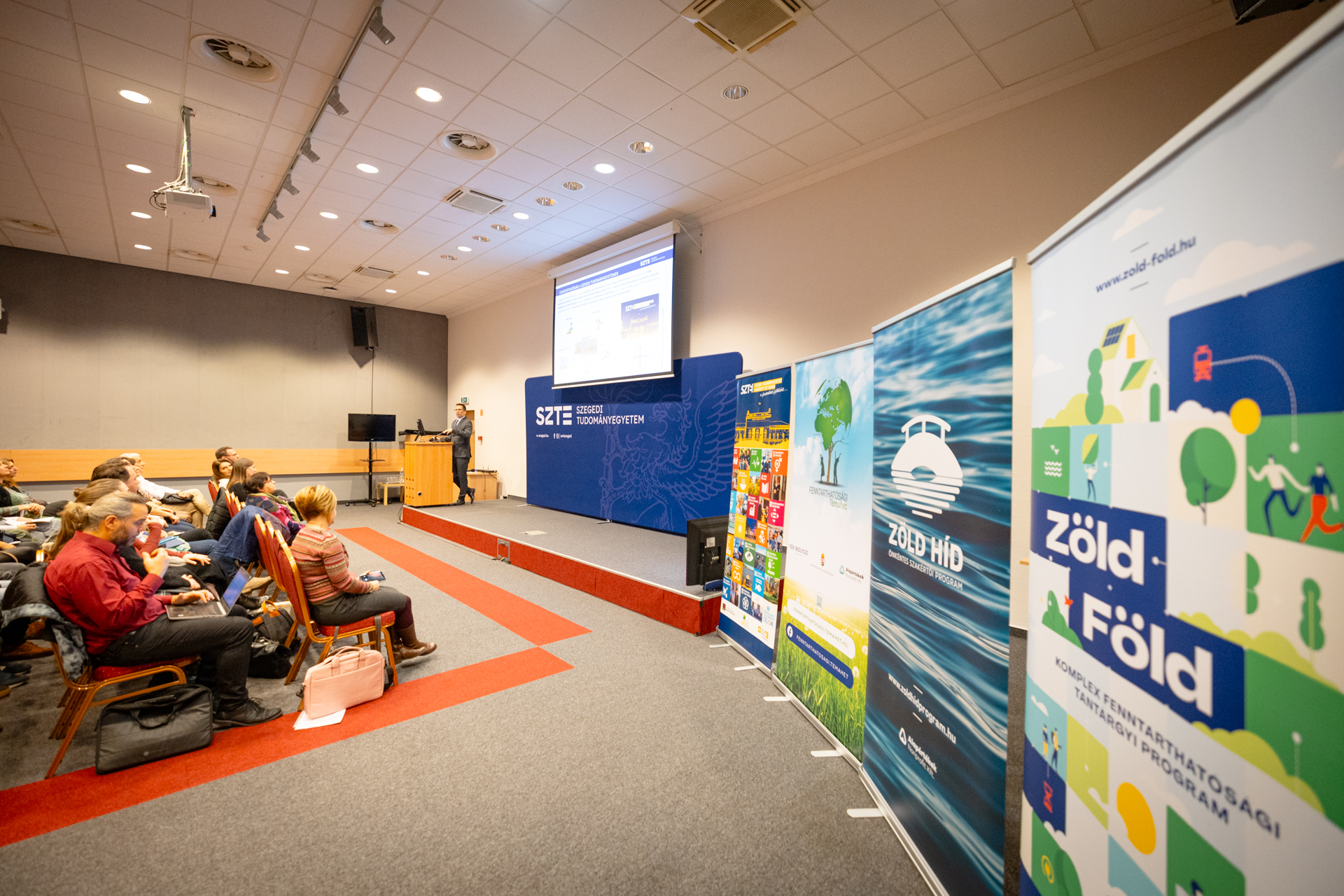
Experts in higher education sustainability convened in Szeged on December 4, 2025, as the University Sustainability Roadshow reached the city for one of its key national stops, bringing together experts and stakeholders at the University of Szeged’s József Attila Study and Information Center to discuss current sustainability initiatives and future collaborations.
Launched in collaboration with five major universities, the University Sustainability Roadshow provides a professional forum for leaders, experts, and educators from public education and vocational training across Hungary. The series aims to showcase the nation’s key sustainability development programs, highlight their achievements to date, and outline future directions. It also seeks to strengthen professional dialogue by facilitating the exchange of experiences and best practices among participants.
Since 2010, the University of Szeged’s long-standing commitment to ‘thinking green’ has played a major role in making the institution one of Hungary’s most environmentally conscious universities. The University is active both nationally and internationally: it is a member of the Hungarian Universities Sustainability Platform and consistently places highly in internationally recognized, objective sustainability rankings. In addition, it maintains strong partnerships with global organizations.
The University’s social engagement and commitment to sustainability are further reflected in several external recognitions, including the QS Commitment to Sustainability international award (2024) and its dual accreditation by ACEEU as an Entrepreneurial and Engaged University – a distinction currently held only by the University of Szeged among Hungarian institutions.
 The University Sustainability Roadshow, organized by the nonprofit organization Alapértékek Nonprofit Kft. in cooperation with five universities – the University of Szeged, Széchenyi István University, the University of Pécs, Eötvös Loránd University, and Eszterházy Károly Catholic University – reached Szeged on December 4, 2025.
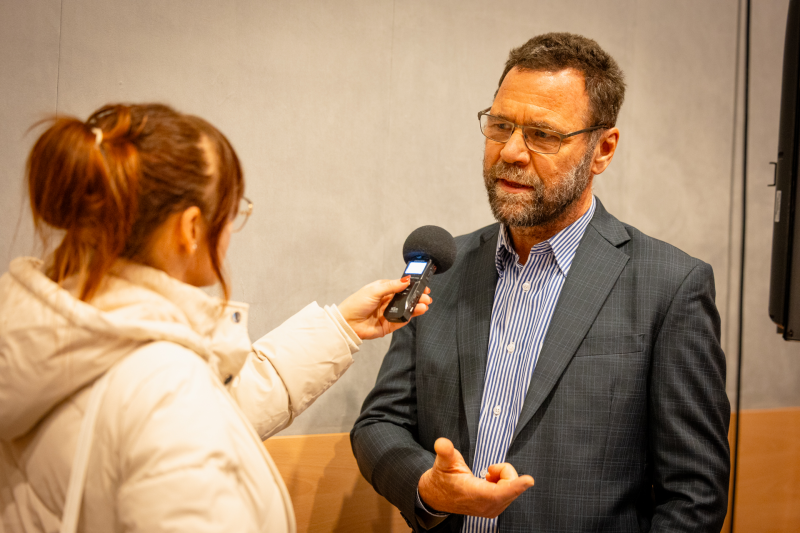
Amid strong media interest in environmental protection, Miklós Matolcsy, Managing Director of the nonprofit organization Alapértékek Nonprofit Kft., gives an interview in Szeged.
Photo by Ádám Kovács-Jerney

The University Sustainability Roadshow was opened by Prof. Dr. Klára Gellén, Vice-Rector for Academic Affairs at the University of Szeged, who emphasized that the concept of sustainability plays a defining role in the university’s strategic objectives across multiple areas.
“Across all levels of education, our aim is to ensure that sustainability is not merely a theoretical concept but an integral part of everyday practice. Thanks to the university’s organizational structure, this approach can be embedded from kindergarten through our affiliated primary and secondary schools, all the way to the higher education setting. A particularly innovative development in this field is the introduction of cooperative courses created jointly with other universities, built around so-called ‘learning molecules’ focusing on environmental protection and sustainability. As a research university, the University of Szeged is also able to incorporate the latest scientific findings directly into its teaching. Against this backdrop, the institution’s strong positions in national and international university rankings confirm that it is moving in the right direction. In fact, on many fronts, at many levels, and in many areas, we are working to achieve even greater progress,” the Vice-Rector said.
Professor Gellén also highlighted that the József Attila Study and Information Centre (JATIK), which hosted the roadshow, is itself an innovative facility that makes increased use of renewable energy.
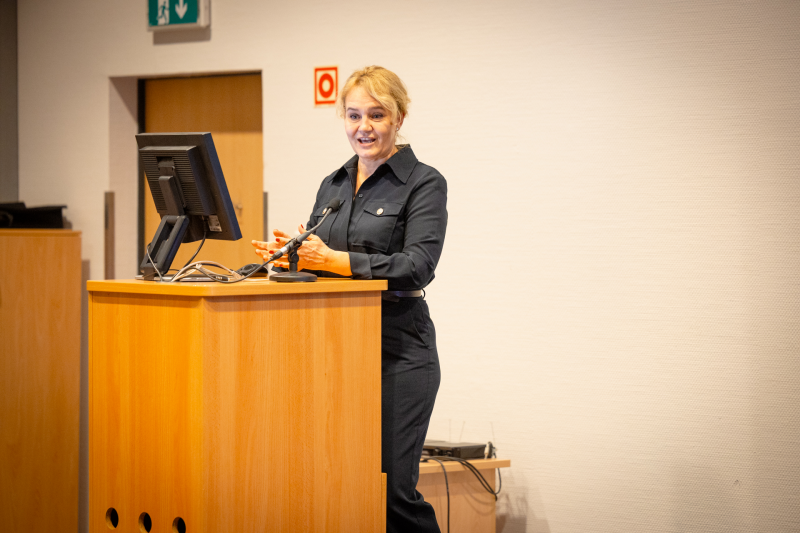
Sustainability is a cause close to the heart of Prof. Dr. Klára Gellén, Vice-Rector for Academic Affairs at the University of Szeged.
Photo by Ádám Kovács-Jerney
Visitors to the University of Szeged’s József Attila Study and Information Center had the opportunity to learn about current initiatives in sustainability education, including contemporary pedagogical approaches and methodological solutions. Through presentations delivered by the participating universities, attendees also gained insight into how education for sustainability is integrated into teacher training. The event attracted nearly 100 participants from around 50 institutions and generated strong interest among schools in Szeged and the wider region, including elementary and secondary schools, grammar schools, vocational schools, and technical schools. In addition to local participants, experts, stakeholders, school leaders, and teachers arrived from a wide range of locations, including Békéscsaba, Csongrád, Hódmezővásárhely, Kecskemét, Makó, Mórahalom, Szentes, Budapest, Csorvás, Domaszék, Fábiánsebestyén, Gádoros, and Százhalombatta. The high number of registered schools and participants underscored the strong priority that educational institutions in the city and the wider region place on sustainability-related knowledge, its dissemination, and awareness-raising. From the University of Szeged, staff members from the Teacher Training Center and the Juhász Gyula Faculty of Education, along with representatives of university-maintained institutions, also took part in the professional program.
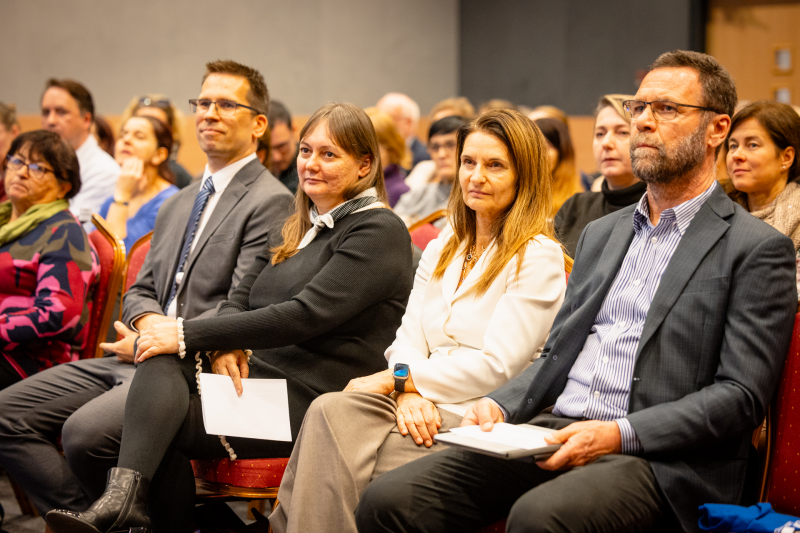
The event was held to a full house, with speakers including Judit Ütőné Visi, Professional Director of Alapértékek Nonprofit Kft.; Dr. Dénes Mátyás, Deputy Director for Sustainability at the Directorate for Strategic Management of the Directorate-General for Strategy and Development at the University of Szeged; Dr. Tünde Sárvári, Deputy Director-General of the SZTE Teacher Training Center; Erika Pálfi, Head of the Public Education Content Development Department at the Ministry of Interior; and Miklós Matolcsy, Managing Director of Alapértékek Nonprofit Kft.
Photo by Ádám Kovács-Jerney
Following the opening remarks, Dr. Dénes Mátyás, Deputy Director for Sustainability at the Directorate for Strategic Management of SZTE’s Directorate-General for Strategy and Development, and Dr. Tünde Sárvári, Deputy Director-General of the SZTE Teacher Training Center, delivered a joint presentation titled SZTE – Sustainability – Teacher Training. Their presentation offered a comprehensive overview of the university’s activities and ongoing initiatives aimed at building a sustainable future, with particular attention to the links between teacher training at SZTE and sustainability. The speakers highlighted the pivotal role of teachers and educators in sustainability education, outlined the key teaching competencies involved, and presented pathways for developing these competencies, supported by several examples of effective school-based practices. In addition, special mention was given to the dedicated institutions maintained by the University – its two Eco-Schools, the SZTE Báthory István High School and Primary School for Teaching Practice, and the SZTE Juhász Gyula Primary School, Elementary Art School, and Daycare Kindergarten for Teaching Practice – for their exemplary events and initiatives. The green programs of the SZTE Kossuth Zsuzsanna Technical and Vocational School were also highlighted.
Erika Pálfi, Head of the Public Education Content Development Department at the Hungarian Ministry of Interior, delivered a presentation titled A School That Teaches the Future – The Eco-School Approach in Everyday Practice. Her engaging and informative talk focused on education for sustainability, the Eco-School Program and its outcomes, as well as the various ways schools can connect to and benefit from the initiative. The presentation was enhanced by an inspiring video featuring the accounts and reflections of participating schools, teachers, and students.
As the program continued, the focus shifted to sustainability education initiatives, including Sustainability Theme Week, the Green Earth Program, and the Green Bridge Program. An overview of these initiatives was provided by Miklós Matolcsy, Managing Director of Alapértékek Nonprofit Kft.
Judit Ütőné Visi, Professional Director of Alapértékek Nonprofit Kft., then delivered a detailed presentation titled Education for Sustainability in School Practice, in which she outlined key methodological approaches, the structure of the related textbooks, and their practical classroom applications.
Climate communication expert László Vekkel focused on global challenges as he introduced the Planet Heroes initiative. He also presented the various components of the Planet Budapest program series, which are open to both the general public and schools, highlighting the range of experiential activities available as well as opportunities for participation and on-site visits.
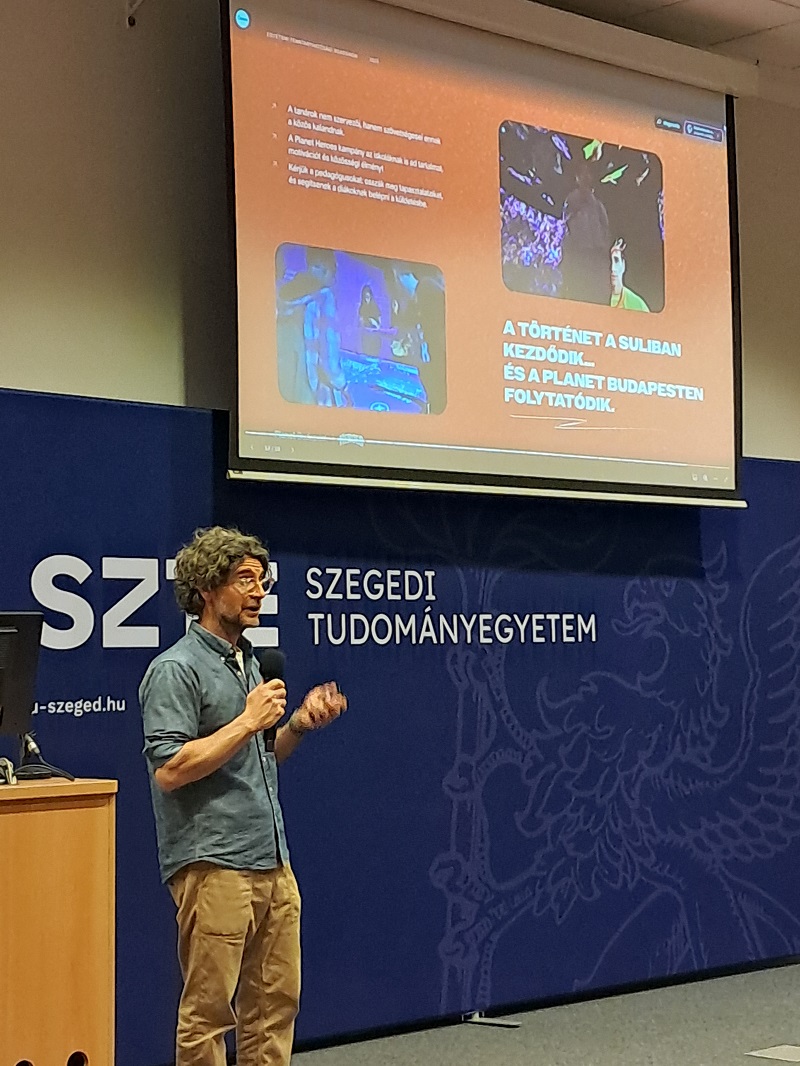
The next event in the free-to-visit Planet Budapest 2026 program series will take place from late February to the end of March in Budapest, at the Railway History Park’s Expo area, where the University of Szeged will also be represented as an exhibitor.

“We are pleased that the University of Szeged was able to host the University Sustainability Roadshow, providing a platform for professionals, schools, institutional leaders, and educators from within and beyond the university to meet, share experiences and best practices, and in doing so help inspire future generations. Events like today’s – and similar occasions that foster the exchange of knowledge and commitment – play an important role in building a sustainable future for all,” summarized Dr. Dénes Mátyás (pictured), SZTE’s Deputy Director for Sustainability.
The University Sustainability Roadshow concluded on December 9 in Eger, hosted by Eszterházy Károly Catholic University.
Original Hungarian text by Ferenc Lévai
Photos: Ádám Kovács-Jerney