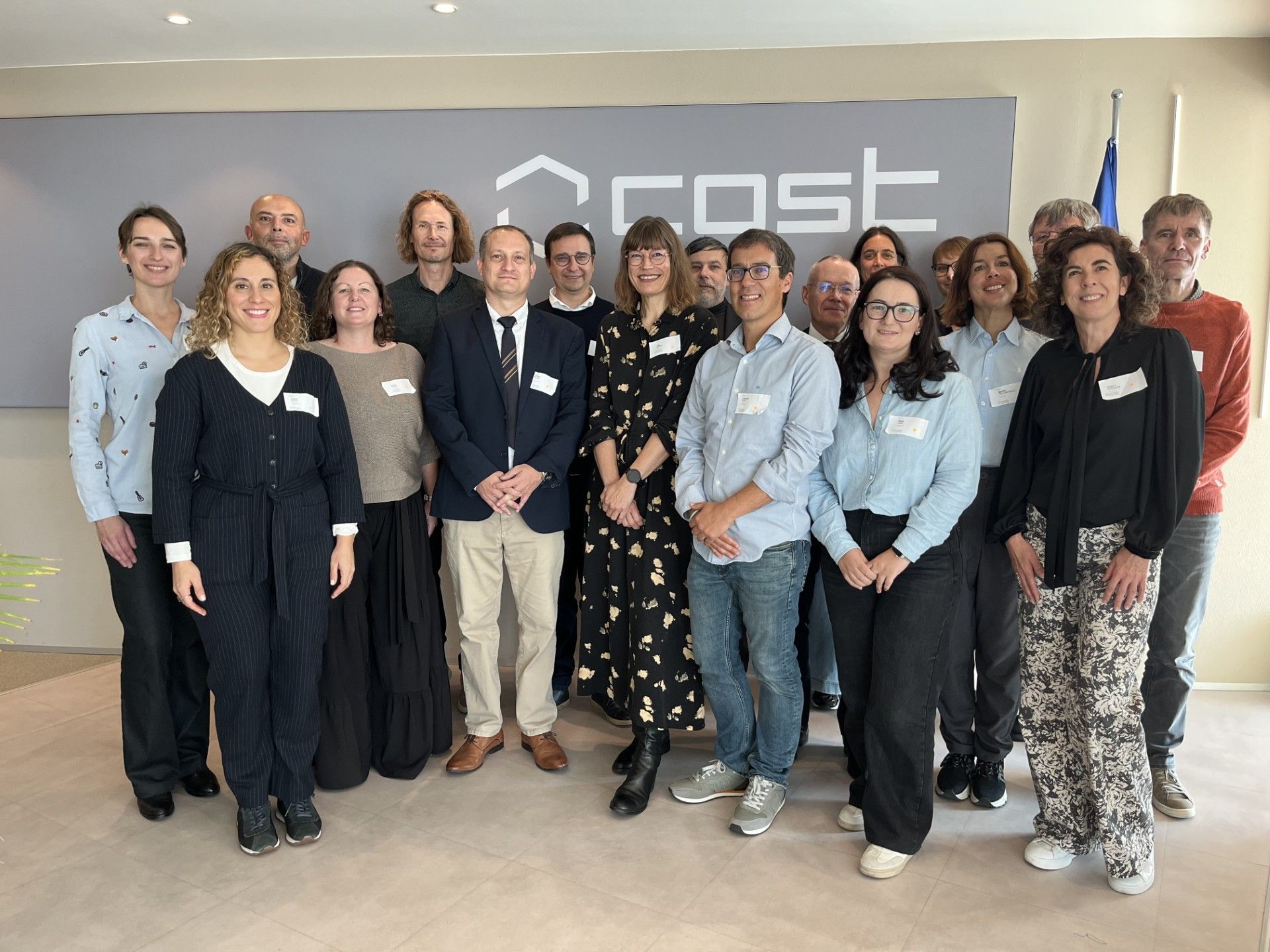
The University of Szeged has joined the newly launched European COST Action CA24114 program, BTCs4ATMP (Blood, Tissue and Cells for Advanced Therapy Medicinal Products). Introduced in October 2025, the initiative strengthens cooperation across an established international network, with SZTE participating as a consortium member.
The BTCs4ATMP initiative aims to link Europe’s blood, tissue, and cell banks with researchers, clinicians, industry partners, and regulatory authorities driving the development, production, and clinical application of advanced therapy medicinal products (ATMPs).
In recent years, one of the central ambitions of researchers, clinicians, and advanced therapy centers has been to move cutting-edge ATMP innovations – ranging from CAR-T cell treatments to mesenchymal stem cell‑based (MSC-based) therapies – into everyday clinical care. Achieving this requires not only excellence in terms of quality, efficiency, and sustainability but also a commitment to ensuring fair access for all patients.
These advanced therapies rely on human cells and tissues – known as Substances of Human Origin (SoHO) – as their raw materials. Each SoHO must be processed, characterized, tested, stored, and finally administered to patients in full compliance with stringent pharmaceutical quality requirements.
ATMP development is extremely vulnerable to subtle shifts in technology and procedure. Even slight changes in how cells are isolated, handled, or quality-controlled can influence the product’s identity, purity, effectiveness, and safety. In the absence of harmonized standards, validated methodologies, and common acceptance criteria, European initiatives often remain fragmented, resulting in repeated efforts, inconsistent reproducibility, and regulatory ambiguity. In this context, blood, tissue, and cell processing centers (BTCs) play a crucial role. Based in hospital and university settings and often working closely with industry partners, these centers already possess substantial expertise in the field. Yet their activities have tended to be isolated – especially in countries where ATMP development is still in its early stages.
Now, BTCs4ATMP aims to integrate these centers into a coordinated and collaborative European network that unites scientific, technological, regulatory, and ethical stakeholders in strengthening the clinical use of emerging therapies.
The project operates through six working groups that address SoHO processing, the advancement of cell and tissue handling technologies, the harmonization of quality assurance and standardization, along with the training, ethical guidance, and workforce development needed to support the field.
Through its Personalized Medicine Research Infrastructure – one of Hungary’s TOP50 Research Infrastructures – the University of Szeged plays an active role in shaping international standards and protocols, as well as in training the professionals needed to ensure the safe introduction of future therapies. Against this background, the COST program is open to all interested participants, and the SZTE Biobank warmly welcomes applications from colleagues in Szeged who wish to take part.
Further information:https://www.cost.eu/actions/CA24114/
Source: IKIKK-infó (Center of Excellence for Interdisciplinary Research, Development and Innovation)
Feature photo: Management Committee of the COST Action program CA24114 BTCs4ATMP at the opening meeting held in Brussels on October 1, 2025. The session was chaired by Coordinator Dr. Joaquim Vives (Spain) and Co-Coordinator Erja Kerkelä (Finland). Hungary was represented by Dr. Zoltán Veréb, Head of IKIKK GMP ACF – Good Manufacturing Practice Advanced Core Facility at SZTE’s Center of Excellence for Interdisciplinary Research, Development, and Innovation.