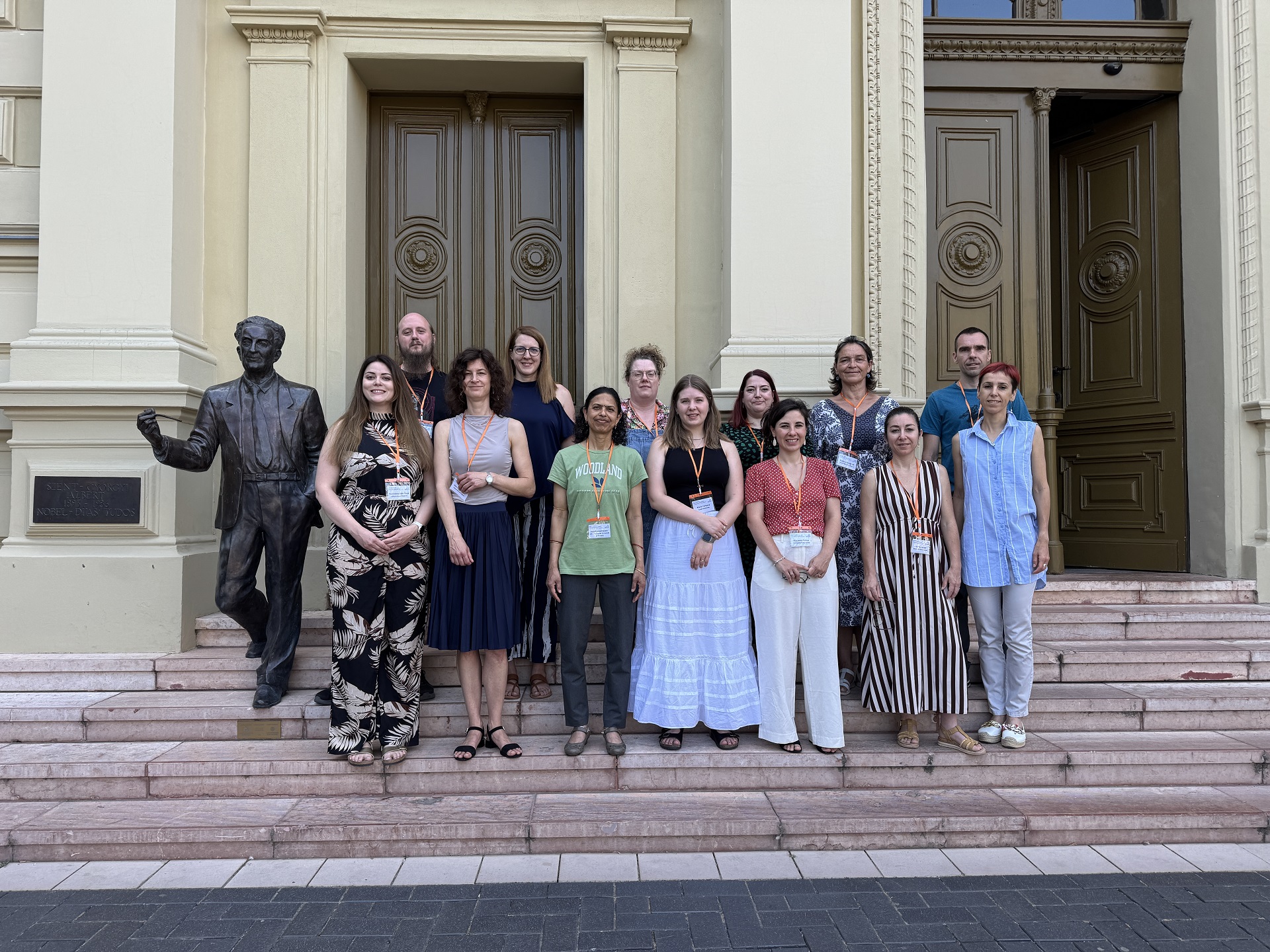
In June 2025, the University of Szeged hosted a series of interactive workshops as part of a EUGLOH Alliance initiative. The program focused on developing international leadership skills and improving communication within intercultural teams.
In June, the University of Szeged brought together researchers, lecturers, and project staff from across the EUGLOH Alliance for a series of workshops, welcoming participants from partner institutions such as Lund University, the University of Novi Sad, Université Paris-Saclay, UiT The Arctic University of Norway in Tromsø. Their goal was to work toward fostering connections both culturally and through digital means.
Intercultural skills and artificial intelligence
The workshop series began on June 17 with an introductory online session, followed by an intensive two-day in-person program in Szeged on June 24–25. The on-site event focused on two main topics: effective communication in intercultural teams and the practical use of artificial intelligence in the workplace. To bring these topics to life, four experts from the University of Szeged delivered engaging and inspiring sessions.
On the first day, participants explored the nuances of working and communicating in multicultural environments and learned about the structure and importance of culturally sensitive presentations – in sessions led by Dr. Anett Árvay and Luca Csák.
The second day shifted focus to AI: under the guidance of Zsolt Szántó, the group delved into the fundamentals of how AI technology works and what it can do. This was followed by an interactive session with Rita Csúri-Magosi, which examined how artificial intelligence is perceived and used across different cultures.
Practice-oriented approach and community building
The uniqueness of this EUGLOH program stemmed from its practice-oriented approach: participants collaborated, debated ideas, and created solutions together, fostering the exchange of professional experience and knowledge. From analyzing diverse cultural scenarios to exploring potential applications of artificial intelligence, the two days were filled with meaningful and engaging discussions.
The workshop series also offered participants a valuable opportunity to expand and deepen their professional networks. With newly acquired intercultural strategies and greater confidence in applying AI tools, they are now even better equipped to advance their work in international projects and collaborations.
Original Hungarian text: Directorate for Academic Affairs