From May 29 to 31, 2025, the University of Szeged’s Faculty of Health Sciences and Social Studies hosted the 1st International Health Sciences Conference at the Art Hotel in Szeged. The event offered a rich and diverse program for professionals and students eager to explore the latest advances in healthcare and medical science. The conference brought together speakers and participants from six countries, alongside representatives from Hungarian higher education institutions.
Hosted by the Faculty of Health Sciences and Social Studies at the University of Szeged, the 1st International Health Sciences Conference took place from May 29 to 31, 2025, at the Art Hotel in Szeged. Conceived as a scientific forum intended to lay the foundation for a lasting tradition, the event was dedicated to showcasing pioneering research and innovations in medical and health sciences.
The international meeting served as an excellent platform to advance health science education and to foster collaboration across various scientific disciplines and research fields. The event featured a rich, first-rate, and diverse program designed for both professionals and students interested in the latest findings in healthcare and medical science.

Dr. Zsanett Renáta Csoma, Vice Dean for General and Scientific Affairs at the Faculty of Health Sciences and Social Studies, University of Szeged, and chief organizer of the 1st International Health Sciences Conference, speaking at the press event for the conference
Photo: István Sahin-Tóth
At the press conference preceding the event, Dr. Zsanett Renáta Csoma, Vice Dean for General and Scientific Affairs at the Faculty of Health Sciences and Social Studies and chief organizer of the conference, highlighted that the three-day event offered a program tailored to a wide spectrum of interests. In line with this, the featured presentations spanned pharmaceutical sciences, medical sciences, nursing, and physiotherapy, underscoring the forum’s commitment to an interdisciplinary approach.
“We announced a poster presentation competition, and the number of applicants far exceeded our expectations. Indeed, our primary goal was to provide young researchers, PhD candidates, doctoral students, and university students with the opportunity to showcase their research at an international academic forum,” stated Dr. Zsanett Renáta Csoma.

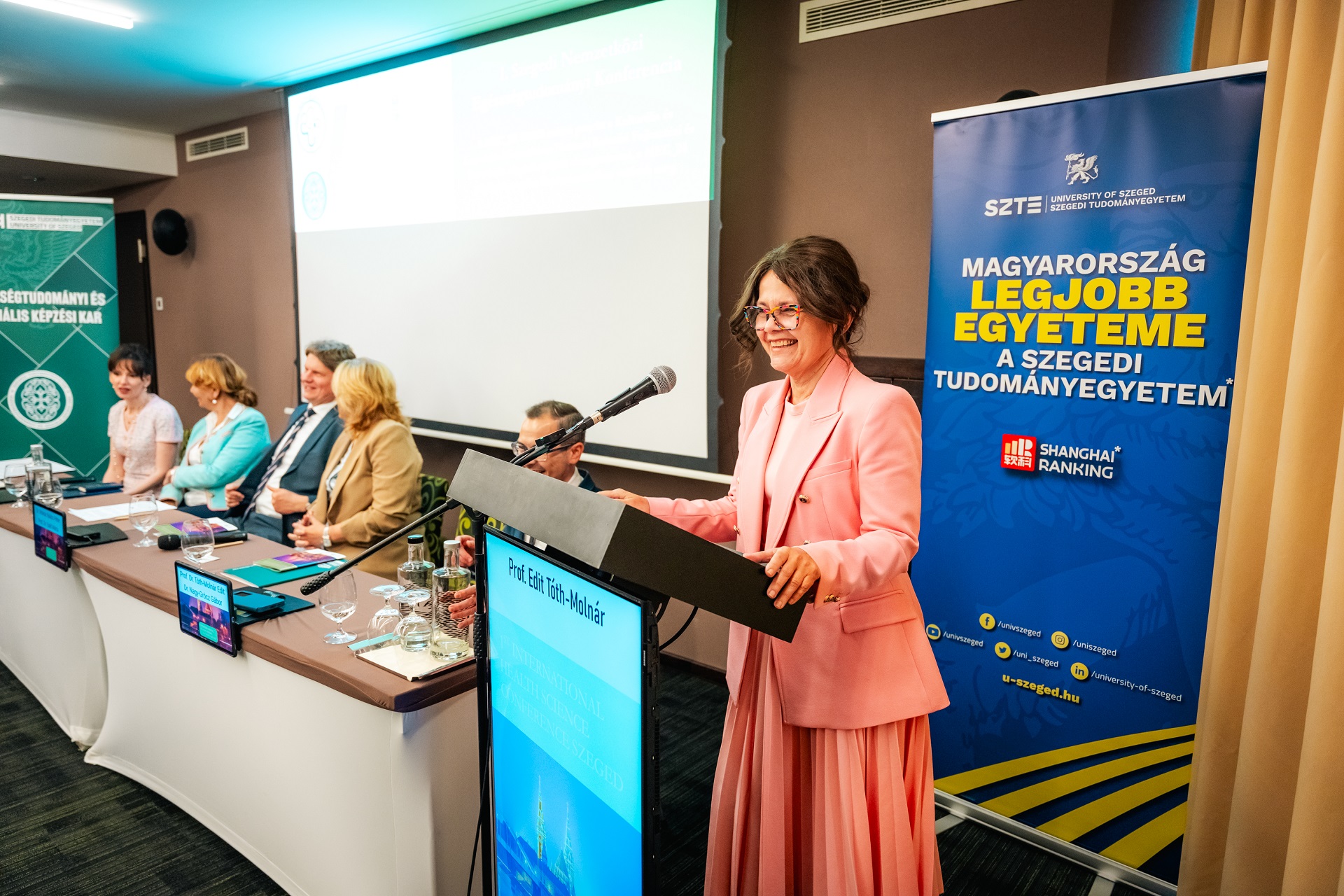
Prof. Dr. Edit Tóth-Molnár, Dean of the Faculty of Health Sciences and Social Studies at the University of Szeged, emphasized that the conference not only brought together representatives from Hungarian higher education institutions and health sciences faculties but also featured presenters and attendees from six different countries, underscoring the event’s international significance.
“For us, this conference is also a celebration of health sciences,” remarked Professor Tóth-Molnár. “Our aim is to highlight the importance of fostering cohesion within Hungarian health science higher education and to emphasize the need for active engagement in the international academic community through new collaborations. The staging of this conference – which we hope will become a tradition – was made possible thanks to significant support through the Mecenatúra grant, awarded by the National Research, Development and Innovation Office and funded by the Ministry of Culture and Innovation.”

Prof. Dr. Edit Tóth-Molnár, Dean of the Faculty of Health Sciences and Social Studies
Photo: Sahin-Tóth István
The 1st International Health Sciences Conference in Szeged was hosted under the honorary patronage of Dr. János Bóka, Minister for European Union Affairs. However, due to prior commitments in Budapest, the minister was unable to attend the opening ceremony. In his place, Balázs Péter Molnár, Deputy State Secretary for European Policy, welcomed the participants on behalf of the ministry.
“In the wake of the COVID-19 pandemic, the importance of health policy within EU-level policymaking has grown considerably. Accordingly, this area remains a priority for us, which is why, during the Hungarian EU Presidency, we have addressed numerous issues that are also prominently featured on today’s conference agenda,” said the deputy state secretary.

Balázs Péter Molnár, Deputy State Secretary for European Policy
Photo: István Sahin-Tóth
As Balázs Péter Molnár noted, during Hungary’s presidency of the Council of the EU, considerable attention was devoted to the so-called Pharmaceutical Package, which entails a comprehensive review of the European Union’s pharmaceutical regulations, covering the entire supply chain. In addition to negotiations on this package, priority was also given to several other critical health issues, including cardiovascular diseases – one of the leading causes of death among Europeans – as well as organ transplantation and food safety.
“The recent formation of the new college of the European Commission in autumn 2024 has created new opportunities to advance key health policy initiatives. In this context, Hungary’s EU Commissioner, Olivér Várhelyi – himself a graduate of the University of Szeged – has taken on a portfolio that includes both healthcare and animal welfare. He has been entrusted with a broad and highly significant set of responsibilities. Among the priorities outlined in his mandate are the conclusion of negotiations on the Pharmaceutical Package, preparations for its implementation, and the drafting of legislation on critical medicines. In addition, closely linked to innovation in health sciences are upcoming EU-level initiatives, including biotechnology regulation and the application of artificial intelligence in pharmaceutical development,” explained the deputy state secretary.

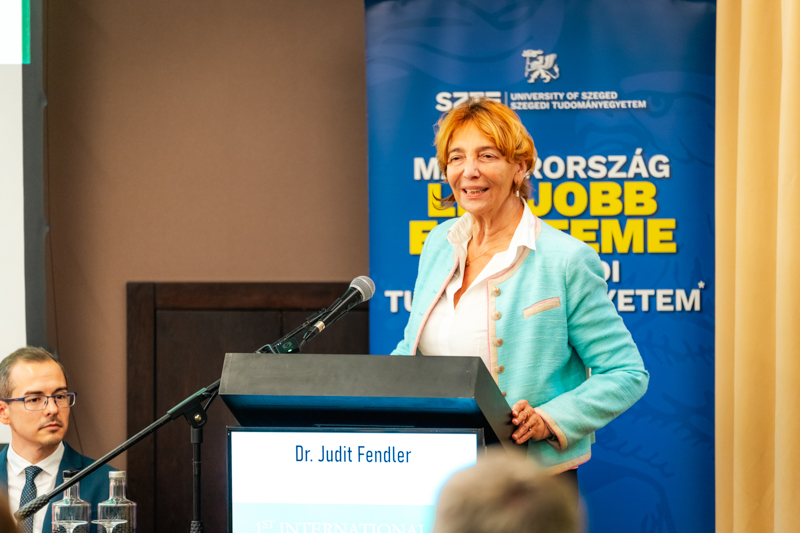
Dr. Judit Fendler, Chancellor of the University of Szeged, emphasized that the university has demonstrated its commitment to the Southern Great Plain Demographic Program by underscoring the importance of ensuring that every conceived life in the region has the chance to be born and to thrive in health and well-being.
“In the past year or two, the Faculty of Health Sciences and Social Studies at SZTE has made tremendous progress toward training more – and more highly qualified – professionals in this field. We have made significant advancements and are now able to – or will soon be able to – produce experts in areas where there is a shortage. The faculty offers high-quality programs that are appealing to international students as well,” explained Dr. Judit Fendler.
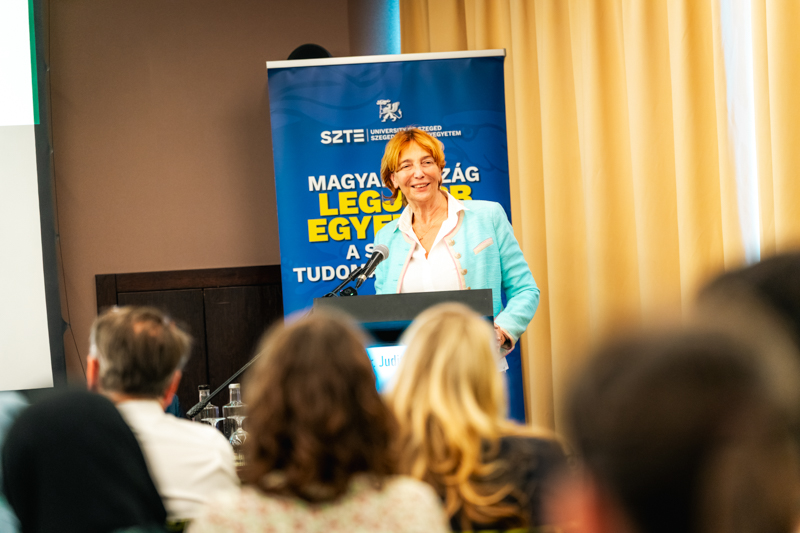
Dr. Judit Fendler, Chancellor of the University of Szeged, at the opening of the conference
Professor Dr. Márta Széll, Vice-Rector for Strategic Planning at the University of Szeged, highlighted the vision and dedication of those who, a century ago, laid the foundations for the university’s enduring traditions in medical and health sciences education, research, and innovation.
“One of the key figures in this process was Kuno Klebelsberg, who recognized that the devastating impact of World War I on the Hungarian nation could only be mitigated through intellectual and cultural renewal. It was Klebelsberg who invited one of the most ambitious and talented Hungarian researchers, Albert Szent-Györgyi, to return from abroad to Hungary, where he would go on to conduct the research in Szeged that later earned him the Nobel Prize in 1937. Yet this was only the beginning of a legacy that endured even through the harrowing years of World War II. It was during this period that Ilona Banga carried out pioneering research on muscle function – foundational work of such caliber that it might well have secured another Nobel Prize for both our university and our country, were it not for the circumstances of the era,” said Prof. Széll, reflecting on the past.
Prof. Széll carried on by highlighting how this scientific momentum continued to grow in the following decades, with the high standard of research conducted in Szeged ultimately leading to the establishment of the Biological Research Center (SZBK). Through its achievements in basic research, the center has significantly contributed to the advancement of local scientific work in close collaboration with the university’s faculties of medicine and health sciences. “Indeed, the next Nobel Prize associated with our university was also rooted in this rich tradition of biomedical research, with Katalin Karikó – a distinguished alumna and current professor of our institution – beginning her groundbreaking mRNA research at the Biological Research Center in Szeged. I believe this historical legacy clearly demonstrates the solid foundations of medical and health sciences education, as well as research and development at the University of Szeged. It is our shared responsibility to ensure that this tradition thrives well into the future,” said Prof. Széll.

Prof. Dr. Márta Széll, Vice-Rector for Strategic Planning at SZTE
Photo: István Sahin-Tóth
“When we first began thinking about hosting a health sciences conference in Szeged, the idea was initially limited to inviting alumni colleagues from our faculty,” recalled Dr. Zsanett Renáta Csoma. “But during an international networking project – somewhere along a winding mountain road in Central America – our dean and the head of the dean’s office encouraged us to think bigger: why not organize an international conference instead? As luck would have it, just a few days later a national grant opportunity was announced. We eagerly submitted our application, and once we received confirmation of our success, we immediately set the planning process in motion. In December 2024, we contacted our esteemed colleagues both in Hungary and abroad. And I can honestly say that one of our most meaningful gifts that Christmas was the steady stream of warm, enthusiastic responses from invited speakers,” Dr. Csoma reflected on organizing the conference and proceeded to personally thank the colleagues who had made the most significant contributions to the preparation of the conference.
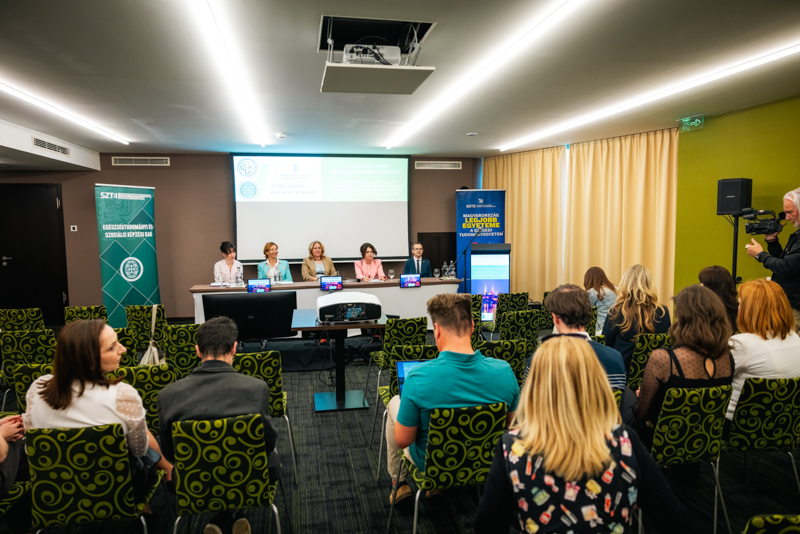         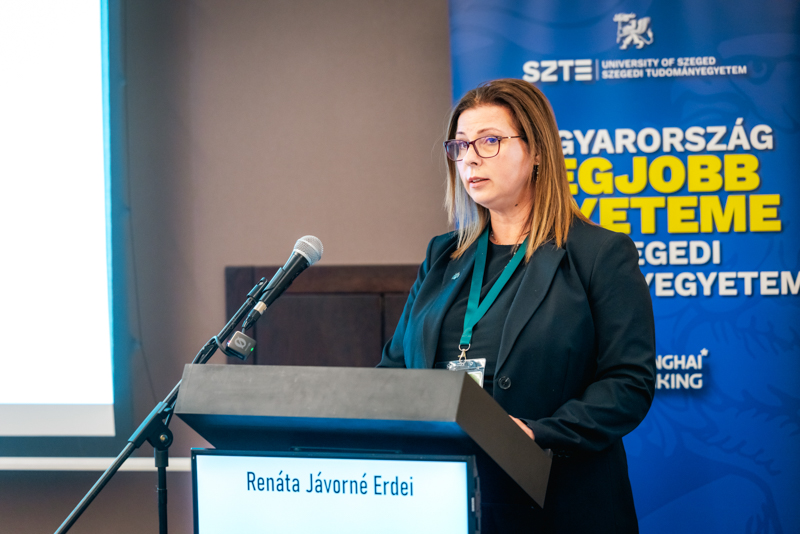      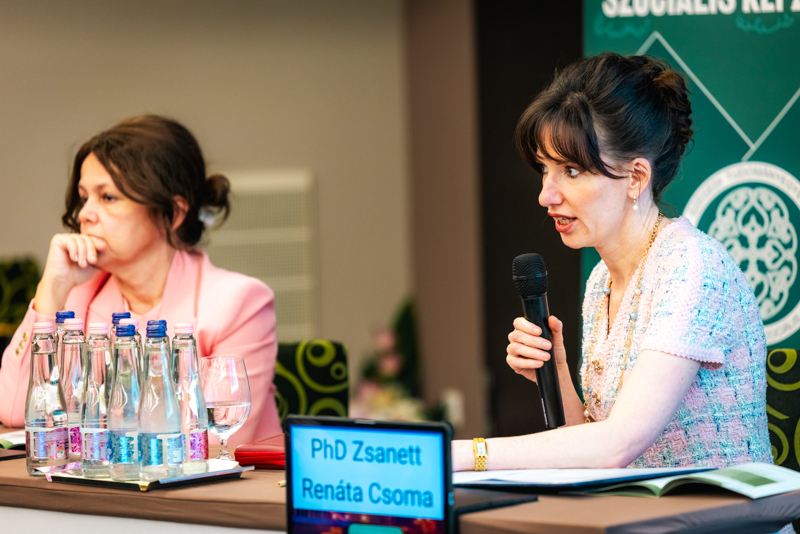    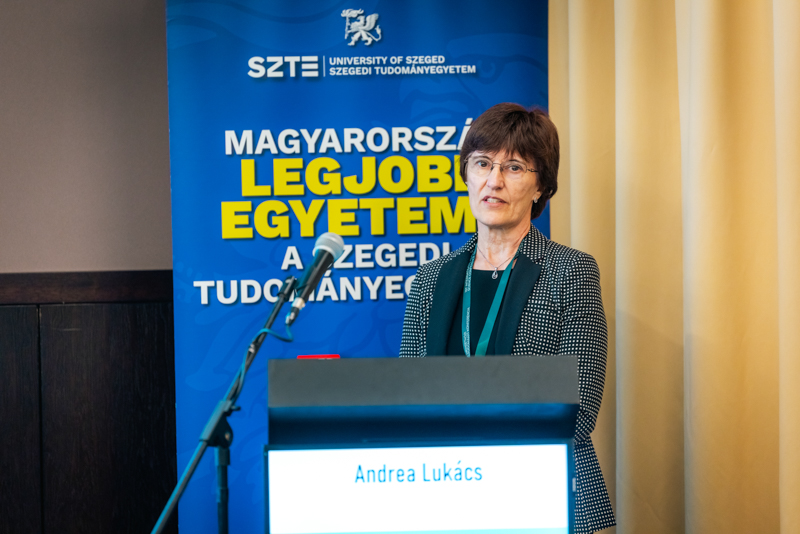    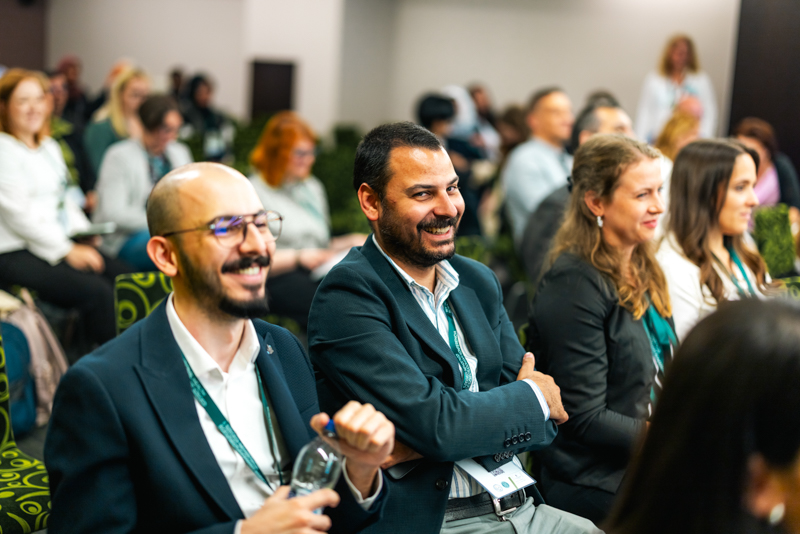  |
| Szeged hosted the 1st International Health Sciences Conference as a step toward establishing a lasting tradition. Photo Gallery by István Sahin-Tóth |
Following the opening ceremony, the conference continued with plenary lectures, which will be covered in a forthcoming article.
Source: SZTEinfo
Photo: István Sahin-Tóth
The implementation of Project No. MEC_SZ 148950 was supported by the National Research, Development and Innovation Fund, with funding provided by the Ministry of Culture and Innovation through the MEC_24 grant program.